
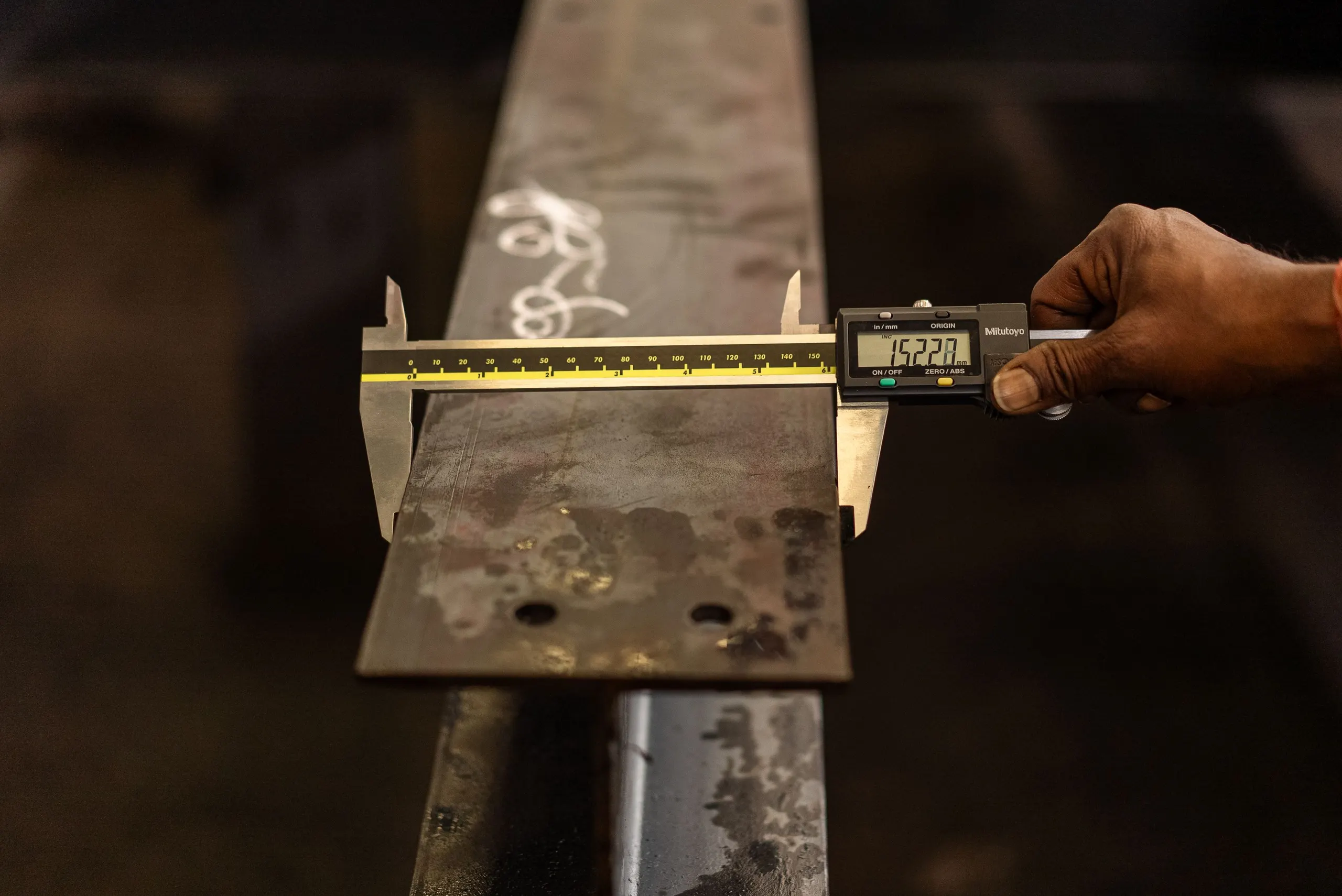
Quality control is won before loading
A defect found at the factory gets fixed. The same defect found on the dock in Europe is paid for in full.
The rule fits in one sentence: you inspect while the goods are still in the maker's hands, in China, not once the container has landed in Europe. A defect caught at the factory is fixed on a run still in progress; the same defect found on the dock is paid for in full, in discounts, returns, or unsellable stock. Our entire approach to quality control follows from that plain piece of common sense.
Control starts before production, not during it. First we lock down a written specification (materials, dimensions, tolerances, finish, packaging) and a signed reference sample, the sealed sample, which governs the whole run. Without that baseline an inspection has nothing to measure against: 'conforming' means nothing if you have not defined, in black and white, conforming to what.
Then comes during-production inspection (DUPRO): you check the first pieces off the line, while there is still time to correct a setting, a shade, a faulty assembly. It is the step rushed buyers skip most often, and the one that heads off mass surprises: a systematic defect caught on the first 200 units costs a thousand times less than on the 5,000th.
The key step remains the pre-shipment inspection, once around 80% of the order is produced and packed. It usually follows a recognised statistical standard, the AQL (Acceptable Quality Level, ISO 2859), which sets how many pieces to draw at random and how many minor, major or critical defects are tolerated before the lot is rejected. It is a common language between buyer, supplier and inspector: it takes the arbitrariness out of the decision to accept or hold.
Where the stakes are high, an independent third party (SGS, Bureau Veritas, QIMA and the like) goes into the factory and issues a standardised report, with photos and measurements. It is not an expense, it is insurance: the cost of an inspection, a few hundred euros, bears no comparison to that of a non-compliant container, tens of thousands. And the mere fact that an inspection is announced already changes how seriously the factory produces.
Beyond the goods, we control what protects them: packaging and loading. A conforming product poorly packed arrives broken; an undersized carton is crushed stacked inside the container. We check the packing standard, the marking, sometimes the supervision of loading itself, because the last metre, from carton to steel box, is also where everything can come undone.
What cannot be checked remotely is checked on site. A photo sent by the factory shows what the factory wants to show; a visit shows the rest. That is precisely why we are in Guangzhou, and not behind a screen: being on the ground means being able to open a carton at random, switch on a device, weigh a fabric, before the container leaves.
Nothing ships without sign-off. A container sealed over a known defect is a mistake you do not recover.