
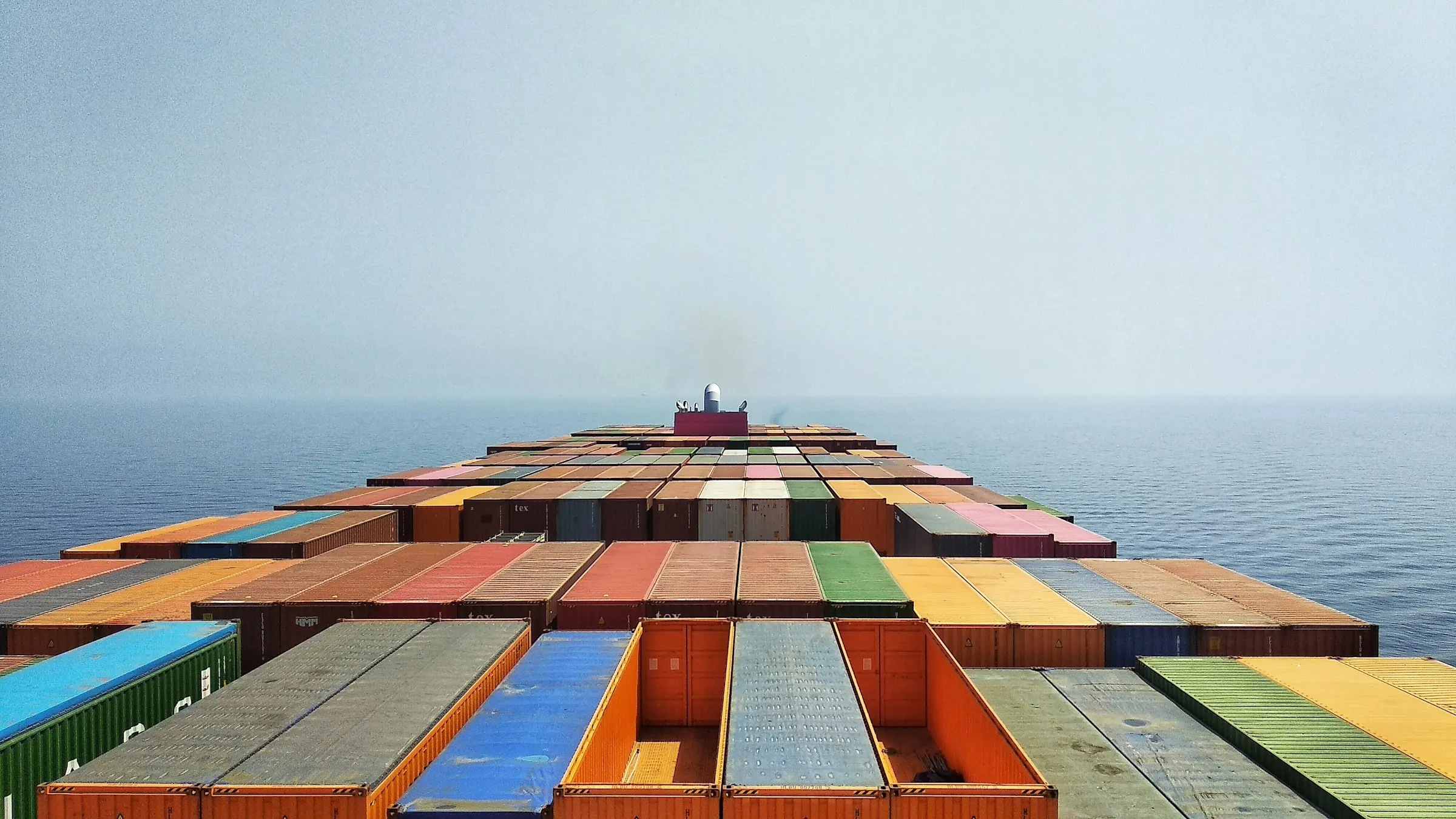
Importing from China to New Zealand: Customs, GST and FTA in 2026
Importing from China to New Zealand relies on one of the oldest free trade agreements China has signed with a developed country, which makes most Chinese goods duty free on entry. This article brings together, with sources, the rates, documents and procedures that matter for an importer based in New Zealand, as at 27 September 2026.
What New Zealand imports from China: promising niches
China is a major trading partner for New Zealand: in the year ending September 2024, New Zealand's goods exports to China reached NZD 19.77 billion, and imports, combining goods and services, reached NZD 18.29 billion, of which NZD 16.92 billion in goods alone, according to the Statistics New Zealand trade dashboard cited by the Ministry of Foreign Affairs and Trade, MFAT (mfat.govt.nz, "Key facts on New Zealand-China trade" page, accessed 27 September 2026, data as at September 2024). This document also identifies electrical and mechanical machinery, furniture, plastics and vehicles as the main imported categories.
- Electrical and mechanical machinery, equipment and industrial parts
- Furniture, plastics and vehicles
Trade and customs relations with China
New Zealand and China are linked by the New Zealand-China Free Trade Agreement, which came into force in 2008; MFAT states that New Zealand's goods exports to China have quadrupled since it was signed and took effect that year (mfat.govt.nz, accessed 27 September 2026).
An upgrade protocol to this agreement came into force on 7 April 2022: it adds chapters on competition, e-commerce, government procurement and the environment, removes additional customs duties, particularly on wood and paper, and aims to reduce non-tariff measures that New Zealand exporters consider costly (mfat.govt.nz, "FTA Upgrade" page, accessed 27 September 2026).
اقرأ أيضًا الرمز الجمركي SH وNC وTARIC: إيجاد الرمز الصحيح ولماذا يهم
Import duties and GST: rates and calculation
New Zealand's tariff, published in the Working Tariff Document, exempts most lines from duty: "most goods in the tariff are free of duty, although GST is still payable," Customs states, with certain categories remaining at 5% or 10% (customs.govt.nz, "Tariffs" page, accessed 27 September 2026). Chinese goods meeting the agreement's rules of origin can access an even more favourable preferential rate, which can be checked using MFAT's Tariff Finder tool (tariff-finder.govt.nz, cited by mfat.govt.nz, accessed 27 September 2026); Customs recommends using a customs broker to apply these rules correctly (customs.govt.nz, "Preferential tariff duty rates" page, accessed 27 September 2026).
New Zealand's GST is 15% and is calculated, according to Customs, "on the total of the value of the goods, plus any customs duty, plus freight, postage and insurance" (customs.govt.nz, "Duty and GST" page, accessed 27 September 2026). Example on a customs value of NZD 10,000: with no duty applicable, GST is NZD 1,500; with a 5% duty of NZD 500, the base rises to NZD 10,500 and GST to NZD 1,575, for a total of NZD 2,075.
Customs does not require payment at the border below NZD 1,000 per shipment, except for tobacco and alcohol, which are always taxed (customs.govt.nz, "Duty and GST" page, accessed 27 September 2026). For online sales to individuals, Inland Revenue has required foreign sellers of low-value goods to collect GST themselves since 1 December 2019 (ird.govt.nz, accessed 27 September 2026); this regime targets direct-to-consumer trade, not the commercial importing covered here.
اقرأ أيضًا القيمة الجمركية واحتساب الرسوم: الوعاء والتعديلات والمعدل · ضريبة القيمة المضافة عند الاستيراد والاحتساب الذاتي في فرنسا
Required documents and customs value
Any commercial import requires registering as a commercial importer with Customs, then submitting an electronic declaration, the import entry, through the Trade Single Window, TSW, shared by Customs, MPI, Maritime NZ and the Ministry of Health (customs.govt.nz, "Start importing" and "Trade Single Window (TSW)" pages, accessed 27 September 2026). A customs broker registered with the TSW simplifies this step.
Customs value is declared on each import entry; Customs offers up to six methods, with transaction value as the reference, and specific rules under the CIF Incoterm to include freight and insurance (customs.govt.nz, "Valuation for import" page, accessed 27 September 2026). The commercial invoice must match the price paid, the packing list must match the actual quantities, and proof of origin must accompany any claim for a preferential rate.
اقرأ أيضًا الفاتورة التجارية للاستيراد: البيانات الإلزامية للجمارك · شهادة المنشأ الصينية: فائدتها ومتى تكون مطلوبة
Standards, certification and biosecurity
New Zealand shares with Australia a common set of AS/NZS standards, published by Standards New Zealand, the national standards body; a product made in China will therefore often reference an AS/NZS standard, for electrical goods, construction or toy safety, rather than a country-specific standard (standards.govt.nz, accessed 27 September 2026). No general pre-shipment inspection requirement by a New Zealand authority has been confirmed in our sources: a private quality check before loading remains the best protection.
Biosecurity is the most New Zealand-specific point to watch. The Ministry for Primary Industries, MPI, is named by Customs as the competent authority for agricultural goods and biosecurity risks on import (customs.govt.nz, "Prohibitions and restrictions" page, accessed 27 September 2026), under the Biosecurity Act 1993. Wooden packaging, products of plant or animal origin, and used equipment may be subject to inspection or treatment. No verifiable MPI cost or timeframe schedule was found: check mpi.govt.nz before shipping.
اقرأ أيضًا استيراد الإلكترونيات من الصين: LVD وCEM وRoHS وDEEE · الملف التقني للمنتج: ما يجب أن يحتفظ به المستورد
Prohibited or licence-controlled goods
New Zealand customs regulations prohibit certain goods outright, with no possibility of approval, and subject others to a permit issued by a specific authority (customs.govt.nz, "Prohibitions and restrictions" page, accessed 27 September 2026).
- Prohibited outright: objectionable publications, certain dangerous dog breeds, chewing tobacco, radio jammers, goods made using prison labour
- MPI permit: agricultural and food products, Southern Bluefin Tuna, biosecurity-risk goods
- Environmental Protection Authority permit: hazardous substances, explosives, fireworks
- Ministry of Health permit: prescription medicines, pseudoephedrine, high-powered lasers
- Police or Department of Conservation permit: firearms, CITES species, marine mammals
Ports, routes from southern China and recommended Incoterms
Ports of Auckland describes itself as "New Zealand's largest import port," operating the Fergusson container terminal for most freight bound for Auckland and the upper North Island (poal.co.nz, accessed 27 September 2026). No verifiable transit time from southern China was found on this page: this should be confirmed case by case with your freight forwarder, as New Zealand sits at the end of the line for East Asia rotations.
FOB from southern China suits an importer who arranges transport themselves; CIF or CFR suit cases where the Chinese seller covers freight through to the New Zealand port. DDP remains inadvisable unless the Chinese seller is registered as a customs declarant in New Zealand, which is rarely the case.
اقرأ أيضًا إنكوترم FOB: المعنى، الالتزامات والسعر (Incoterms 2020) · الشحن البحري من الصين: FCL أو LCL، التكاليف والمهل وعتبة التحول
Payment, order steps and what Sorva does for you
On payment, common practice remains a deposit on order followed by a balance before shipment, paid exclusively to the Chinese company's business account, never to a personal account: any change of bank details received by email should be verified with a direct phone call, as this type of fraud is widespread. The New Zealand dollar floats freely, which is why it makes sense to fix the purchase price in US dollars from the outset.
An order follows a precise sequence: specifications, factory verification, an approved sample, a proforma with the chosen Incoterm, registration as a commercial importer if needed, production follow-up, pre-shipment inspection, gathering the documents for the import entry, freight to Auckland or another port, then customs clearance by the importer or their broker through the Trade Single Window.
Sorva is a sourcing and trading house based in Guangzhou's Tianhe district, backed by a Chinese subsidiary whose business scope covers purchasing, reselling and exporting goods, and a parent company in France. Our Chinese-speaking team finds and verifies factories, arranges visits and samples, negotiates, has quality checked before loading, and arranges freight through to the chosen New Zealand port, with full documentation. We never act as the official importer in New Zealand, do not clear customs locally, and do not export vehicles without a licensed Chinese exporter. Our base offer is invoiced in US dollars, with region-specific options quoted separately on request.
اقرأ أيضًا الدفع لمورد صيني: التحويل المصرفي، خطاب الاعتماد · أول عملية استيراد: الخطوات العشر والأخطاء المكلفة
Key takeaway: in New Zealand, 15% GST applies almost every time, but customs duty is often nil thanks to the free trade agreement with China, upgraded in 2022. First step: check the exact rate for your product using MFAT's Tariff Finder tool before costing your landed price.
هل تستوردون من الصين؟
أخبرونا بما ترغبون في شرائه. يرد فريقنا عبر WhatsApp، مع المصانع والآجال والوثائق التي يطلبها بلدكم.
الأسئلة الشائعة
01What is the GST rate on an import from China to New Zealand?
02Do you have to pay customs duties to import from China to New Zealand?
03Does the free trade agreement with China cover all products?
04What documents are needed to clear goods from China through customs in New Zealand?
05Does biosecurity complicate an import from China?
06Which products are banned from import into New Zealand?
07Can Sorva clear my goods through customs on arrival in New Zealand?
ما يتغيّر في الوقت الراهن
- Chine · Fiscalité export
الصين: استرداد ضريبة القيمة المضافة على التصدير يختفي بالنسبة إلى 271 فئة من المنتجات
منذ 1 أبريل 2026، ألغت الصين استرداد ضريبة القيمة المضافة على التصدير بالنسبة إلى 249 فئة من المنتجات، وخفضت استرداد البطاريات من 9% إلى 6%. ويمس هذا الإجراء بشكل خاص مادة PVC والزجاج والسيراميك والخلايا الكهروضوئية والسجائر الإلكترونية، ويرفع آليًا سعر الخروج من المصنع لأي مشترٍ، في آسيا والمحيط الهادئ كما في أماكن أخرى.
قراءة المقال - Australie · Biosécurité
أستراليا: ارتفاع رسوم السلامة الأحيائية على الاستيراد اعتبارًا من 1 يوليو 2026
اعتبارًا من 1 يوليو 2026، رفعت الوزارة الأسترالية للزراعة والصيد والغابات (DAFF) رسوم استرداد تكاليف السلامة الأحيائية المطبقة على كل تصريح استيراد كامل، لتصل إلى 48 دولارًا أستراليًا بالنسبة إلى الشحن الجوي و71 دولارًا بالنسبة إلى الشحن البحري. كما ترتفع أيضًا رسوم معالجة التصريح نفسه.
قراءة المقال - Kazakhstan · Douane en ligne
الاتحاد الأوراسي: نظام جمركي خاص بالتجارة الإلكترونية ابتداء من يوليو 2026
وافق مجلس اللجنة الاقتصادية الأوراسية على فصل جديد من قانون الجمارك للاتحاد الاقتصادي الأوراسي (UEEA) يُنشئ نظاما خاصا بالتجارة الإلكترونية العابرة للحدود، على أن يدخل حيز التنفيذ في 1 يوليو 2026. وكانت كازاخستان، آخر الدول الأعضاء الخمس التي صادقت على هذا النص، قد فعلت ذلك في ديسمبر 2025، في حين ستخضع أرمينيا، العضو أيضا في الاتحاد، لنفس الشروط.
قراءة المقال
الخدمة المناسبة
- العمولةعمولة على الحجمتفتحون ملفا، ونحن نجد المصنع ونتفاوض معه. لا نتقاضى أجرا إلا على البضاعة التي تطلبونها.150 €رسوم فتح الملفعرض الخدمة
- مكتب دراساتدراسة المطابقة التنظيميةما يجب أن يستوفيه منتجكم في بلد الوجهة، مكتوب وموثق المصادر، قبل أول طلبية.390 €لكل منتج ولكل بلد وجهةعرض الخدمة
- بالوحدةالمراقبة قبل التحميلالكميات، التغليف، الوسم، حالة الحاوية، وتقرير بالصور، قبل مغادرة البضاعة.229 €لكل عملية تحميلعرض الخدمة