
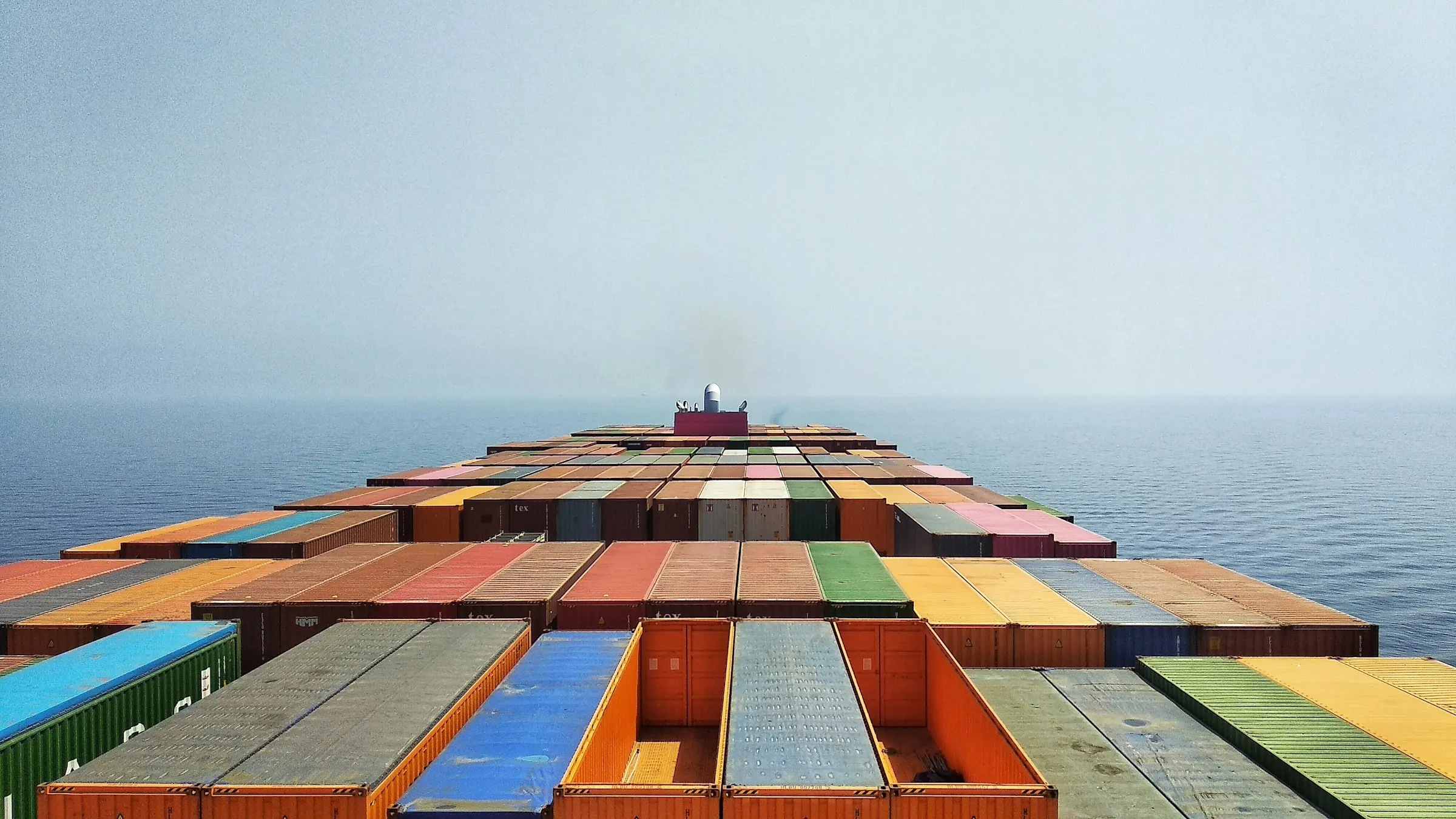
Importing From China to Australia: Customs, GST and RCM in 2026
Importing from China to Australia means juggling ChAFTA, the 10% Goods and Services Tax (GST), RCM marking for electrical and electronic goods, and strict biosecurity checks at the border. This article brings together, with sources, the rules, rates and procedures that matter to an Australian importer, as at 27 September 2026.
What Australia imports from China: overview and sales channels
Australia buys a wide range of consumer goods from China: electronics, appliances, furniture, textiles, toys, sporting goods and industrial parts. Five reference points shape any import project: ChAFTA, in force since 20 December 2015; the 10% GST, collected by the Australian Taxation Office; RCM marking, mandatory since 1 March 2016 for electrical and electronic goods; the Biosecurity Act 2015 (No. 61, 2015), for plant, animal and food products; and the Australian Border Force (ABF), which administers customs clearance under the Customs Act 1901.
An imported product can be sold through its own online store or through a marketplace such as Amazon Australia, without a physical network. The resale channel chosen does not change the customs and compliance obligations, which apply to the importer.
Pročitajte i Pojmovnik nabave u Kini: pregovaranje, naručivanje i plaćanje tvornice
Trade agreements and customs relations with China
ChAFTA (China-Australia Free Trade Agreement), signed on 17 June 2015 after negotiations concluded on 17 November 2014, entered into force on 20 December 2015. The agreement covers goods, services and investment, with a tariff phase-out schedule spread over several years. Once fully implemented, 95% of Australian exports to China benefit from duty-free access; this figure applies to the Australia-to-China direction, not Chinese imports, and should be checked line by line.
On the import side, ChAFTA has progressively reduced duty to zero on a large share of covered tariff lines, provided the rules of origin are met and a certificate of origin accompanies the shipment. Outside the agreement, Chinese goods enter under the general customs tariff regime, administered by the ABF under the Customs Act 1901.
Pročitajte i Certifikat o podrijetlu iz Kine: čemu služi i kad se zahtijeva
Customs duty and import GST: how it is calculated
Australian GST, under the A New Tax System (Goods and Services Tax) Act 1999 (No. 55, 1999), has applied at 10% since 1 July 2000. Division 13 of the Act sets out how GST on importation is calculated: it applies to the customs value, plus any duty and the cost of transport and insurance.
Example: for a shipment from Guangzhou with a customs value of AUD 5,000, transport and insurance included, covered by a valid ChAFTA certificate of origin on a line reduced to 0%, the duty payable is nil. The 10% GST then applies to that AUD 5,000, i.e. AUD 500 payable before release. Outside ChAFTA, or on a line not yet reduced to zero, that duty is added to the customs value before GST is applied; we found no verifiable aggregate average rate, as each Harmonized System code must be checked separately.
For low-value shipments sold to individuals, the Treasury Laws Amendment (GST Low Value Goods) Act 2017 (No. 77, 2017) extends GST to low-value imported goods: since 1 July 2018, for goods with a customs value under AUD 1,000, GST is collected by the overseas vendor or the marketplace at the point of sale; above that threshold, it remains payable at the border as for any other shipment. A business reselling in bulk stays on the standard regime, with declaration and payment on entry.
Pročitajte i Trošak isporučene robe: potpuna formula landed cost · Carinski broj HS, KN, TARIC: kako pronaći pravi broj i zašto je važan
Documents required to clear customs in Australia
The importer remains responsible for the accuracy of the information given to the Australian Border Force, regardless of who prepares the documents. An import declaration is lodged electronically with the ABF. Commercial documents must be kept for at least five years after entry, including for samples.
- Electronic import declaration lodged with the Australian Border Force
- ChAFTA certificate of origin for preferential tariff treatment, without which the general regime applies
- Full commercial invoice and packing list, the basis for the customs value
- Transport document, ocean bill of lading or air waybill
- Retention of documents for at least five years after entry
Pročitajte i Uvozna trgovačka faktura: obvezni podaci za carinu · Packing list (specifikacija pakiranja): definicija, obvezan sadržaj
Standards, RCM marking and biosecurity: what holds shipments at the border
The Regulatory Compliance Mark (RCM) became mandatory on 1 March 2016 for electrical, electronic and wireless devices, replacing the former A-tick and C-tick markings. It certifies compliance with the Electrical Equipment Safety System (EESS) for electrical safety and with ACMA requirements for electromagnetic compatibility, under the joint oversight of the Electrical Regulatory Authorities Council (ERAC) and the ACMA. The RCM is neither a quality label nor a certification: it is a declaration of conformity that the importer applies on their own responsibility, backed by test evidence.
Any goods of plant, animal or food origin, or that could carry a biosecurity risk (timber, packaging, residual soil), fall under the Biosecurity Act 2015, jointly administered by the Department of Agriculture and the Department of Health. The department offers an online system for checking import conditions before shipping, indicating whether a permit or inspection is likely; costs and timeframes depend on the product and should be confirmed with the department before placing an order.
Pročitajte i Tehnička dokumentacija proizvoda: što uvoznik mora posjedovati · Uvoz elektronike iz Kine: LVD, EMC, RoHS, WEEE
Prohibited goods and goods requiring a permit
The Biosecurity Act 2015 applies systematic controls to at-risk goods: a food, plant, raw wood or soil-contaminated product can be held, treated or refused entry if import conditions are not met before shipment. An electrical or electronic product lacking RCM marking can likewise be held at clearance.
Beyond these two regimes, the Australian Border Force distinguishes several categories of prohibited or permit-controlled goods: consumer goods subject to conditions (lighters, toys, cosmetics), defence and strategic goods (biological agents, nuclear or radioactive materials), firearms, narcotics and medicines requiring authorisation, engineered stone, and protected species. Each sensitive category should be checked directly on abf.gov.au before placing an order.
Pročitajte i Prijevare u sourcingu u Kini: kako ih prepoznati i izbjeći
Ports, routes from Southern China, Incoterms and payment
Port Botany, in Sydney, handles 2.8 million TEU a year against a capacity of over 7 million TEU, and manages 99.6% of New South Wales' containerised trade; it contributes around AUD 10.7 billion to the regional economy and supports around 52,000 jobs. The Port of Melbourne describes itself as the country's largest container port, with no recent, verifiable traffic statistic to cite here. From Southern China, freight most often departs from Guangzhou, Shenzhen or Yantian, depending on the route booked by the freight forwarder.
FOB Southern China suits buyers who arrange transport themselves; CIF or CFR to the chosen port suits those using an intermediary. DDP remains inadvisable unless the Chinese seller is itself a customs declarant and liable for GST in Australia, which remains rare. On payment, the usual practice is a deposit followed by a balance before shipment, paid into the Chinese company's business account, never a personal account, with any change of bank details verified by a direct phone call.
Pročitajte i Incoterms uvoz iz Kine: EXW, FOB, DDP, koji incoterm odabrati · Pomorski teret Kina: FCL ili LCL, troškovi, rokovi i prag prelaska · Uvjeti plaćanja tvornici u Kini: predujam, saldo, L/C
Steps for a first order, and what Sorva does for you
A first import follows a set sequence: specifications, factory verification, an approved sample, a proforma invoice with Incoterm, verification of ChAFTA origin if preferential tariff treatment is sought, RCM or biosecurity compliance before production, pre-shipment inspection, freight to the chosen port, then customs clearance by the client or their local broker.
Sorva is a sourcing and trading house based in Guangzhou, in the Tianhe district, backed by a Chinese subsidiary whose business scope covers purchasing, resale and export of goods, and by a parent company in France. Our Chinese-speaking team finds and vets factories, arranges visits and samples, negotiates, has quality checked before shipment and arranges freight to the chosen Australian port. We never act as the official importer in Australia, do not clear customs in the destination country, and do not export vehicles ourselves without a licensed Chinese exporter. Our base offer is quoted in dollars, with regional add-ons, such as RCM support, quoted on request.
Pročitajte i Prvi uvoz: deset koraka i pogreške koje vas skupo koštaju · Plaćanje kineskog dobavljača: doznaka, akreditiv
Keep in mind that in Australia, ChAFTA can bring customs duty down to zero, but the 10% GST applies almost always, and RCM and biosecurity requirements must be checked before production, not after receipt. First step: identify your product's Harmonized System code and check whether it falls under ChAFTA, RCM or biosecurity.
Uvozite iz Kine?
Recite nam što tražite kupiti. Naš tim odgovara na WhatsAppu, s informacijama o tvornicama, rokovima i dokumentima koje zahtijeva vaša zemlja.
Česta pitanja
01What customs duties and taxes apply when importing from China to Australia?
02Does Australia have a free trade agreement with China?
03How does GST work on low-value shipments bought by individuals?
04What is RCM marking and which products must carry it?
05How does biosecurity screening work on entry into Australia?
06Which port should I choose for an import from Southern China?
07Can Sorva clear my goods through customs on arrival in Australia?
Što se trenutno mijenja
- Australie · Biosécurité
Australija: povećanje pristojbi za biosigurnost pri uvozu od 1. srpnja 2026.
Od 1. srpnja 2026. australsko Ministarstvo poljoprivrede, ribarstva i šumarstva (DAFF) povisilo je pristojbe za pokrivanje troškova biosigurnosti koje se primjenjuju na svaku potpunu uvoznu deklaraciju, na 48 australskih dolara za zračni prijevoz i 71 australski dolar za pomorski prijevoz. Rastu i pristojbe za obradu same deklaracije.
Pročitaj članak - Chine · Fiscalité export
Kina: povrat PDV-a na izvoz nestaje za 271 kategoriju proizvoda
Od 1. travnja 2026. Kina je ukinula povrat PDV-a na izvoz za 249 kategorija proizvoda i smanjila onaj za baterije s 9 % na 6 %. Mjera posebice pogađa PVC, staklo, keramiku, fotonaponske ćelije i elektroničke cigarete, te automatski poskupljuje izlaznu tvorničku cijenu za svakog kupca, u Aziji i Tihom oceanu kao i drugdje.
Pročitaj članak - Kazakhstan · Douane en ligne
Euroazijska unija: poseban carinski režim za online trgovinu od srpnja 2026.
Vijeće Euroazijske gospodarske komisije odobrilo je novo poglavlje Carinskog zakonika Euroazijske gospodarske unije (EAEU) kojim se uvodi poseban režim za prekograničnu online trgovinu, s najavljenim stupanjem na snagu 1. srpnja 2026. Kazahstan, posljednja od pet država članica koja je ratificirala taj tekst, to je učinio u prosincu 2025., dok će Armenija, također članica unije, podlijegati istim uvjetima.
Pročitaj članak
Usluga koja odgovara
- ProvizijaProvizija na količinuOtvarate dosje, mi pronalazimo i pregovaramo s tvornicom. Plaćeni smo samo na robu koju naručite.150 €troškovi otvaranja dosjeaPogledajte uslugu
- Ured za studijeStudija regulatorne usklađenostiŠto vaš proizvod mora ispunjavati u zemlji odredišta, napisano i izvorirano, prije prve narudžbe.390 €po proizvodu i po zemlji odredištaPogledajte uslugu
- Po komaduKontrola prije utovaraKoličine, pakiranje, označavanje, stanje kontejnera, foto izvješće, prije nego roba krene.229 €po utovaruPogledajte uslugu