
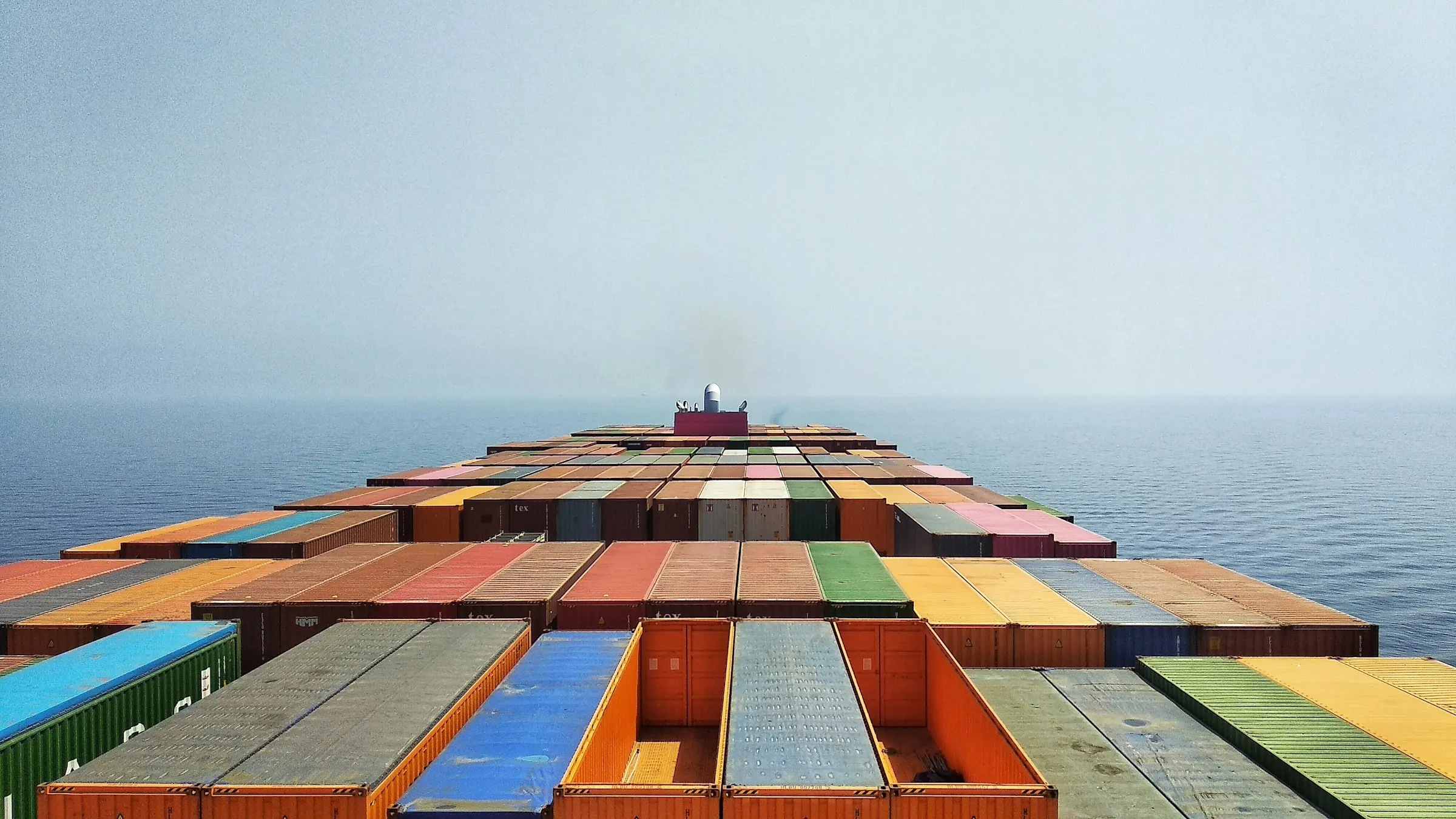
Importing from China to Canada: Customs, CARM and Surtaxes 2026
Importing from China to Canada means mastering CARM, which has made every importer responsible for their own registration and their own financial security since October 21, 2024, along with targeted Chinese surtaxes, such as on steel and aluminum, that shift from one order to the next. This article gathers, with sources, the rates, documents and deadlines that matter to a Canadian importer, as of September 27, 2026.
What Canada imports from China: niches and sensitive categories
Canada has not signed a free trade agreement with China: Chinese goods enter under the general most-favoured-nation tariff regime, administered by the Canada Border Services Agency (CBSA). Two categories stand out because Ottawa has applied a dedicated surtax to them: Chinese steel and aluminum, taxed at 25% since 2024 under two orders detailed further below, and Chinese electric vehicles, surtaxed at 100% from October 1, 2024 to February 28, 2026 before being exempted since March 1, 2026. The rule has already changed once, so double check before placing any order in these sectors.
- Chinese steel and aluminum: two 25% surtaxes have coexisted since 2024 and 2025, see below, on top of the normal MFN duty
- Chinese electric vehicles: 100% surtax from October 1, 2024 to February 28, 2026, repealed since March 1, 2026, to be reconfirmed before any project
- Everyday consumer goods, electronics, furniture, textiles, toys: subject only to the MFN duty that varies by Harmonized System code
- Goods made with forced or prison labour: import prohibited regardless of sector, see below
Olvassa el még Dömpingellenes vámok Kínával szemben: hogyan tudja meg, érinti-e Önt
Trade and customs relations between Canada and China
Canadian customs clearance relies on two CBSA systems: eManifest, which requires cargo data to be transmitted electronically before arrival, and CARM, detailed below, which handles the assessment and collection of duties and taxes.
Olvassa el még HS, KN, TARIC vámkódok: hogyan találja meg a megfelelőt, és miért számít
Customs duties and import taxes: calculation and Chinese surtaxes
The base duty depends on the Harmonized System code assigned to the goods, published in the Canadian customs tariff: we found no verifiable aggregated average rate, so each line needs to be checked before ordering. On top of this duty comes the federal GST of 5%, replaced in harmonized provinces by the HST: 13% in Ontario, 14% in Nova Scotia since April 1, 2025.
Sample calculation, excluding surtax: on a customs value of 10,000 Canadian dollars and a hypothetical MFN duty of 6%, the duty owed is 600 dollars; the 5% GST then applies to 10,600 dollars, or 530 dollars; the total owed to the CBSA, excluding freight and insurance, comes to 1,130 dollars. For Chinese steel or aluminum, two 25% surtax orders coexist without stacking: the one from October 22, 2024, codes 24187B and 24187C, for goods of Chinese origin, and the one from July 31, 2025, for steel melted and poured in China or aluminum smelted and cast in China, even when shipped via a third country. As of September 27, 2026, check which of the two applies to your product before ordering.
- MFN duty: varies by Harmonized System code, to be checked line by line
- Federal GST: 5%, in all provinces
- HST in harmonized provinces: 13% in Ontario, 14% in Nova Scotia since April 1, 2025
- Chinese steel and aluminum surtax: 25%, two separate orders depending on origin (October 22, 2024) or melting and casting in China (July 31, 2025), detailed above
Olvassa el még Kirakodott önköltség: a teljes landed cost képlet
Mandatory documents and business number
The core document for any declaration remains the Canada Customs Invoice or a complete commercial invoice, required for almost all commercial shipments. At the border, the importer or their broker files Form B3. Before any shipment, the importer must hold a business number and an import-export program account, essential for registering with CARM.
- Canada Customs Invoice or complete commercial invoice
- Form B3, the detailed declaration filed at the border
- Packing list and ocean bill of lading or air waybill
- Business number and import-export program account, before the first import
- Cargo data transmitted electronically before arrival, under the eManifest program
Olvassa el még Import kereskedelmi számla: kötelező adattartalom a vámhoz · Packing list (csomagolási jegyzék): meghatározás, kötelező tartalom
CARM: the CBSA's new system, mandatory since 2024
CARM (CBSA Assessment and Revenue Management) is the system the CBSA uses to assess and collect duties and taxes, with an official switchover on October 21, 2024. Each importer must register on the client portal themselves, using a GCKey credential or an Interac partner, no longer relying on their broker's registration.
Another change: for release prior to payment, the importer must now post their own financial security with the CBSA, rather than relying solely on their broker's bond. A 180-day transition period accompanied this switchover, running until May 20, 2025: since that date, the absence of your own security blocks release prior to payment.
Standards, prohibited or licence-controlled goods, bilingual labelling
The Canada Consumer Product Safety Act (S.C. 2010, c. 21) imposes a general safety obligation, with testing, documentation and incident reporting, for any product sold in Canada regardless of country of manufacture. The Consumer Packaging and Labelling Act (R.S.C. 1985, c. C-38) requires bilingual labelling on any prepackaged product: mandatory statements must appear in both official languages at once.
A series of CBSA memoranda, the D9 series, governs prohibited imports: goods made in whole or in part by forced or prison labour, obscene material or hate propaganda, counterfeit goods or goods bearing a false indication of geographic origin, used mattresses, white or yellow phosphorus matches, and used vehicles subject to age and origin rules specific to that category.
- General product safety: Canada Consumer Product Safety Act, testing and documentation to be kept on file
- Mandatory bilingual labelling, on any prepackaged product
- Absolute prohibition: forced or prison labour, obscene material or hate propaganda, counterfeit goods
- Specific rules: used mattresses, phosphorus matches, used vehicles depending on age and origin
Olvassa el még Termék műszaki dokumentációja: amit az importőrnek birtokolnia kell · Kínai származási bizonyítvány: mire jó, és mikor kötelező
Ports, shipping routes, recommended incoterms and payment
The Port of Prince Rupert claims the shortest Pacific route to Asia, 36 hours less than Vancouver and more than 68 hours less than Los Angeles to Shanghai, and North America's deepest deep-water port. Vancouver remains Canada's historic gateway for transpacific trade.
From southern China, freight most often departs from Guangzhou, Shenzhen or Yantian, depending on the line booked by the freight forwarder. FOB southern China works if the buyer arranges transport; CIF or CFR to the Canadian port if an intermediary handles it; DDP is not recommended as long as the seller is not a licensed customs declarant in Canada. On payment, the usual practice is a deposit followed by a balance before shipment, paid into the Chinese company's business account, never a personal account, with any change of bank details verified by a direct phone call.
Olvassa el még FOB Incoterm: jelentése, kötelezettségek és ár (Incoterms 2020) · Tengeri szállítás Kínából: FCL vagy LCL, költségek, határidők és váltási küszöb
Steps for a first order and what Sorva does for you
A first import follows a precise sequence: specifications, factory verification, approved sample, proforma invoice with incoterm, CARM registration if needed, production follow-up, pre-shipment inspection, freight to the chosen port, then customs clearance by the client or their broker.
Sorva is a sourcing house based in Guangzhou, in the Tianhe district, backed by a Chinese subsidiary and a French parent company. Our Chinese-speaking team verifies factories, arranges samples and pre-shipment quality control, then organizes freight to the chosen Canadian port. We never act as the official importer of record in Canada, and we do not export vehicles ourselves without going through a licensed Chinese exporter. Our base offer is priced in dollars, with zone options quoted on request.
Olvassa el még Kínai beszállító kifizetése: átutalás, akkreditív · Első import: a tíz lépés és a drágán megfizetett hibák
Keep in mind that in Canada, a Chinese surtax can appear or disappear from one order to the next, as with the electric vehicle surtax repealed since March 1, 2026, and that CARM has required its own registration and its own financial security from every importer since 2024. First step: check the Harmonized System code for your product and any surtax that may apply.
Kínából importál?
Mondja el, mit szeretne vásárolni. Csapatunk WhatsAppon válaszol, a gyárakkal, határidőkkel és az Ön országa által megkövetelt dokumentumokkal kapcsolatban.
Gyakori kérdések
01What customs duties and taxes do I need to pay to import from China to Canada?
02Does Canada have a free trade agreement with China?
03What is CARM and why do you need to register for it?
04Are Chinese electric vehicles still subject to a surtax in Canada?
05What products are banned from import into Canada?
06Do my products need bilingual labelling?
07Which port should I choose for an import from southern China?
08Can Sorva clear my goods through customs on arrival in Canada?
Ami most éppen változik
- Canada · Droits de douane
Kanada: 6,1%-ra csökkenti a kínai elektromos autók vámját kontingens alatt
2026. január 16-án Kanada megállapodást jelentett be Kínával, amely a kínai elektromos autókra kivetett 100%-os vámját a legnagyobb kedvezmény elve szerinti 6,1%-os kulcsra csökkenti, éves kontingens keretén belül. Cserébe Kína csökkenti vámjait több kanadai mezőgazdasági terméken.
Cikk elolvasása - États-Unis · Droits de douane
Az Egyesült Államok és Kína csökkenti a vámokat 30 milliárd dollár értékű árun
Miután Hszi Csin-ping kínai elnök 2026. szeptember 26-án Washingtonba látogatott, a két ország kölcsönös vámcsökkentést jelentett be mintegy 30 milliárd dollár értékű kereskedelemre. Részletes, vámtarifasor szerinti táblázatot ezen a napon még nem tettek közzé.
Cikk elolvasása - États-Unis · Douane
Egyesült Államok: a 800 dolláros de minimis vámmentesség megszűnt Kína esetében
A 800 dolláros vámmentességi küszöb, amely mentesítette a kisebb küldeményeket a vámok és a részletes nyilatkozat alól, Kína és Hongkong esetében már 2025 májusától felfüggesztésre került, majd a világ többi részére is, mielőtt a 2026. június 24-i szabály véglegesítette a határozatlan idejű felfüggesztést a nemzetközi postai hálózaton kívüli bármely módon érkező küldeményekre. Minden kereskedelmi küldeménynek, értékétől függetlenül, vámáru-nyilatkozat tárgyát kell képeznie, és meg kell fizetnie a rendes vámokat.
Cikk elolvasása
A megfelelő szolgáltatás
- JutalékMennyiségi jutalékÖn megnyit egy dossziét, mi megtaláljuk és tárgyaljuk a gyárat. Csak az Ön által megrendelt áru után kapunk fizetést.150 €dosszié megnyitásának költségeSzolgáltatás megtekintése
- Szakértői irodaSzabályozási megfelelőségi tanulmányAmit a termékének a célországban be kell tartania, írásban és forrásokkal, az első rendelés előtt.390 €termékenként és célországonkéntSzolgáltatás megtekintése
- EgységenkéntEllenőrzés berakodás előttMennyiségek, csomagolás, jelölés, konténer állapota, fényképdokumentáció, mielőtt az áru elindul.229 €rakományonkéntSzolgáltatás megtekintése