
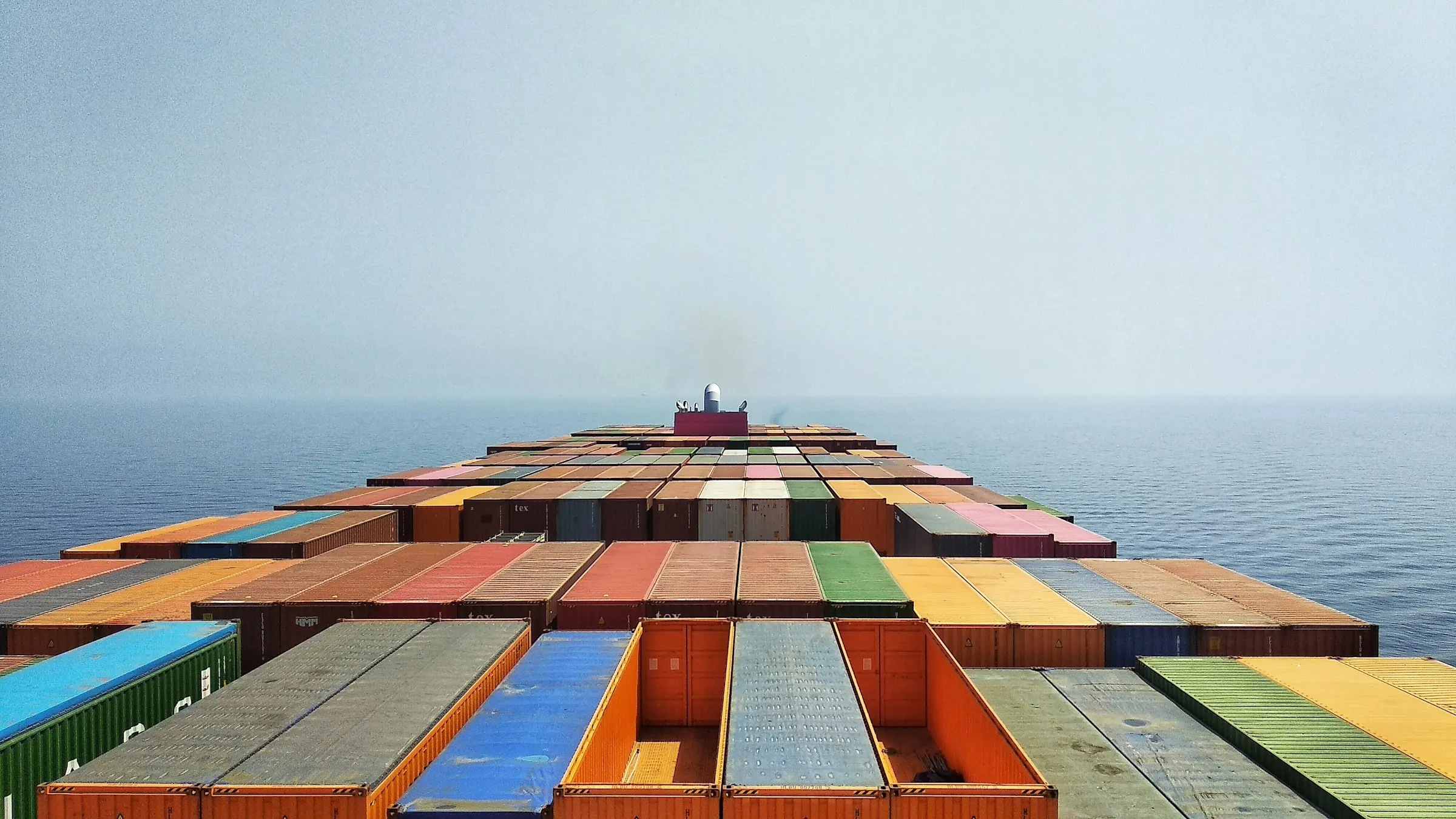
Importing from China to Uganda: customs, UNBS and costs in 2026
Importing from China to Uganda means mastering a common customs tariff shared with the rest of East Africa, a UNBS certificate obtained before loading in China, and shipping routes that almost always run through the Kenyan port of Mombasa, since Uganda has no access to the sea. This article brings together, with sources, the rates, documents and timelines that matter to a Ugandan importer, as of 27 September 2026.
What Uganda imports from China: the promising niches
From March 2025 to February 2026, Uganda's total imports reached 36.1 billion dollars, of which 9.02 billion came from China, or 27.6% of the total. Machinery and mechanical appliances, chapter 84, account alone for 3.29 billion dollars of Uganda's imports.
Electronics and household appliances form a second niche, worth 414.57 million dollars from China in 2024. Add to that motorcycles and utility tricycles, construction and agricultural equipment, building materials, textiles, and used vehicles, governed by the rules detailed below.
- Machinery and equipment (chapter 84): 3.29 billion dollars of total imports
- Electronics and household appliances: 414.57 million dollars from China in 2024
- Motorcycles, construction and agricultural equipment
- Building materials, textiles, vehicles subject to UNBS
Trade and customs relations with China
No bilateral free trade agreement between Uganda and China was found in our sources. Uganda clears customs under the rules of the East African Community customs union, of which it is a member alongside Kenya, Tanzania, Rwanda, Burundi, the Democratic Republic of Congo, Somalia and South Sudan.
China has removed customs duties on all tariff lines for thirty three African least developed countries since 1 December 2024, a regime extended to fifty three African countries with diplomatic relations with China since 1 May 2026. Uganda, a least developed country, benefits from this on exports to China, without any reduction in the duties it pays on imports.
Under the East African Community's single customs territory regime, goods bound for Uganda are declared once at the first regional point of entry, most often Mombasa, then move under customs bond to their final destination, which cuts down on repeated formalities at every border.
Lasīt arī Muitas kods SH, KN, TARIC: kā atrast pareizo kodu un kāpēc tas svarīgi
Customs duties and import taxes: how to work them out
The East African Community's common external tariff sorts goods into bands: finished products most often carry 25%, intermediate products 10%, non food raw materials and capital goods can enter duty free, and certain sensitive lines go up to 60%. Have a customs agent confirm the exact rate for your product before ordering.
Three further levies apply on the CIF value: 18% VAT assessed on the CIF value plus duty, a 6% withholding tax on the CIF value, and a 1.5% infrastructure levy on the CIF value. The withholding tax can be offset against income tax for a VAT registered importer, but remains a hard cost for an informal operator.
Example on a CIF value of 30,000,000 shillings, at the 25% duty rate: customs duty 7,500,000 shillings, VAT base 37,500,000 shillings, VAT at 18% 6,750,000 shillings, withholding tax 1,800,000 shillings, infrastructure levy 450,000 shillings. Total levies: 16,500,000 shillings, or 55% of the CIF value, before clearing agent fees or local transport.
Lasīt arī Muitas vērtība un nodokļu aprēķins: bāze, korekcijas, likme · Importa PVN un reverso maksāšana: kā tas darbojas Francijā
Documents required to clear an import
An import is declared through a licensed customs agent, mandatory in Uganda. The basic file brings together the commercial invoice, packing list, bill of lading or air waybill, and certificate of origin.
Depending on the product, this is joined by any applicable licenses or exemptions and the pre shipment inspection certificate from the PVoC programme detailed further below. The declaration goes through the single electronic window, which calculates the customs value from the price paid, insurance and freight, converted into shillings at the monthly rate published by the tax authority.
- Commercial invoice and packing list
- Bill of lading or air waybill
- Certificate of origin
- PVoC certificate of conformity for regulated products
- Specific licenses or permits when the product requires them
Lasīt arī Importa komercrēķins: obligātie rekvizīti muitai · Packing list (iepakojuma saraksts): definīcija un obligātais saturs
Standards, UNBS certification and pre shipment inspection
The Uganda National Bureau of Standards runs a pre shipment verification of conformity programme, PVoC, for a list of regulated products. Before shipping, the Chinese exporter goes through a body accredited by UNBS in its own country, such as SGS, Intertek, Bureau Veritas, TÜV Rheinland or HQTS, which checks the documents and then physically inspects the goods.
The cost varies with the inspection channel chosen, between 0.25% and 0.50% of the FOB value, with a minimum of 235 dollars and a maximum of 3,000 dollars; this covers document verification and physical inspection, not laboratory testing or product registration. The certificate is valid only for the shipment inspected: have the accredited body confirm the deadline for presenting it at clearance, which we could not find in a primary source.
Have it checked before production whether your product appears on UNBS's list of regulated products: a shipment that is not covered blocks clearance on arrival.
Lasīt arī Elektronikas imports no Ķīnas: LVD, EMC, RoHS, EEIA · Produkta tehniskā dokumentācija: kas importētājam jāglabā
Prohibited products or products requiring a license
Uganda bans the import of pornographic material, used tyres for light vehicles and passenger cars, used computers and used household appliances, and used undergarments. Also banned are narcotics under international control, counterfeit goods, hazardous waste, and mercury based soaps and cosmetics. Raw or worked ivory remains subject to a permit rather than an outright ban.
Used vehicles remain admissible up to fifteen years of age: a proposal discussed in 2026 to lower this ceiling to thirteen years, with a sharply progressive environmental levy based on age, was withdrawn during the parliamentary process. The environmental levy in force as of 27 September 2026 exempts vehicles under nine years old; from nine to fifteen years, it reaches 50% of the customs value for a passenger car, 20% for a utility vehicle or motorcycle.
Lasīt arī Antidempinga nodokļi Ķīnai: kā uzzināt, vai tie attiecas uz jums
Ports, routes from southern China and recommended incoterms
With no coastline, Uganda receives its containerized freight via the Kenyan port of Mombasa, then by road or rail to Malaba or Busia, under the East African Community's single customs territory. We found no recent, verifiable transit time for this route: ask your freight forwarder.
From southern China, freight most often leaves from Guangzhou, Shenzhen or Yantian for Mombasa, on the order of several weeks by sea, to be reconfirmed. Air freight, more expensive, remains reserved for urgent or lightweight shipments, via Entebbe.
FOB origin southern China works well if the buyer arranges transport to Uganda itself; CIF or CFR Mombasa shifts that organisation onto an intermediary. DDP remains inadvisable as long as the Chinese seller is not itself a licensed customs declarant in Uganda, which in practice it never is.
Lasīt arī Incoterm FOB: nozīme, pienākumi un cena (Incoterms 2020) · Jūras krava no Ķīnas: FCL vai LCL, izmaksas, termiņi, robežpunkts
Payment, the steps of an order, and what Sorva does for you
On payment, common practice remains a deposit followed by a balance before shipment, settled exclusively to the Chinese company's business account, never a personal account: a change of bank details received by email should always be verified by phone before any transfer.
A first order follows a set sequence: specifications, factory verification, approved sample, proforma invoice with the chosen incoterm, PVoC inspection arranged in parallel with production, manufacturing follow up, pre loading inspection, certificate of conformity, shipment to Mombasa, transit under customs bond to Uganda, then clearance handled by the client or their local agent.
Sorva is a sourcing and trading house based in Guangzhou, in the Tianhe district, backed by a Chinese subsidiary whose corporate purpose covers buying, reselling and exporting goods, and by a parent company in France. Our Chinese speaking team finds and verifies factories, arranges visits and samples, negotiates, has quality checked before loading and coordinates freight to Mombasa, while gathering the documents your PVoC file needs. We never act as the official importer in Uganda, do not clear customs locally, and do not export vehicles without a licensed Chinese exporter. Our base offer is invoiced in dollars, with regional options including PVoC support on quotation.
Lasīt arī Ķīnas piegādātāja apmaksa: pārskaitījums, akreditīvs · Pirmais imports: desmit soļi un kļūdas, kas maksā dārgi
Remember that in Uganda, UNBS's PVoC certificate needs to be arranged as soon as production starts, not afterwards, and that the real cost of an import depends as much on the withholding tax and the infrastructure levy as on the customs duty alone. First move: check whether your product appears on UNBS's list of regulated products.
Vai importējat no Ķīnas?
Pastāstiet mums, ko vēlaties iegādāties. Mūsu komanda atbild WhatsApp, ar rūpnīcām, termiņiem un dokumentiem, ko pieprasa jūsu valsts.
Biežāk uzdotie jautājumi
01What customs duties apply when importing from China to Uganda?
02How much does the PVoC certificate of conformity required by UNBS cost?
03What is the import VAT rate in Uganda?
04What documents are needed to clear goods coming from China?
05What products are banned from import into Uganda?
06Can you import a used car more than fifteen years old into Uganda?
07Which port do Chinese goods bound for Uganda pass through?
08Can Sorva clear my goods on arrival in Uganda?
Kas mainās šobrīd
- Ouganda · Droits de douane
Uganda: jauni EAC muitas nodokļi eļļām, cepumiem, desām un autiņbiksītēm
No 2026. gada 1. jūlija Uganda piemēro paplašinātus muitas nodokļus, no 36 % līdz 60 %, plašam sarakstam preču, kas klasificētas kā jutīgas, piemēram, pārtikas eļļām, sviestam, cepumiem un desām. PVH izstrādājumiem un bērnu autiņbiksītēm nodoklis pieaug no 25 % līdz 35 %.
Lasīt rakstu - Kenya · Droits de douane
Kenija: augstāki EAC muitas nodokļi mēbelēm, autiņbiksītēm un somām
Austrumāfrikas Kopienas Ministru padome no 2026. gada 1. jūlija paaugstinājusi muitas nodokļus vairākām patēriņa preču kategorijām, ko bieži importē no Āzijas uz Keniju. Mēbelēm nodoklis pieaug no 35 % līdz 45 %, bērnu autiņbiksītēm un rokassomām no 25 % līdz 35 %.
Lasīt rakstu - Rwanda · Droits de douane
Ruanda: muitas nodokļu atbrīvojums elektriskajiem un hibrīda autobusiem
Kopš 2026. gada 1. jūlija Ruanda piemēro nulles muitas nodokli elektriskajiem un hibrīda autobusiem, kā arī viedkartēm, saskaņā ar EAC kopējā ārējā tarifa ikgadējo pārskatīšanu. Savukārt alumīnija traukiem muitas nodoklis pieaug no 25 % līdz 35 %.
Lasīt rakstu
Atbilstošais pakalpojums
- KomisijaKomisija par apjomuJūs atverat lietu, mēs atrodam un risinām sarunas ar rūpnīcu. Mēs saņemam samaksu tikai par precēm, kuras jūs pasūtāt.150 €lietas atvēršanas maksaSkatīt pakalpojumu
- Pētījumu birojsNormatīvās atbilstības izpēteKas jūsu produktam jāievēro galamērķa valstī, rakstiski un ar avotiem, pirms pirmā pasūtījuma.390 €par produktu un galamērķa valstiSkatīt pakalpojumu
- AtsevišķiPārbaude pirms iekraušanasDaudzumi, iepakojums, marķējums, konteinera stāvoklis, foto atskaite, pirms prece dodas prom.229 €par iekraušanuSkatīt pakalpojumu