
Importing from China to Pakistan: customs, PSQCA and ports 2026
Importing from China to Pakistan draws on a rare advantage: a bilateral free trade agreement with China, backed by the CPEC corridor that links the two countries by road and through the port of Gwadar. This article gathers, with sources, what CPEC changes for an importer, the structure of duties and taxes at entry, PSQCA certification, the documents to assemble and the ports to choose from South China, as of 27 September 2026.
What Pakistan imports from China: the niches of the CPEC corridor
The China-Pakistan Economic Corridor, CPEC, has driven energy, transport and infrastructure projects since 2015, largely equipped from China, with the port of Gwadar as its centrepiece, presented by its port authority as the industrial lever of the corridor, site accessed 27 September 2026. This setup steers Pakistani demand toward construction machinery and electrical equipment, alongside domestic textiles and consumer electronics, two sectors that also depend heavily on South China. We did not find a dated, sourced bilateral statistic quantifying these flows: check with official trade statistics before any business plan.
- Equipment for CPEC projects: energy, infrastructure, transport
- Textile machinery for Pakistan's garment industry
- Consumer electronics and mobile phones
Trade agreements and customs relations with China
Pakistan is one of the few countries with a bilateral free trade agreement with China, alongside Sri Lanka and Malaysia, according to the US Department of Commerce's country commercial guide, source accessed 27 September 2026. The agreement reduces or removes duties on a list of tariff lines agreed between the two countries, revised in successive phases; the exact list and 2026 rates need checking line by line against the Pakistan customs tariff, as no consolidated, dated text was found during this research.
The CPEC corridor adds a logistics dimension: the port of Gwadar, on the Arabian Sea in Balochistan, is presented as the country's third deep-water port, alongside Karachi and Port Qasim, intended primarily for regional transshipment rather than routine imports.
Přečtěte si také Osvědčení o původu Čína: k čemu slouží a kdy se vyžaduje
Customs duties and import taxes: the structure, not fixed rates
Pakistani customs duties are calculated on an ad valorem basis, a percentage of the customs value determined by the Harmonized System code, payable in rupees, according to the US country commercial guide, which notes that these duties and taxes change frequently and should be reconfirmed with the authorities. The government revised the tariff-slab structure through a finance act that took effect on 1 July 2025.
Beyond customs duty, an import shipment typically bears sales tax collected at entry under Pakistan's sales tax law, administered by the Federal Board of Revenue, and may bear an additional or regulatory duty as well as an income tax withholding at clearance. No dated 2026 schedule by Harmonized System code was found: each rate should be confirmed via WeBOC, the Pakistan Single Window, or a local customs agent.
- Ad valorem customs duty by Harmonized System tariff line, revised in 2025
- Sales tax on imports, under Pakistan's sales tax law
- Additional duty and regulatory duty on certain tariff lines
- Income tax withheld at clearance
Přečtěte si také Celní kód HS, KN, TARIC: jak najít správný kód a proč na něm záleží · Celní hodnota a výpočet cla: základ, úpravy, sazby
Mandatory documents to clear an import shipment
The US Department of Commerce's country commercial guide, accessed 27 September 2026, lists the documents expected: bill of lading or air waybill, commercial invoice, packing list, certificate of origin, a copy of the letter of credit if one is used, and an insurance certificate. The Federal Board of Revenue has also rolled out the Pakistan Single Window, a platform presented on its official site, same date, as the single entry point for filing these documents for imports, exports and transit, and which issues licences, permits and certificates online.
- Bill of lading or air waybill, commercial invoice, packing list
- Certificate of origin and insurance certificate
- Copy of the letter of credit if this payment method is used
- Declaration filed on the Pakistan Single Window
Přečtěte si také Dovozní obchodní faktura: povinné náležitosti pro celní řízení · Packing list (balicí list): definice, povinný obsah
Standards, PSQCA certification and pre-shipment inspection
The Pakistan Standards and Quality Control Authority, PSQCA, established by a 1996 law according to its official site accessed 27 September 2026, oversees compliance of imported products through its quality control centre. It publishes a list of items subject to mandatory certification and issues, after testing, a certification mark, the PS Mark, to compliant products; its fee schedule, last revised in August 2017 according to the same source, has no dated, public 2026 version found here, so it should be requested directly from PSQCA for the relevant category before starting production.
Přečtěte si také Technická dokumentace výrobku: co musí dovozce mít k dispozici
Prohibited or licensed products: a point to check line by line
Pakistan governs its imports through an import policy order published by the Ministry of Commerce, which splits goods into those freely importable, those subject to licence or condition, and those prohibited. A dated, publicly accessible 2026 version of this order could not be consulted for this research: the precise list should be checked directly with the Ministry of Commerce or the Federal Board of Revenue before any order, category by category, as it changes from one annual policy to the next.
Ports, routes from South China and recommended Incoterms
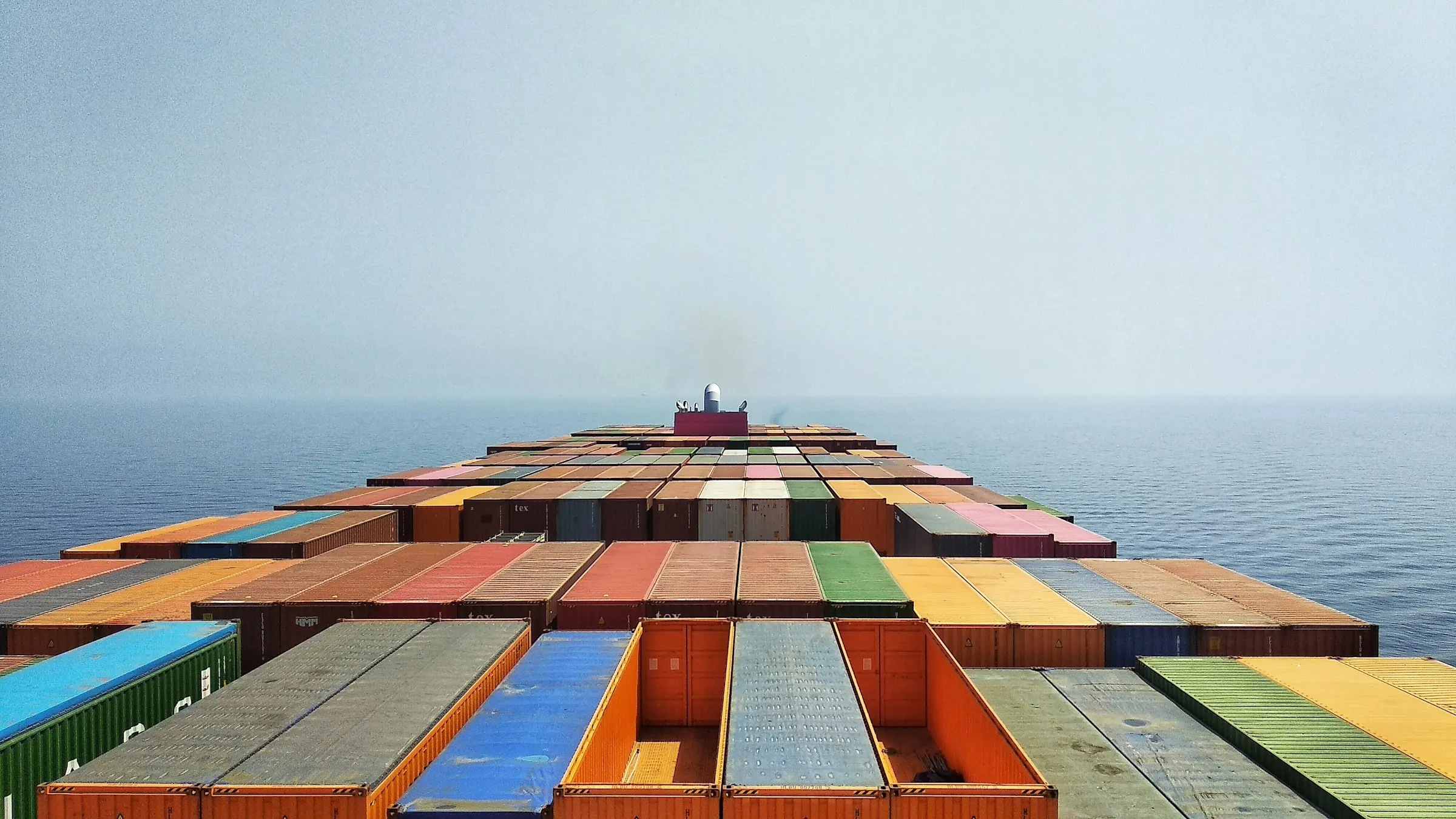
Three ports handle most of Pakistan's maritime trade. Port Qasim, about 28 miles southeast of Karachi according to its port authority, site accessed 27 September 2026, operates 18 berths with an annual capacity of 89 million tonnes and claims over 52% of the country's imports and exports, making it the most likely entry point for a container from South China. Karachi Port, the older facility, remains the second-largest port complex, with no recent statistic isolating its share of traffic. Gwadar, on the Arabian Sea in Balochistan, is presented by its authority, same access date, as the third deep-water port and the gateway to the CPEC corridor, oriented toward regional transshipment rather than routine imports.
From southern China, a container most often departs from Guangzhou, Shenzhen or Yantian; no single, verifiable transit time to Karachi or Port Qasim was found, so ask your freight forwarder at the time of booking. FOB from South China suits an importer who arranges their own transport, CIF or CFR if the supplier handles it up to the port, and DDP remains inadvisable as long as the Chinese seller is not itself a licensed customs declarant in Pakistan, which remains rare.
Přečtěte si také Incoterm FOB: význam, povinnosti a cena (Incoterms 2020) · Námořní přeprava z Číny: FCL nebo LCL, náklady, doba dodání
Payment, the steps of an order and what Sorva does for you
On payment, standard practice with a Chinese factory remains a deposit on order followed by a balance before shipment, paid exclusively into the Chinese company's business account, never a personal account: a change of bank details received by email should always be verified by a direct phone call before any transfer. The arrangements for paying in foreign currency through Pakistan's banking system could not be confirmed for this research, so check with your bank.
A first order follows a stable sequence: specifications, factory verification, sample approval, proforma invoice with the chosen Incoterm, agreed payment method, production follow-up, pre-shipment inspection, gathering of documents, filing the declaration on the Pakistan Single Window, then arrival at the port and customs clearance by the importer or their local customs agent, duties and taxes included.
Sorva is a sourcing and trading house based in Guangzhou, in the Tianhe district, backed by a Chinese subsidiary whose business scope covers the purchase, resale and export of goods, and by a parent company in France. Our Chinese-speaking team finds and verifies factories, arranges visits and samples, negotiates terms, has quality checked before loading and organises freight to the chosen Pakistani port. We never act as the official importer of record in Pakistan, we do not clear customs there, and we do not export vehicles ourselves without going through a licensed Chinese exporter. Our base service is invoiced in US dollars, with optional zone add-ons quoted separately, including support with PSQCA certification.
Přečtěte si také Platba čínskému dodavateli: bankovní převod, akreditiv · První dovoz: deset kroků a chyby, které draze stojí
Keep in mind that in Pakistan, the free trade agreement with China and the choice of port, Port Qasim leading with more than half of national traffic, weigh on your timeline as much as any customs duty, and that the exact rates change often enough to need reconfirming before every order. First step: check whether your product appears on the list of items requiring mandatory PSQCA certification before starting production.
Dovážíte z Číny?
Řekněte nám, co chcete koupit. Náš tým odpoví na WhatsApp a uvede továrny, termíny a dokumenty, které vyžaduje vaše země.
Časté otázky
01Does Pakistan have a free trade agreement with China?
02What documents are needed to clear an import shipment from China into Pakistan?
03What is PSQCA certification and when is it mandatory?
04Which port should I choose for a container from South China?
05How do I pay a Chinese supplier safely for an order shipped to Pakistan?
06What customs duties and taxes are payable on arrival in Pakistan?
07Can Sorva clear my goods through customs in Pakistan?
08How long does an import from South China to Pakistan take?
Co se mění právě teď
- Chine · Fiscalité export
Čína: vratka DPH při vývozu zaniká pro 271 kategorií výrobků
Od 1. dubna 2026 Čína zrušila vratku DPH při vývozu pro 249 kategorií výrobků a snížila vratku pro baterie z 9 % na 6 %. Opatření se týká zejména PVC, skla, keramiky, fotovoltaických článků a elektronických cigaret a automaticky zdražuje cenu ze závodu pro každého kupujícího, v Asii a Tichomoří i jinde.
Číst článek - Australie · Biosécurité
Austrálie: zvýšení dovozních poplatků za biologickou bezpečnost od 1. července 2026
Od 1. července 2026 australské ministerstvo zemědělství, rybolovu a lesnictví (DAFF) zvýšilo poplatky za úhradu nákladů na biologickou bezpečnost uplatňované u každého úplného dovozního prohlášení, a to na 48 australských dolarů za leteckou přepravu a 71 dolarů za námořní přepravu. Rovněž se zvyšují poplatky za zpracování samotného prohlášení.
Číst článek - Kazakhstan · Douane en ligne
Eurasijská unie: vlastní celní režim pro internetový obchod od července 2026
Rada Euroasijské hospodářské komise schválila novou kapitolu Celního kodexu Euroasijské hospodářské unie (EAEU), která vytváří zvláštní režim pro přeshraniční internetový obchod, s oznámeným nabytím účinnosti k 1. červenci 2026. Kazachstán, poslední z pěti členských států, který text ratifikoval, tak učinil v prosinci 2025, zatímco Arménie, rovněž člen unie, mu bude podléhat za stejných podmínek.
Číst článek
Odpovídající služba
- ProvizeProvize z objemuOtevřete spis, my najdeme a vyjednáme továrnu. Jsme placeni pouze za zboží, které objednáte.150 €poplatek za otevření spisuZobrazit službu
- Projektová kancelářStudie regulační shodyCo musí váš produkt splňovat v cílové zemi, písemně a s uvedením zdrojů, ještě před první objednávkou.390 €za produkt a cílovou zemiZobrazit službu
- JednotlivěKontrola před nakládkouMnožství, balení, označení, stav kontejneru, fotografická zpráva, než zboží odejde.229 €za nakládkuZobrazit službu