
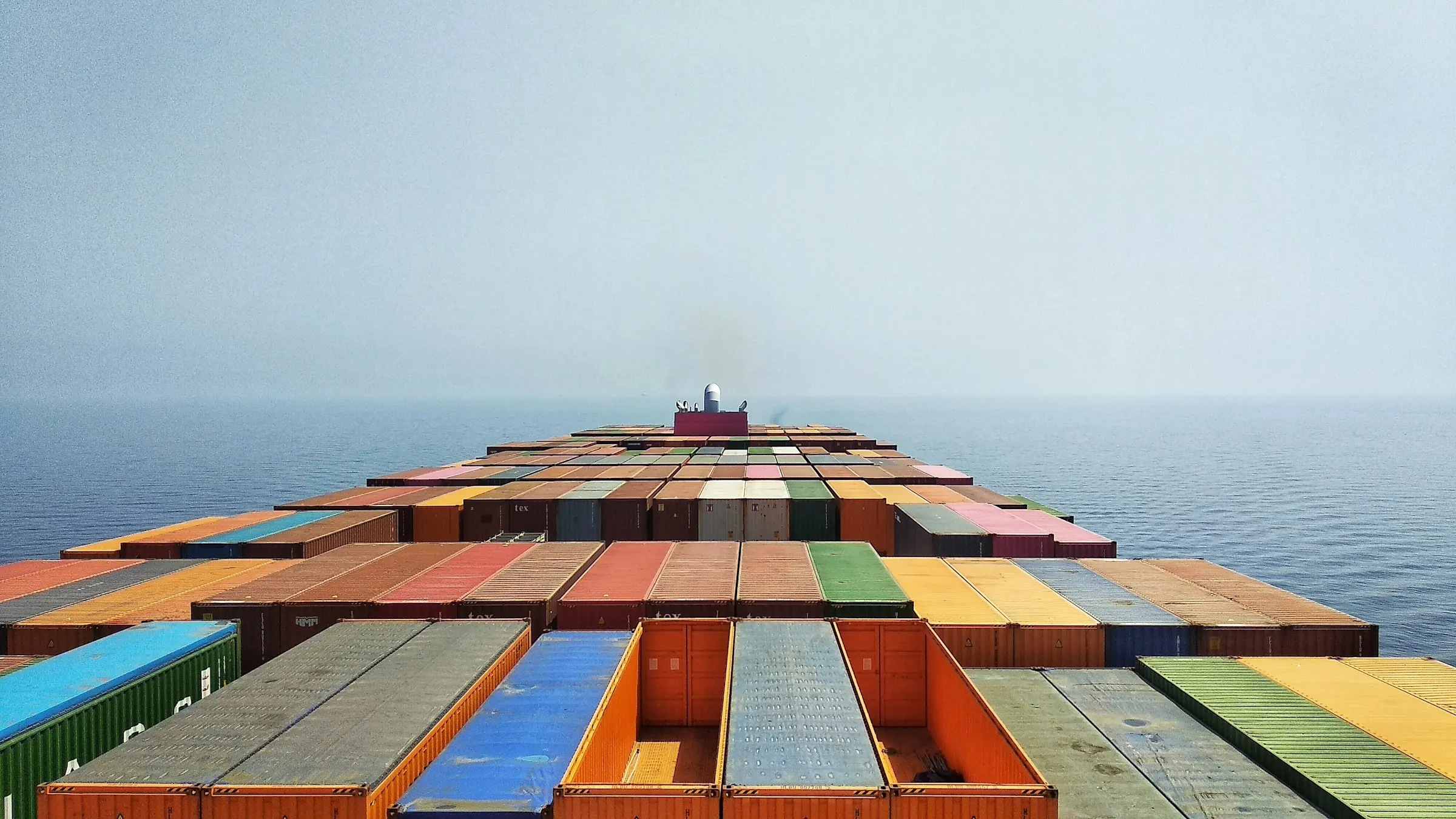
Importing From China to the US: Customs, Tariffs and Standards in 2026
Importing from China to the United States in 2026 means stacking three layers of rules: a generally low base customs tariff, China specific surtaxes that have become unstable since 2018, and federal agencies, CBP, FDA, FCC, CPSC, each stepping in on a different part of the product. This article brings together, with sources, the rates, documents and steps useful to a US importer, as of September 27, 2026.
What the United States imports from China: promising niches and sales channels
The United States remains one of the largest markets worldwide for merchandise shipped directly from Chinese factories and resold through Amazon or a Shopify store rather than in physical stores. Consumer electronics, small appliances, furniture, toys, sporting goods, and textiles and apparel still dominate our American clients' orders, with a growing share for smart home products.
The base customs tariff remains, on average, one of the lowest in the world for these product families: it is the China specific surtax that makes the real difference in cost (WTO, ITC and UNCTAD, World Tariff Profiles 2026, 2025 data, wto.org, accessed September 27, 2026).
- Electrical and electronics: average MFN duty 1.2%, cap 15%
- Machinery and computing: average MFN duty 1.3%, cap 10%
- Transport equipment: average MFN duty 3.4%, cap 25%
- Textiles: average MFN duty 7.9%, cap 25%; apparel: average MFN duty 11.7%, cap 32%
Читайте также Импорт электроники из Китая: Шэньчжэнь, соответствие, фрахт
Trade and customs relations between the United States and China
China, a WTO member since December 11, 2001, in principle benefits from most favored nation treatment in the United States. Since 2018, this baseline treatment has been overlaid with China specific surtaxes: the USTR's Section 301 lists, covering 34, 16, 200 and 300 billion dollars of Chinese products (ustr.gov, Section 301 tariff actions, accessed September 27, 2026), followed since 2025 by measures based on the IEEPA law.
This framework has changed several times in 2026, with the latest US China announcement lacking final figures predating the writing of this article. No combined rate can be taken for granted as of September 27, 2026: it must be verified with the USTR, CBP, or a licensed customs broker before placing an order.
Читайте также Антидемпинговые пошлины на Китай: как узнать, касаются ли они вас
Customs duties, surtaxes and federal fees: how to calculate them
The United States' simple average MFN tariff stood at 3.3% across all products in 2025, 3.1% for non agricultural goods (WTO, World Tariff Profiles 2026, 2025 data). It is calculated on the transaction value of the product, generally the ex works or FOB price, excluding freight and insurance billed separately: unlike many countries, the United States does not assess duty on a CIF basis. There is no federal import VAT; some states levy a sales tax on resale, unrelated to customs clearance.
Two fixed federal fees apply to most commercial entries: the Merchandise Processing Fee, 0.3464% of value, between 33.58 and 651.50 dollars for a formal entry, or a flat 2.69, 8.06 or 12.09 dollars for an informal entry; the Harbor Maintenance Fee, 0.125% of value for any ocean shipment (CBP, user fee table, cbp.gov, accessed September 27, 2026).
Example for an ocean shipment of small electronic appliances with a customs value of 20,000 dollars, base MFN duty at 1.2%: 240 dollars in duty, 69.28 dollars Merchandise Processing Fee, 25 dollars Harbor Maintenance Fee, for a total of 20,334.28 dollars before any Section 301 surtax, IEEPA measure or antidumping duty specific to the product code, to be added once the current rate is confirmed.
- HTS code (hts.usitc.gov): base MFN duty and any applicable Section 301 surtax
- Section 301 surtax: varies by tariff line, verify on ustr.gov
- Merchandise Processing Fee: 0.3464%, from 33.58 to 651.50 dollars for a formal entry
- Harbor Maintenance Fee: 0.125% for any ocean shipment
- Antidumping or countervailing duties: specific to certain products, verify before ordering
Читайте также Таможенная стоимость и расчёт пошлин: база, корректировки, ставки · Таможенный код ТН ВЭД, КН, TARIC: как найти нужный код
Required documents and customs clearance steps
CBP does not require a general import license: the importer identifies itself with its federal Employer Identification Number or, failing that, its Social Security number (CBP, tips for new importers, cbp.gov, accessed September 27, 2026). For an ocean shipment, the Importer Security Filing, known as the 10+2 rule, must be filed before the vessel is loaded in China, or the importer risks a penalty and a held container.
The entry must be filed within 15 days of arrival, followed by CBP Form 7501 and payment of duties within 10 days of release (CBP, entry summary, cbp.gov, accessed September 27, 2026). A customs bond is most often obtained through a licensed customs broker, not mandatory but recommended as soon as the product gets more complex.
- Commercial invoice: description, quantity, transaction value
- Packing list with HTS code per item
- Ocean bill of lading or air waybill
- Importer Security Filing (10+2), before loading, ocean shipments
- Entry summary CBP Form 7501 and duty payment, within the set deadlines
- Customs bond through a customs broker
Читайте также Коммерческий счёт-фактура при импорте: обязательные реквизиты · Упаковочный лист (packing list): определение и содержание
Standards, certifications, inspections, and prohibited or licensed products
Depending on the product, one or more agencies get involved besides CBP. The FDA covers food, cosmetics and medical devices, with facility registration and prior notice of the shipment; the FCC regulates radiofrequency devices, Wi-Fi, Bluetooth and remote controls, which must carry a valid equipment authorization before import; APHIS issues permits for any product of plant or animal origin. The CPSC requires a written certificate of compliance, a General Certificate of Conformity, and a Children's Product Certificate based on testing by a CPSC accepted laboratory for any product intended for children, toys included (CPSC, certificates of compliance, cpsc.gov, accessed September 27, 2026).
The 2021 Uyghur Forced Labor Prevention Act creates a rebuttable presumption: any merchandise manufactured in whole or in part in the Xinjiang region is presumed linked to forced labor and refused entry, unless the importer provides clear and convincing evidence tracing the entire supply chain (CBP, UFLPA page, cbp.gov, accessed September 27, 2026). Cotton, polysilicon and certain agricultural products remain particularly closely monitored sectors.
Читайте также Техническое досье товара: что обязан иметь импортер
Ports, freight from Southern China, incoterms and payment
The Los Angeles and Long Beach complex receives most container traffic from Southern China; Los Angeles describes itself as the leading container port in North America (Port of Los Angeles, portoflosangeles.org, accessed September 27, 2026). Savannah and the New York and New Jersey complex absorb a growing share of the same flows via the Panama Canal. No verifiable transit time from Guangzhou, Shenzhen or Yantian was found: ask your freight forwarder for one.
FOB Southern China remains the safest incoterm for a first order, with the buyer arranging transport and the entry in its own name. DDP remains inadvisable as long as the Chinese seller cannot act as the official importer of record registered with CBP, which remains rare.
On payment, common practice remains a deposit at order confirmation followed by a balance before shipment, paid to the Chinese company's business account, never a personal account: a change of bank details received by email should be verified with a direct phone call before any transfer, since this type of fraud remains common in China sourcing.
Читайте также Инкотермс FOB: значение, обязательства и цена (Инкотермс 2020) · Морской фрахт из Китая: FCL или LCL, стоимость, сроки и порог выбора
Steps of a first order and what Sorva does for you
A first order follows a precise sequence: specifications, factory verification, approved sample, HTS classification, FDA, FCC or CPSC verification depending on the product, proforma invoice with the chosen incoterm, production follow up, pre shipment inspection, Importer Security Filing, freight to the chosen port, then customs clearance by the client or its customs broker.
Sorva is a sourcing and trading house based in Guangzhou, in the Tianhe district, backed by a Chinese subsidiary whose corporate purpose covers the purchase, resale and export of goods, and by a parent company in France. Our Chinese speaking team finds and verifies factories, organizes visits and samples, negotiates, has quality checked before loading and arranges freight to the chosen US port, while gathering the documents useful for your compliance file. We never act as the official importer of record in the United States, do not clear customs locally, and do not export vehicles ourselves without going through a licensed Chinese exporter. Our base offer is invoiced in dollars, with regional options quoted separately on request.
Читайте также Как платить китайскому поставщику: перевод, аккредитив · Найти надёжного китайского поставщика: метод и проверки
The key point: in the United States, the base customs duty stays low, but the China specific surtax changes several times a year and makes the whole difference in cost, so no combined rate should be taken for granted without checking it at order time. First step: classify your product under the correct HTS code and check the applicable Section 301 or IEEPA surtax before negotiating a price with the factory.
Вы импортируете из Китая?
Расскажите нам, что вы хотите купить. Наша команда ответит в WhatsApp с заводами, сроками и документами, которые требует ваша страна.
Частые вопросы
01What customs duties apply when importing from China to the United States in 2026?
02Does the de minimis exemption still exist for Chinese parcels?
03Is a customs broker mandatory to import into the United States?
04What is the Importer Security Filing, or 10+2 rule?
05Does an electronic device imported from China need FCC authorization?
06Which Chinese products risk being blocked from entering the United States?
07Can Sorva clear my goods through customs on arrival in the United States?
Что меняется прямо сейчас
- États-Unis · Droits de douane
США и Китай снижают пошлины на товары на 30 миллиардов долларов
По итогам визита председателя КНР Си Цзиньпина в Вашингтон 26 сентября 2026 года обе страны объявили о взаимном снижении пошлин на торговлю объёмом около 30 миллиардов долларов. Подробная тарифная сетка, позиция за позицией, на данный момент ещё не опубликована.
Читать статью - États-Unis · Douane
США: льгота de minimis в 800 долларов больше не действует для Китая
Таможенная льгота в 800 долларов, освобождавшая мелкие отправления от пошлин и подробной декларации, была приостановлена для Китая и Гонконга уже в мае 2025 года, затем для остального мира, после чего правило от 24 июня 2026 года формально закрепило бессрочную приостановку для отправлений, прибывающих любым способом, кроме международной почтовой сети. Теперь любое коммерческое отправление, независимо от суммы, должно оформляться таможенной декларацией и облагаться обычными пошлинами.
Читать статью - Chine · Contrôle des exportations
Китай: новые экспортные ограничения на редкоземельные металлы в отношении американских компаний
В июне 2026 года Китай добавил около десяти американских организаций, включая производителей редкоземельных металлов и магнитов, в свой экспортный контрольный список, немедленно запретив с 22 июня 2026 года китайский экспорт товаров двойного назначения в адрес этих организаций. Эта мера дополняет систему лицензирования, действующую с апреля 2025 года, которая уже ограничивает китайский экспорт семи редкоземельных элементов.
Читать статью
Сертификации, которые требует ваша страна
В долларах, по индивидуальному расчёту, добавляются к одной и той же базовой услуге.
США · FCC, CPSC, FDA Соответствие требованиям США
По запросуIn US dollars
Разрешение FCC для электроники, сертификаты соответствия CPSC для потребительских товаров и детской продукции, регистрация FDA для продуктов питания и медицинских изделий: мы готовим документы со стороны поставщика, официальным импортёром остаётесь вы.
- Определение федеральных правил, применимых к вашему товару
- Протоколы испытаний, полученные от завода, при необходимости от признанной лаборатории
- Проект сертификата соответствия и маркировки на утверждение
- Информация о поставщике, готовая для ваших импортных деклараций
Подходящая услуга
- КомиссияКомиссия с объёмаВы открываете дело, мы находим и ведём переговоры с заводом. Мы получаем оплату только с товара, который вы заказываете.150 €расходы на открытие делаСмотреть услугу
- Инженерное бюроЭкспертиза нормативного соответствияТребования, которым должен соответствовать ваш товар в стране назначения, изложенные письменно со ссылками на источники, до первого заказа.390 €за товар и за страну назначенияСмотреть услугу
- Разовая услугаКонтроль перед погрузкойКоличество, упаковка, маркировка, состояние контейнера, фотоотчёт, до отправки товара.229 €за погрузкуСмотреть услугу