
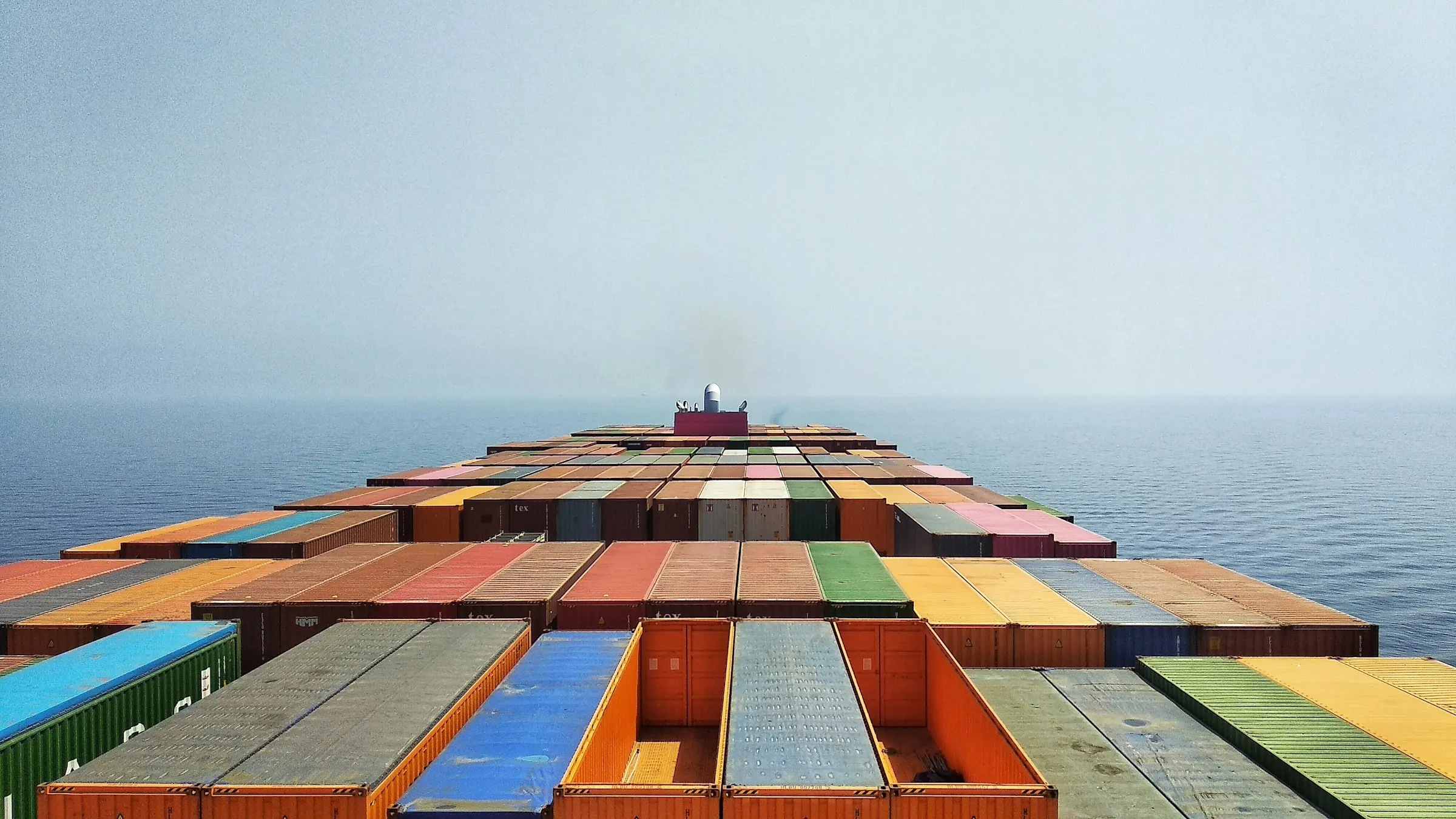
Importing from China to Singapore: Customs, GST and Logistics Hub 2026
Singapore imports from China under a distinctive setup: a free port with customs duties close to zero on almost every tariff line, but a 9% GST that applies systematically. This article gathers, with sources, the rates, documents and procedures useful to an importer based in Singapore, as of September 27, 2026.
What Singapore Imports from China, and the Niches of a Re-export Hub
Singapore imported 452.9 billion dollars of goods in 2024, including 436.6 billion excluding agriculture, with 100% of non-agricultural tariff lines applied at zero duty (WTO, ITC, UNCTAD, World Tariff Profiles 2026, 2024 data, accessed September 27, 2026). The country functions less as a closed consumer market than as a regional transit point: its port handled a record 44.66 million TEUs in 2025, up 8.6% year on year, and remains the world's busiest container transshipment hub (Maritime and Port Authority of Singapore; Singapore's Ministry of Transport, accessed September 27, 2026).
These figures cover all countries of origin combined: the exact share of China by product category has no verifiable official breakdown, to be confirmed with Singapore's Department of Statistics.
- Electrical machinery and electronics: 31.8% of non-agricultural imports
- Mechanical machinery, office and computing equipment: 18.2%
- Minerals and metals: 10.9%
- Chemical products: 7.4%
- Transport equipment: 3.4% (all duty-free, WTO, 2024 data)
Singapore and China: WTO Status, Bilateral Agreement and RCEP
Singapore has been a WTO member since 1995, with bound coverage of 72.0% of its tariff lines overall and 67.3% for non-agricultural products (WTO, World Tariff Profiles 2026). The US government's trade guide confirms a bilateral free trade agreement with China, and Singapore's participation in the Regional Comprehensive Economic Partnership, linking ASEAN with China, Japan, South Korea, Australia and New Zealand (trade.gov, accessed September 27, 2026).
This China-Singapore Free Trade Agreement entered into force on January 1, 2009, with an upgrade protocol applicable since December 31, 2024 (Singapore's Ministry of Trade and Industry). Its line-by-line preferences still need to be checked with Enterprise Singapore for a given product: in practice, the gap with the general regime remains narrow, since nearly all tariff lines are already duty-free, agreement or not.
Loe ka Hiina päritolusertifikaat: milleks see on ja millal seda nõutakse
Customs Duties and GST on Import: Rates and a Worked Example
Singapore applies a zero customs duty, on simple average, on nearly all its non-agricultural tariff lines in 2025, a free port under most-favoured-nation treatment (trade.gov; WTO, World Tariff Profiles 2026, accessed September 27, 2026). Only four categories remain subject to excise duty, for social or environmental reasons: distilled spirits and wine, tobacco, motor vehicles, petroleum products (trade.gov). The exact rates, per litre of pure alcohol or by engine capacity, need to be checked product by product with Singapore Customs before placing any order.
GST has stood at 9% since January 1, 2024, on the import of goods as on most local supplies (IRAS, iras.gov.sg; trade.gov, accessed September 27, 2026). Example on a customs value of 50,000 Singapore dollars for a shipment not subject to excise duty: zero duty, a GST base of 50,000 Singapore dollars, GST at 9%, or 4,500 Singapore dollars due on clearance. For a product subject to excise duty, the duty is added to the customs value first, with GST then calculated on this increased total.
Loe ka Tolliväärtus ja tollimaksude arvutamine: alus, kohandused, määrad · Impordikäibemaks ja pöördmaksustamine: kuidas see toimib Prantsusmaal
Mandatory Documents to Import and Clear Goods Through Customs
Any goods imported into Singapore require a permit, obtained through the national electronic system, a largely automated formality for most uncontrolled products (trade.gov; customs.gov.sg, accessed September 27, 2026). The importer must hold a Unique Entity Number and open a Singapore Customs account before filing any declaration.
- Commercial or proforma invoice, with description, quantity and value
- Packing list detailing weight and packing method
- Ocean bill of lading or air waybill
- Certificate of origin
- Value documents, including freight and insurance, to establish the customs value
- Import permit obtained before the goods arrive
- Bona fide commercial samples under 300 US dollars: exempt from duty, GST and permits, when used to solicit orders or for testing (trade.gov)
Loe ka Impordi kaubaarve: tollile kohustuslikud andmed · Packing list (pakkeleht): definitsioon, kohustuslik sisu
Standards, Certifications and Pre-shipment Control Bodies
Enterprise Singapore coordinates the national framework: the Singapore Standards Council develops standards through twelve sector committees, including electronics and food, while the Singapore Accreditation Council accredits testing, inspection and certification bodies (trade.gov, accessed September 27, 2026). Singapore recognizes, through ILAC, IAF and APAC, test reports from accredited foreign bodies carrying the corresponding marks.
Some product families fall additionally under a sector regulator: the Consumer Product Safety Office for household electrical and gas appliances, the Health Sciences Authority for medical devices, the Info-communications Media Development Authority for telecommunications equipment, the Singapore Food Agency for food products (trade.gov). No schedule of costs or timelines was found for these approvals: to be checked with each body before any production run.
Loe ka Toote tehniline toimik: mida importija peab omama · Elektroonika import Hiinast: LVD, EMC, RoHS, WEEE
Prohibited or Licence-controlled Products
Several product families require a licence before entering Singapore: strategic dual-use goods, hazardous chemicals, radioactive materials, films and video games, weapons and ammunition, agricultural biotechnology, medical devices, medicines, high-dose vitamins, cosmetics (trade.gov, accessed September 27, 2026). Outright prohibited: weapon-shaped lighters, firecrackers, handcuffs, spent cartridge cases and silencers.
Singapore Customs also runs three cross-cutting frameworks: chemicals under the Chemical Weapons Convention, strategic dual-use goods, and restrictions arising from United Nations Security Council sanctions (customs.gov.sg, accessed September 27, 2026). Restrictions on chewing gum or e-cigarettes are reported but not verified here against a primary official source: to be confirmed by Harmonized System code before placing any order.
Loe ka Tollikood SH, NC, TARIC: õige koodi leidmine ja miks see loeb
Ports, Routes from Southern China and Recommended Incoterms
The Port of Singapore handled 44.66 million TEUs in 2025, up 8.6% year on year, with a record gross tonnage of 3.22 billion tonnes of vessels arrived, up 3.5% (MPA, accessed September 27, 2026). From Guangzhou, Shenzhen or Yantian, regular lines serve Singapore: no single, verifiable transit time was found, to be requested from your freight forwarder at the time of booking. Air freight remains reserved for urgent or low-volume shipments.
Goods deposited in a customs-bonded free trade zone in Singapore are not considered imported: duty and GST stay suspended as long as the goods are neither consumed locally nor released onto the local market, which eases transshipment toward ASEAN (Singapore Customs, accessed September 27, 2026). FOB southern China works if the buyer arranges transport; CIF or CFR when an intermediary handles it through to the Singapore port; DDP should be used with caution unless the seller holds an active customs account in Singapore.
Loe ka Incoterm FOB: tähendus, kohustused ja hind (Incoterms 2020) · Meretransport Hiinast: FCL või LCL, kulud, tähtajad
Payment, Steps for a First Order and What Sorva Does for You
On payment, common practice remains a deposit at order, followed by a balance before shipment, paid exclusively into the Chinese company's business account, never a personal account: a change of bank details received by email should be verified with a direct phone call before any transfer, as this fraud remains common in sourcing from China. Currency risk stays secondary to supplier risk for a first order.
A first order follows a precise sequence: specifications, factory verification, approved sample, proforma invoice with the chosen incoterm, permit filed through the national electronic system, production follow-up, pre-shipment inspection, freight to the chosen port, then customs clearance and GST paid by the client or their local freight forwarder.
Sorva is a sourcing and trading house based in Guangzhou, in the Tianhe district, backed by a Chinese subsidiary whose business scope covers the purchase, resale and export of goods, and by a French parent company. Our Chinese-speaking team researches and verifies factories, arranges visits and samples, negotiates, has quality checked before loading and organizes freight to the chosen Singapore port, gathering the documents useful for your compliance file. We never act as the official importer of record in Singapore, do not clear goods through customs on-site, and do not export vehicles without a licensed Chinese exporter. Our base offer is priced in dollars, with zone options quoted on request.
Loe ka Hiina tarnijale maksmine: pangaülekanne, akreditiiv · Esimene import: kümme sammu ja vead, mis lähevad kalliks
Keep in mind that in Singapore, the customs duty is zero for nearly all manufactured goods from China, but the 9% GST applies from clearance onward. First step: check whether your product falls under one of the four excise categories or a sector approval, before starting production.
Impordite Hiinast?
Öelge meile, mida soovite osta. Meie meeskond vastab WhatsAppis, koos tehaste, tähtaegade ja dokumentidega, mida teie riik nõuab.
Korduma kippuvad küsimused
01What is the GST rate on an import from China to Singapore?
02Do I need to pay customs duties to import from China to Singapore?
03Is there a free trade agreement between China and Singapore?
04What documents are needed to clear goods from China through customs in Singapore?
05Does a Chinese electronic product need certification before entering Singapore?
06Why is Singapore a hub for re-exporting to ASEAN?
07Can Sorva clear my goods through customs on arrival in Singapore?
Mis praegu muutub
- Chine · Fiscalité export
Hiina: käibemaksu tagastamine ekspordil kaob 271 tootekategoorialt
Alates 1. aprillist 2026 on Hiina kaotanud käibemaksu tagastamise ekspordil 249 tootekategoorialt ja vähendanud akude oma 9%-lt 6%-le. Meede mõjutab eelkõige PVC-d, klaasi, keraamikat, fotogalvaanilisi elemente ja e-sigarette ning tõstab mehaaniliselt tehasehinda igale ostjale, nii Aasia ja Vaikse ookeani piirkonnas kui mujal.
Loe artiklit - Australie · Biosécurité
Austraalia: bioturvalisuse tasude tõus impordil alates 1. juulist 2026
Alates 1. juulist 2026 on Austraalia põllumajandus-, kalandus- ja metsandusministeerium (DAFF) tõstnud iga täieliku impordideklaratsiooni kohta kohaldatavat bioturvalisuse kulude sissenõudmise tasu 48 Austraalia dollarini õhuveose ja 71 dollarini mereveose puhul. Tõuseb ka deklaratsiooni enda menetlustasu.
Loe artiklit - Kazakhstan · Douane en ligne
Euraasia Liit: e-kaubandusele oma tollikord alates juulist 2026
Euraasia Majanduskomisjoni nõukogu kiitis heaks Euraasia Majandusliidu (EAEU) tolliseadustiku uue peatüki, millega luuakse piiriülesele e-kaubandusele eraldi kord, mille jõustumine on teatatud 1. juulil 2026. Kasahstan, viimane viiest liikmesriigist, kes selle teksti ratifitseeris, tegi seda 2025. aasta detsembris, samal ajal kui Armeenia, samuti liidu liige, allub sellele samadel tingimustel.
Loe artiklit
Sobiv teenus
- KomisjonitasuMahukomisjonTe avate toimiku, meie leiame ja peame läbirääkimisi tehasega. Meile makstakse ainult kauba eest, mille te tellite.150 €toimiku avamise tasuVaata teenust
- Ühiku kohtaTarnijate otsing · täielikKvalifitseeritud tehased, konkureerivad teie spetsifikatsioonide alusel, koos proovide ja kontrolliga enne saatmist.279 €toote kohtaVaata teenust
- ÜhikunaKontroll enne laadimistKogused, pakend, märgistus, konteineri seisukord, fotoreportaaž, enne kui kaup lahkub.229 €laadimise kohtaVaata teenust