
Importing from China to South Korea: customs, VAT and FTA in 2026
Importing from China to South Korea means dealing with a free trade agreement in force since 2015, a 10% VAT, the national KC marking, and Busan as the region's first port of transshipment. This article brings together, with sources cited, the rates, documents and procedures useful to a Korean importer, as of 27 September 2026.
What South Korea imports from China, and the most promising niches
South Korea buys a wide range of intermediate and consumer goods from China: electronic components, industrial machinery and parts, textiles, toys, furniture, pet products and sporting goods. Two reference points shape any import project: the China-Korea free trade agreement, in force since 20 December 2015 (Ministry of Trade, Industry and Energy, official FTA portal, accessed 27 September 2026), and the national KC marking, required on a large share of electrical and electronic products.
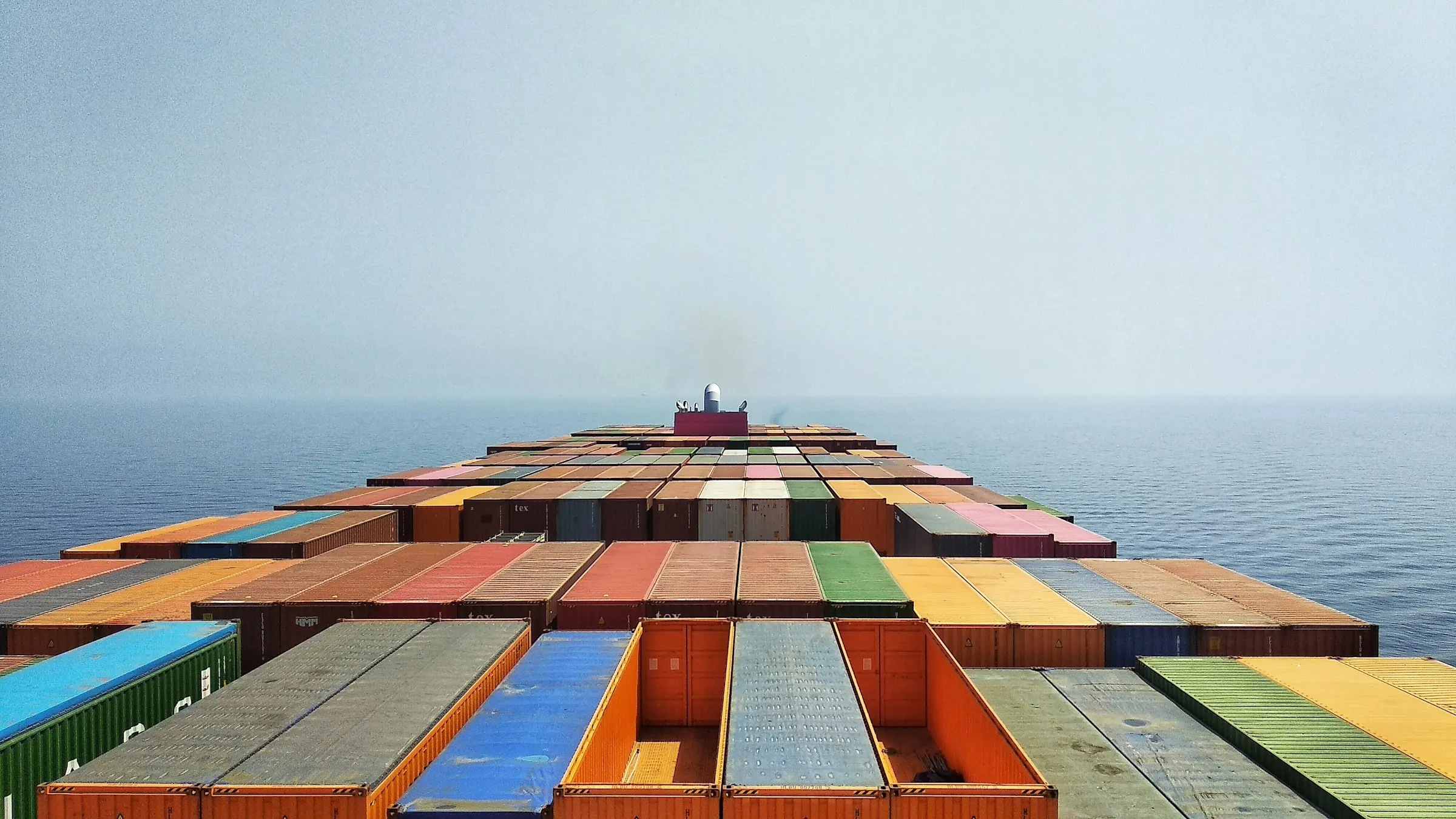
The port of Busan, described by its port authority as the world's second-largest transshipment port, remains the most direct maritime gateway from southern China (Busan Port Authority, accessed 27 September 2026). Whichever resale channel is chosen makes no difference to customs and compliance obligations, which remain the importer's.
- Electronic components and parts
- Industrial machinery and equipment
- Textiles and apparel
- Toys and furniture
- Sporting goods and pet products
Prečítajte si tiež Glosár sourcingu v Číne: rokovanie, objednávanie a platba továrni
Trade agreements and customs relations with China
The free trade agreement between South Korea and China entered into force on 20 December 2015 (Ministry of Trade, Industry and Energy, fta.motir.go.kr, accessed 27 September 2026). Its tariff schedules set a line-by-line duty reduction timetable under the Harmonized System (fta.mofcom.gov.cn, accessed 27 September 2026). South Korea has implemented 21 free trade agreements in total, including this one (trade.gov, accessed 27 September 2026). The precise schedule could not be fully verified here: not every tariff line reaches zero, some categories remain excluded or subject to quota, and each code must be checked individually in the Korea Customs Service tariff database.
Prečítajte si tiež Certifikát pôvodu z Číny: na čo slúži a kedy sa vyžaduje
Customs duties and import taxes: rates and a worked example
South Korea applies a flat 10% VAT on almost all imports (trade.gov, accessed 27 September 2026). A special consumption tax of 10 to 20% is added on certain luxury items and durable goods, to be checked product by product. Duties are calculated on a CIF basis, using the transaction value method, and are payable in won within fifteen days of customs clearance. As a general benchmark, not specific to China: South Korea's average tariff stands at 5.80% (simple average) and 5.82% (trade-weighted average) across all lines, 2023 data (World Bank, WITS, accessed 27 September 2026), which does not replace the exact rate for a specific code.
Example, for a product not subject to the special tax, shipped from Guangzhou with a customs value of 10,000 dollars: if the tariff line is at zero under the China-Korea agreement with a valid certificate of origin, the duty is nil and the 10% VAT applies to the full 10,000 dollars, i.e. 1,000 dollars due. For a luxury or durable good, the special consumption tax is added first to the customs value and any duty, before VAT.
Prečítajte si tiež Colná hodnota a výpočet cla: základ, úpravy, sadzba · DPH pri dovoze a samovyrubenie: ako to funguje vo Francúzsku
Documents required to clear customs in South Korea
The US government's trade guide lists the documents commonly required for customs clearance, regardless of origin (trade.gov, accessed 27 September 2026). The manufacturer must keep supporting proof of origin for five years, and the declaration is filed in Korean. For a shipment sold online to a private individual, the Korea Customs Service requires a personal customs clearance code, regardless of value (trade.gov, e-commerce section, published 29 June 2026, accessed 27 September 2026).
A 250 dollar de minimis threshold per shipment exists for express couriers, but only for US goods under the Korea-US agreement: it does not apply to Chinese goods, and the general threshold for a parcel from China could not be confirmed here, to be checked on the Korea Customs Service's Unipass portal.
- Commercial invoice, one original and two copies
- Certificate of origin if China-Korea preferential treatment is sought
- Packing lists, two copies
- Bill of lading or air waybill
- Marine insurance depending on the Incoterm
- Import declaration in Korean
- Personal customs clearance code for a shipment to a private individual
Prečítajte si tiež Obchodná faktúra pri dovoze: povinné náležitosti pre colnicu · Packing list (baliaci list): definícia, povinný obsah
Standards, certifications and pre-shipment inspections
A large share of electrical and electronic appliances sold in South Korea carry a national conformity mark, KC. The exact categories covered, costs and lead times could not be verified against a primary source here: confirm with the relevant Korean authority before any production run, as a non-compliant product can be held at customs.
Pharmaceutical products require certification or additional testing; medical devices must be registered with the Ministry of Food and Drug Safety, as must cosmetics (trade.gov, accessed 27 September 2026). These sectors require a technical file and a prior assessment, not a simple after-the-fact declaration.
Prečítajte si tiež Technická dokumentácia výrobku: čo musí dovozca vlastniť · Dovoz elektroniky z Číny: LVD, EMC, RoHS, OEEZ
Prohibited or licence-controlled products
Rice cannot be freely imported into South Korea (trade.gov, accessed 27 September 2026). Pharmaceuticals, medical devices and cosmetics are subject to mandatory registration with the Ministry of Food and Drug Safety before being placed on the market; a product shipped without this registration risks being held at customs.
Beyond these confirmed categories, families such as weapons, certain chemicals, protected species and their derivatives, or counterfeit goods are subject to bans or licensing requirements under most customs regimes, and South Korea is no exception. The full list maintained by the Korea Customs Service could not be reviewed in detail here: each sensitive category should be checked directly with them.
Prečítajte si tiež Colný kód HS, KN, TARIC: ako nájsť správny kód a prečo na ňom záleží
Ports, routes from southern China, Incoterms, payment and fraud
Busan handles most of South Korea's containerised traffic and, according to its port authority, ranks as the world's second-largest transshipment port, with 11.43 million TEU transshipped, or 53% of its total traffic (Busan Port Authority, accessed 27 September 2026). Regular services connect southern China, from Guangzhou, Shenzhen or Hong Kong, to Busan; no single, verifiable transit time was found here, to be confirmed with the freight forwarder. Air freight remains reserved for urgent or low-volume shipments.
FOB from southern China suits buyers who arrange their own transport; CIF or CFR to Busan suits those using an intermediary. DDP should be handled with caution as long as the Chinese seller is not itself liable for Korean VAT, which remains rare. On payment, the usual practice is a deposit followed by a balance before shipment, paid into the Chinese company's business account, never a personal account: a change of bank details received by email should be verified with a direct phone call, as this type of fraud remains common in sourcing from China.
Prečítajte si tiež Incoterm FOB: význam, povinnosti a cena (Incoterms 2020) · Námorná preprava z Číny: FCL alebo LCL, náklady, lehoty a prah prechodu
Steps for a first order, and what Sorva does for you
A first import follows a precise sequence: specifications, factory verification, an approved sample, a proforma invoice with an Incoterm, verification of origin if China-Korea preferential treatment is sought, KC or health compliance depending on the product, pre-shipment inspection, freight to Busan, then customs clearance and VAT paid by the client or their local freight forwarder.
Sorva is a sourcing and trading house based in Guangzhou, in the Tianhe district, backed by a Chinese subsidiary whose corporate purpose covers the purchase, resale and export of goods, and by a parent company in France. Our Chinese-speaking team finds and vets factories, arranges visits and samples, negotiates, has quality checked before loading, and organises freight to the chosen Korean port. We never act as the official importer of record in South Korea, do not clear customs locally, and do not export vehicles without a licensed Chinese exporter. Our base service is invoiced in dollars, with regional options quoted on request.
Prečítajte si tiež Platba čínskemu dodávateľovi: prevod, akreditív · Prvý dovoz: desať krokov a chyby, ktoré draho vyjdú
The key point for South Korea: the China-Korea agreement can bring the duty to zero line by line, but the 10% VAT applies almost always, and KC marking as well as health registrations must be checked before production, not after the goods arrive. First step: identify your product's Harmonized System code and check whether it qualifies for China-Korea preferential treatment, KC marking or MFDS registration.
Dovážate z Číny?
Povedzte nám, čo chcete kúpiť. Náš tím odpovie na WhatsApp a uvedie továrne, termíny a dokumenty, ktoré vyžaduje vaša krajina.
Časté otázky
01What customs duties and taxes apply to importing from China to South Korea?
02Does South Korea have a free trade agreement with China?
03What is the VAT rate on imports from China to South Korea?
04What is the KC marking, and does it apply to a product imported from China?
05What documents are needed to clear goods from China through South Korean customs?
06Is there a duty-free threshold for a small parcel from China?
07Which port should you choose for an import from southern China?
08Can Sorva clear my goods through customs on arrival in South Korea?
Čo sa mení práve teraz
- Chine · Fiscalité export
Čína: vrátenie DPH pri vývoze zaniká pre 271 kategórií produktov
Od 1. apríla 2026 Čína zrušila vrátenie DPH pri vývoze pre 249 kategórií produktov a znížila ho pri batériách z 9 na 6 %. Opatrenie sa týka najmä PVC, skla, keramiky, fotovoltaických článkov a elektronických cigariet a mechanicky zvyšuje cenu tovaru z továrne pre každého kupujúceho, v Ázii a Tichomorí rovnako ako inde.
Čítať článok - Australie · Biosécurité
Austrália: zvýšenie poplatkov za biologickú bezpečnosť pri dovoze od 1. júla 2026
Od 1. júla 2026 austrálske Ministerstvo poľnohospodárstva, rybolovu a lesníctva (DAFF) zvýšilo poplatky za úhradu nákladov na biologickú bezpečnosť uplatňované pri každom úplnom dovoznom vyhlásení, na 48 austrálskych dolárov pre leteckú prepravu a 71 dolárov pre námornú prepravu. Zvyšujú sa aj poplatky za spracovanie samotného vyhlásenia.
Čítať článok - Kazakhstan · Douane en ligne
Eurázijská únia: vlastný colný režim pre online obchod od júla 2026
Rada Eurázijskej hospodárskej komisie schválila novú kapitolu Colného kódexu Eurázijskej hospodárskej únie (EAEU), ktorá vytvára osobitný režim pre cezhraničný online obchod, s oznámeným nadobudnutím účinnosti k 1. júlu 2026. Kazachstan, posledný z piatich členských štátov, ktorý tento text ratifikoval, tak urobil v decembri 2025, zatiaľ čo Arménsko, tiež člen únie, mu bude podliehať za rovnakých podmienok.
Čítať článok
Zodpovedajúca služba
- ProvíziaProvízia z objemuOtvoríte zložku, my nájdeme a vyjednáme podmienky s továrňou. Platíte nám iba z tovaru, ktorý si objednáte.150 €poplatok za otvorenie zložkyZobraziť službu
- Študijné oddelenieŠtúdia regulačnej zhodyČo musí váš produkt spĺňať v cieľovej krajine, písomne a so zdrojmi, pred prvou objednávkou.390 €za produkt a za cieľovú krajinuZobraziť službu
- Na jednotkuKontrola pred naloženímMnožstvá, balenie, označovanie, stav kontajnera, fotodokumentácia, kým tovar odíde.229 €za nákladZobraziť službu