
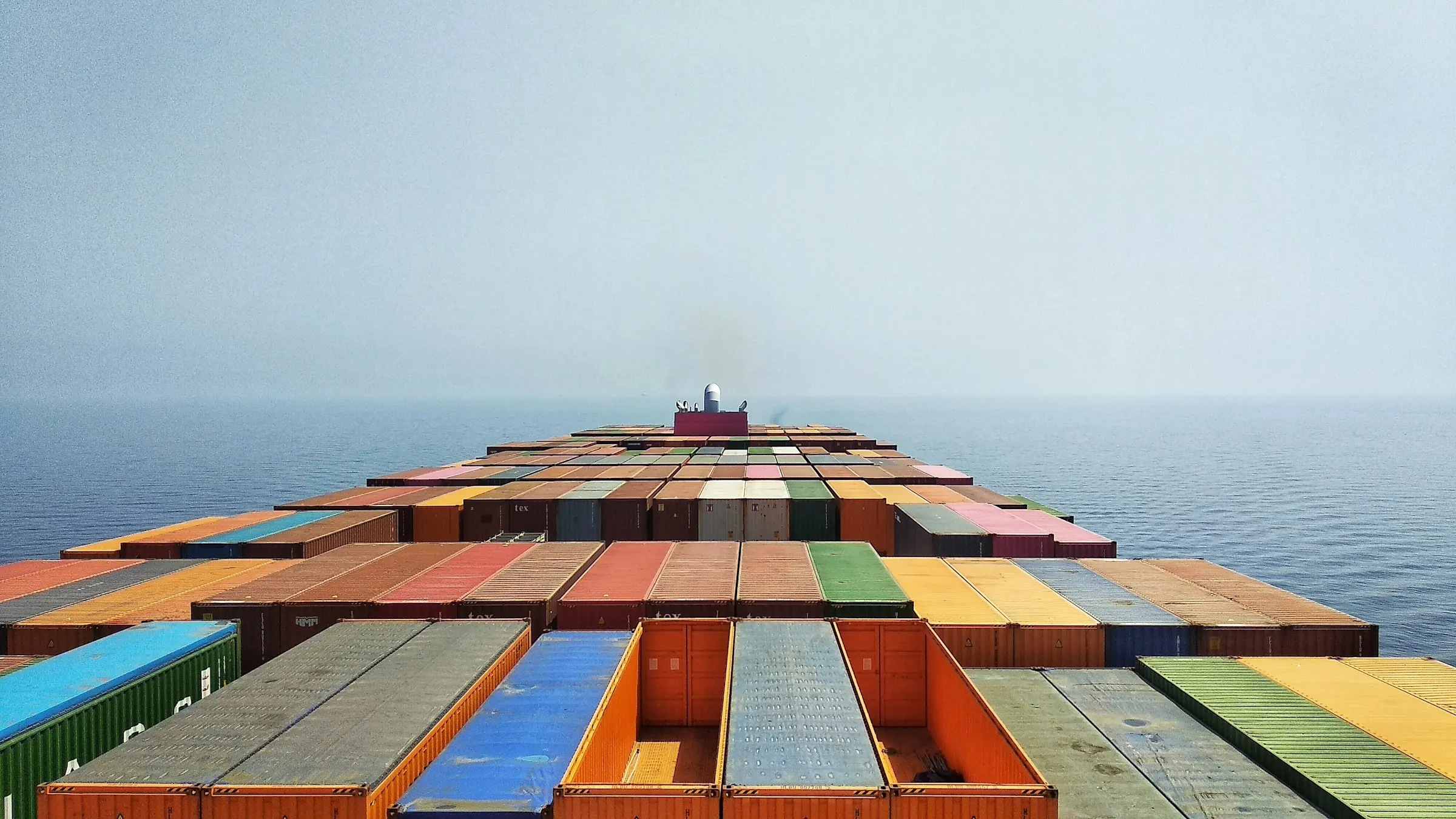
Importing from China to Australia 2026: ChAFTA, BICON, RCM
Importing from China to Australia means securing a ChAFTA certificate of origin before production starts, working out GST on entry, clearing the BICON biosecurity system and applying RCM marking to any electrical device. This article covers these four points, with thresholds, dates and sources, as of 27 September 2026.
The ChAFTA certificate of origin: what it does and how to secure it
The China-Australia Free Trade Agreement (ChAFTA), signed on 17 June 2015 and in force since 20 December 2015, set out a multi-year tariff phase-down schedule covering a large share of Harmonized System lines. A ChAFTA certificate of origin, attached to the import declaration lodged with the Australian Border Force, certifies that the goods meet the agreement's rules of origin and allows the negotiated preferential tariff to apply instead of the general tariff.
Without this document, or if the Harmonized System code used does not yet fall among the lines already brought to zero under the schedule, the goods are taxed at the general tariff, line by line. Three points should be checked before production starts: the exact HS code of the product, its status under the ChAFTA schedule, and which Chinese body will issue the origin document. As of 27 September 2026, we found no accessible primary source detailing which Chinese bodies are authorised to issue it, or whether a declaration of origin by approved exporter exists as an alternative: this should be checked directly with the Australian Border Force or the ChAFTA desk at Australia's Department of Foreign Affairs and Trade before placing an order.
- Harmonized System code of the product, checked line by line, a condition for any preferential tariff
- ChAFTA certificate of origin attached to the import declaration, otherwise the general tariff applies
- Commercial documents, including the certificate, kept for at least five years after entry
Les også Opprinnelsessertifikat Kina: hva det brukes til og når det kreves · Tollkode HS, NC, TARIC: finn riktig kode, og hvorfor det er avgjørende
GST and clearance thresholds on import
Australia's GST (Goods and Services Tax), set at 10% since 1 July 2000 under the A New Tax System (Goods and Services Tax) Act 1999 (No. 55 of 1999), is calculated under Division 13 of that Act on the customs value of the goods, plus any duty and transport and insurance costs. A duty reduced to zero under ChAFTA never removes the GST liability: only the calculation base changes.
The Treasury Laws Amendment (GST Low Value Goods) Act 2017 (No. 77 of 2017) extends GST to low value imported goods: since 1 July 2018, below 1,000 Australian dollars in customs value, GST on a sale to a consumer is collected by the overseas vendor or marketplace at the point of sale; above that threshold, it remains payable at the border. The same 1,000 Australian dollar threshold also shapes, on the customs declaration side, the distinction between a simplified clearance and a full import declaration for a commercial shipment; this mechanism, not verified on an accessible abf.gov.au page at the time of writing, should be confirmed directly with the Australian Border Force before any commercial shipment.
Les også Landet kostpris: den komplette landed cost-formelen
Biosecurity: Biosecurity Act 2015, BICON and packaging wood
The Biosecurity Act 2015 (No. 61 of 2015) is the federal law governing the control of imported goods that carry a biosecurity risk: products of plant, animal or food origin, but also wood, packaging or pallets that may carry residual soil or insects. The relevant Australian department publishes online, under the acronym BICON (Biosecurity Import Conditions system), a product-by-product search database indicating whether a permit or inspection is likely before shipment; its exact operation, costs and timeframes could not be verified on agriculture.gov.au at the time of writing and should be checked directly before ordering.
Packaging wood falls under the international ISPM 15 standard, adopted by Australia in July 2010: debarked and then either heat-treated (56 degrees at the core for 30 minutes) or fumigated with methyl bromide, it must carry an IPPC stamp showing the country code, treatment code and certification number. Plastic or corrugated cardboard pallets, plywood, OSB panels, wood under 6 millimetres thick and wine barrels are exempt. Non-compliant packaging risks being held on arrival, with the outcome decided case by case with the relevant department.
- Wood treatment: heat at a minimum of 56 degrees for 30 minutes, or fumigation with methyl bromide
- IPPC marking required after treatment: country code, treatment code, certification number
- Exemptions: plastic, corrugated cardboard, plywood, OSB, wood under 6 mm, wine barrels
RCM and the Electrical Equipment Safety Scheme: electrical compliance
The Regulatory Compliance Mark (RCM) has been mandatory since 1 March 2016, following a transition period that began on 1 March 2013, for any electrical, electronic or wireless device sold in Australia; it replaces the former A-tick and C-tick markings. It sits within the Electrical Equipment Safety Scheme (EESS), a regulatory framework shared by several Australian jurisdictions and New Zealand, aimed at improving the safety of household electrical equipment.
An importer placing a device on the Australian market must register as a responsible supplier on the EESS platform, updated on 14 October 2024, prepare a responsible supplier declaration and obtain a certificate of conformity or suitability depending on the equipment's risk level. The scheme distinguishes three registration levels (Level 1, 2 and 3); their exact criteria should be checked directly on eess.gov.au for the specific product before finalising specifications with the factory.
Ports of entry: Sydney and Melbourne from southern China
Port Botany, in Sydney, handles 2.8 million TEU a year against a capacity of over 7 million TEU and manages 99.6% of New South Wales' containerised trade; around 80% of its import containers do not travel more than 40 kilometres from the port. The Port of Melbourne describes itself as the country's largest container and general cargo port, though no recent, verifiable traffic figure was found to date.
From southern China, freight most often departs from Guangzhou, Shenzhen or Yantian, depending on the route booked by the freight forwarder; the choice of Australian port depends mainly on the final destination of the goods, not on any difference in customs treatment, since GST and the ChAFTA tariff apply identically regardless of the port of entry.
Les også Sjøfrakt fra Kina: FCL eller LCL, kostnader, frister og vippepunkt · Incoterms import fra Kina: EXW, FOB, DDP, hvilket bør du velge
Documents to gather before shipping
The minimum documentation to clear customs in Australia includes a customs declaration, a bill of lading or air waybill, the commercial invoice and the packing list, which underpins the customs value. The importer remains responsible for this information regardless of who prepares it, and must keep commercial documents for at least five years after entry, including samples.
Depending on the product, the ChAFTA certificate of origin is supplemented by proof of packaging wood treatment, RCM registration for electrical devices and, where applicable, a favourable BICON assessment outcome. Gathering these documents before shipping avoids a container being held over a single missing item.
Les også Handelsfaktura ved import : obligatoriske opplysninger for tollvesenet · Packing list (pakkseddel): definisjon, obligatorisk innhold
What Sorva does for you
Sorva is a sourcing and trading house based in Guangzhou, in the Tianhe district, backed by a Chinese subsidiary whose corporate purpose covers buying, reselling and exporting goods, and by a parent company in France. Our Mandarin-speaking team finds and vets factories, arranges visits and samples, negotiates terms, has quality checked before loading and organises freight through to the chosen Australian port. Our technical team can also help scope a product's RCM or biosecurity compliance before production.
Sorva never acts as the official importer of record in Australia, does not clear customs in the destination country and does not itself export vehicles without a licensed Chinese exporter: the certificate of origin, the BICON declaration and RCM marking remain the responsibility of the Australian importer or their local customs broker. Our base offer is invoiced in US dollars, with optional add-ons, such as RCM or biosecurity support, quoted separately.
Remember that ChAFTA can bring a duty to zero but never removes the 10% GST, and that the certificate of origin, the BICON check and RCM marking need to be sorted before production, not after the goods arrive. First step: check the product's Harmonized System code and its ChAFTA status, then check agriculture.gov.au and eess.gov.au for any biosecurity or RCM marking requirement.
Importerer du fra Kina?
Fortell oss hva du ønsker å kjøpe. Teamet vårt svarer på WhatsApp, med fabrikker, tidsfrister og dokumentene landet ditt krever.
Ofte stilte spørsmål
01How do you get a ChAFTA certificate of origin to import from China to Australia?
02What GST rate applies to goods imported from China into Australia?
03What is BICON and what does it do?
04Does packaging wood need to be treated before entering Australia?
05Which products must carry the RCM marking?
06Is there a simplified clearance threshold for small shipments into Australia?
07Which Australian port should you choose for imports from southern China?
08Can Sorva obtain the ChAFTA certificate of origin or BICON clearance on my behalf?
Hva som endrer seg akkurat nå
- Australie · Biosécurité
Australia: økte biosikkerhetsavgifter ved import fra 1. juli 2026
Fra 1. juli 2026 har det australske departementet for landbruk, fiskeri og skogbruk (DAFF) hevet kostnadsdekningsavgiftene for biosikkerhet som gjelder for hver fullstendig importdeklarasjon, til 48 australske dollar for luftfrakt og 71 dollar for sjøfrakt. Behandlingsgebyret for selve deklarasjonen øker også.
Les artikkelen - Chine · Fiscalité export
Kina: eksport-mva-refusjonen forsvinner for 271 produktkategorier
Siden 1. april 2026 har Kina fjernet eksport-mva-refusjonen for 249 produktkategorier og redusert den for batterier fra 9 til 6 %. Tiltaket rammer særlig PVC, glass, keramikk, solceller og e-sigaretter, og øker mekanisk utsalgsprisen fra fabrikk for enhver kjøper, i Asia-Stillehavet som andre steder.
Les artikkelen - Kazakhstan · Douane en ligne
Den eurasiske union: egen tollordning for netthandel fra juli 2026
Rådet for den eurasiske økonomiske kommisjonen har godkjent et nytt kapittel i tollkodeksen til Den eurasiske økonomiske union (EAEU) som oppretter en egen ordning for grensekryssende netthandel, med kunngjort ikrafttredelse 1. juli 2026. Kasakhstan, sistemann av de fem medlemsstatene til å ratifisere teksten, gjorde det i desember 2025, mens Armenia, også medlem av unionen, vil bli omfattet på samme vilkår.
Les artikkelen
Matchende tjeneste
- ProvisjonVolumprovisjonDu åpner en sak, vi finner og forhandler fabrikken. Vi får kun betalt for varene du bestiller.150 €saksåpningsgebyrSe tjenesten
- UtredningsavdelingRegulatorisk samsvarsutredningHva produktet ditt må oppfylle i bestemmelseslandet, skriftlig og med kilder, før den første bestillingen.390 €per produkt og per bestemmelseslandSe tjenesten
- Per enhetKontroll før lastingAntall, emballasje, merking, containerens tilstand, fotografi, før varene sendes.229 €per lastSe tjenesten