
Importing from China to Guinea: Complete 2026 Guide
An importer based in Guinea has to work with the ECOWAS common external tariff, the Import Declaration Form, and clearance through the port of Conakry. This guide brings together the verified rates, documents and steps for a first order, from sourcing in southern China to delivery in Conakry.
What Guinea imports from China: markets and promising niches
Guinea is the world's leading producer of bauxite, with about 150 million tonnes extracted in 2025, ahead of Australia and China (US Geological Survey, February 2026). Its exports reached about 182.8 million tonnes in 2025, up 25% year on year, with the vast majority going to China, its top customer (miningweekly.com, January 26, 2026; annual figure, to be updated). This mining relationship in turn drives a stream of imports: heavy equipment and spare parts, trucks, generators, construction materials, vehicles and everyday consumer goods, distributed from the autonomous port of Conakry, which handles about 90% of Guinea's foreign trade.
- Heavy equipment, spare parts and vehicles linked to bauxite mining
- Trucks, generators and equipment
- Construction materials: steel, cement, sanitary ware
- Everyday consumer goods, electronics and textiles
- Autonomous port of Conakry: gateway for about 90% of Guinea's foreign trade
Soma pia Kuagiza mashine au vifaa vya viwandani kutoka Uchina: mwongozo
Trade relations and customs framework with China
Guinea is a member of the Economic Community of West African States (ECOWAS) and adopted the region's common external tariff in early 2017 (trade.gov, page updated May 1, 2024). This membership governs every Guinean import, regardless of origin: no bilateral trade agreement between Guinea and China lowers the duties applied on entry into Guinea. Chinese goods therefore pay the same regional tariff as goods from any other country outside ECOWAS.
Guinea is also a signatory to the African Continental Free Trade Area, which entered into force on May 30, 2019, with preferential trade starting on January 1, 2021 (trade.gov, May 1, 2024). This agreement covers trade between African member states: it does not change the duties Guinea applies to goods manufactured in China.
Soma pia Msimbo wa forodha HS, CN, TARIC: kupata msimbo sahihi, na kwa nini una umuhimu
Import duties and taxes: categories and calculation
Guinea's customs system has five import duty categories: 0% for social and basic necessity goods, 5% for essential goods, raw materials and capital equipment, 10% for intermediate products, 20% for final consumer goods, and 35% for a list of products tied to economic development (trade.gov, May 1, 2024). On top of this comes the ECOWAS community levy of 0.5% (WTO, Trade Policy Review of Guinea), and a statistical tax of around 1%, a rate not confirmed in a primary source as of September 27, 2026: to be verified with the Single Window. Then comes VAT, charged at a flat rate of 18% on the customs value plus these duties and taxes (trade.gov, May 1, 2024). Additional surtaxes of 20% to 70% apply depending on the product, with vehicles at the lower end of that range, between 20% and 30% (trade.gov, May 1, 2024).
Sample calculation, excluding the statistical tax pending confirmation: a shipment of final consumer goods, the 20% category, with a customs value of 10,000 dollars, pays 2,000 dollars in import duty and 50 dollars in ECOWAS levy, giving a base of at least 12,050 dollars on which 18% VAT applies, about 2,169 dollars. The total comes to at least around 4,219 dollars, a little over 42% of the initial customs value, before the statistical tax. The exact amount depends on the precise tariff code and should be confirmed through the Single Window.
Soma pia Gharama ya uzalishaji iliyoshushwa: fomyula kamili ya landed cost · Thamani ya forodha na hesabu ya ushuru: msingi, marekebisho, viwango
Required documents and customs clearance
An import authorization, the Import Declaration Form (Demande descriptive d'importation), issued by the Ministry of Commerce, becomes mandatory once an import exceeds 12 million Guinean francs, about 1,250 dollars (trade.gov, May 1, 2024). Declarations go through Guinea's Single Window for foreign trade, launched in September 2019: payment is made by bank transfer to the central bank since August 2020, or to commercial banks since November 2020, with release granted on presentation of the bank receipt (trade.gov, May 1, 2024).
- Commercial invoice and packing list
- Transport document, bill of lading for sea freight
- Import Declaration Form above 12 million Guinean francs
- Certificate of origin mandatory for certain categories: ores, animal by-products, live animals, hunting and fishing products, waste and scrap, under article 26 of the 2015 customs code
- Prior authorization from the Ministry of Health for pharmaceutical products
Soma pia Packing list (orodha ya vifurushi): maana, maudhui ya lazima · Cheti cha asili China: kinatumika kwa nini na kinahitajika lini
Standards, certification and pre-shipment inspection
The Guinean Institute of Standardization and Metrology is the national standards body (trade.gov, May 1, 2024). No general labeling requirement is published for imported products (trade.gov, May 1, 2024), and no pre-shipment inspection program run by a named body has been confirmed: check with the National Customs Directorate before a first order, especially for a technical product.
Soma pia Kamusi ya uzingatiaji wa sheria na ubora: kuagiza bila hatari ya kurudishwa kwa bidhaa
Prohibited products and products subject to licensing
Guinean regulations prohibit the import of live animals and fresh meat, coin-minting equipment, weapons, ammunition and military equipment, obscene publications, medals and collectible coins, toxic substances and narcotics, explosives, plants and fertilizers, fuels and asbestos-containing products, as well as used vehicles over 13 years old since July 15, 2021 (trade.gov, May 1, 2024). Pharmaceutical products remain subject to prior approval from the Ministry of Health. In addition, rice, sugar, cooking oil and flour cannot enter by land; this restriction does not apply at the port of Conakry (trade.gov, May 1, 2024).
Port of Conakry, transport, payment and steps for a first order
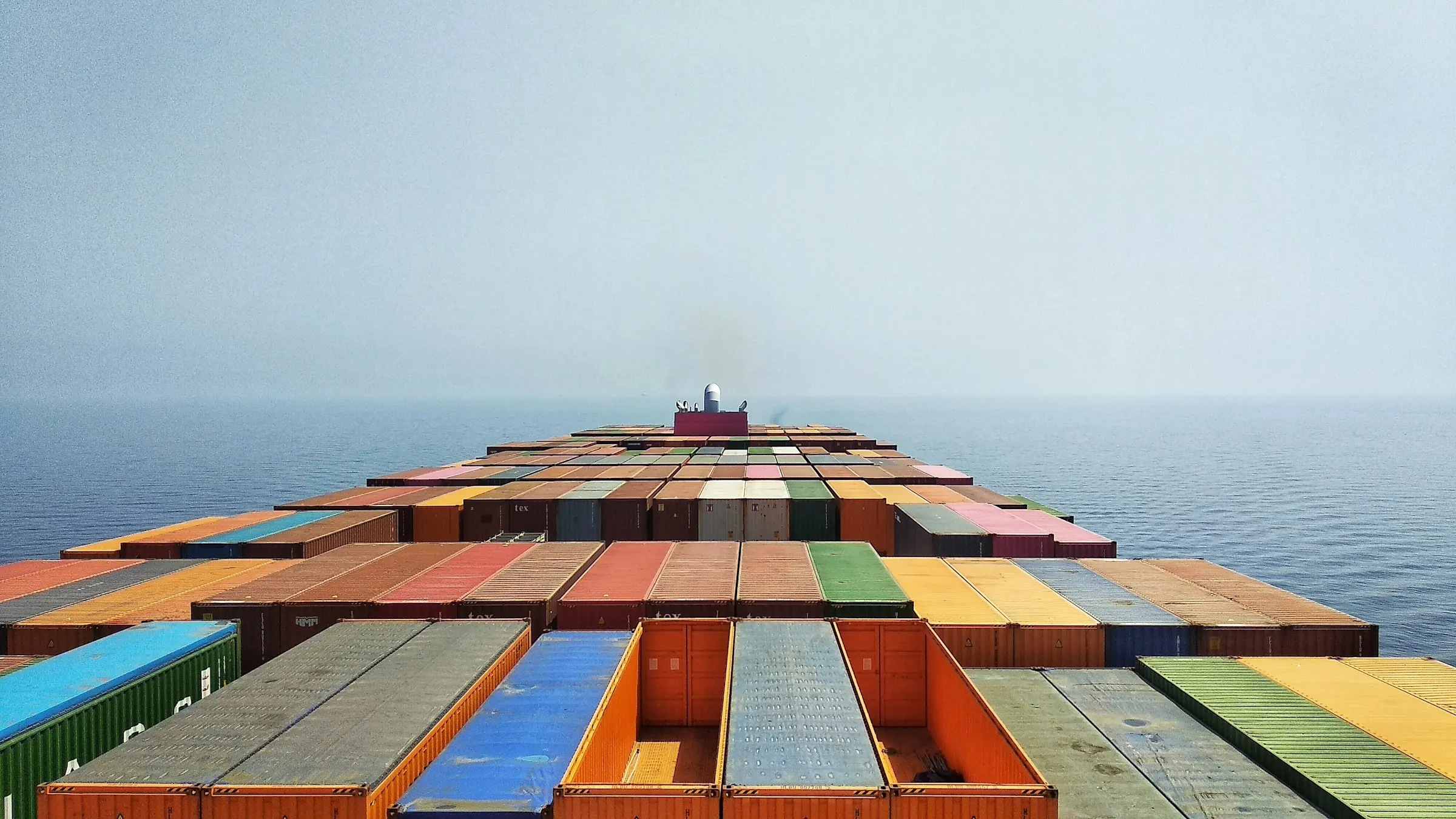
The autonomous port of Conakry handles about 90% of Guinea's foreign trade. Its container terminal covers 200,000 square meters, with a 600-meter quay allowing two vessels to be handled at once (portconakry.gov.gn, "Our port facilities" page, accessed September 27, 2026). Sea freight dominates shipments from southern China; the exact transit time, not officially published, should be confirmed when booking. FOB or EXW incoterms suit a first order best, with responsibility for transport and customs clearance on arrival remaining with the client or their local freight forwarder.
On payment, the common practice remains a deposit at order and a balance before shipment, paid into the factory's business account, never a personal account and never after a change of bank details received by email along the way. A first order follows a simple sequence: define the product and its tariff code, have the supplier verified, approve a sample, secure payment, follow production, have the goods inspected before loading, choose transport, and prepare the Import Declaration Form before shipping.
Soma pia Incoterms za uagizaji China: EXW, FOB, DDP, incoterm gani ya kuchagua · Kulipa muuzaji wa Kichina: uhamisho wa fedha, barua ya mkopo
What Sorva does for you
Sorva is a sourcing and trading house between China and the world, based in Guangzhou with a Chinese-speaking team on the ground and a Chinese subsidiary whose corporate purpose covers buying, reselling and exporting goods. For a client based in Guinea, Sorva finds and vets factories, arranges visits and samples, negotiates prices and terms, has the goods inspected before loading and arranges freight to the port of Conakry. Sorva is never the official importer in Guinea: the client, or their local freight forwarder, remains responsible for customs clearance and duties on arrival, and Sorva never exports any vehicle itself without going through a licensed Chinese exporter holding the required licenses.
In most cases, no fee is charged for finding a supplier: a file is opened, Sorva negotiates the goods for the client and takes a commission on their ex-factory value. The base offer is billed in dollars outside the European Union, supplemented if needed by options specific to a given region, such as a certification pack, quoted on request.
Remember that duties on entry into Guinea follow a five-category import duty, from 0% to 35%, topped up by 18% VAT and two community levies, with no reduction for goods coming from China. First step: check the product's exact tariff code and the Import Declaration Form threshold before placing the order.
Unaagiza kutoka China?
Tuambie unachotafuta kununua. Timu yetu inajibu kupitia WhatsApp, ikiwa na viwanda, muda na nyaraka zinazohitajika na nchi yako.
Maswali yanayoulizwa mara kwa mara
01What are the customs duties on an import from China to Guinea?
02Do you need authorization to import from China to Guinea?
03Is there a trade agreement between Guinea and China that lowers customs duties?
04What products are banned from import into Guinea?
05How long does sea freight from China to Conakry take?
06What documents are needed for a first order from China?
07Does Sorva clear the goods through customs on arrival in Guinea?
08Which import niches are promising in Guinea?
Yanayobadilika kwa sasa
- Ghana · Normes
Ghana: ukaguzi kabla ya usafirishaji kwa magari yaliyotumika kuanzia Oktoba
Kuanzia tarehe 1 Oktoba 2026, Ghana Standards Authority inaweka sharti la cheti cha ufuasi kinachotolewa kabla ya usafirishaji kwa kila gari lililotumika linaloagizwa. Magari yenye zaidi ya miaka 15 hayataruhusiwa kuingia, bila kujali chanzo chake.
Soma makala - Côte d'Ivoire · Logistique
Ivory Coast: OIC yazindua SYSANEV kutabiri gharama za uagizaji
Ofisi ya Wasafirishaji ya Ivory Coast (Office ivoirien des chargeurs, OIC) ilianzisha, tarehe 19 Mei 2026, jukwaa lililopewa jina SYSANEV linalowawezesha waagizaji kukadiria gharama zao za usafirishaji kabla ya kuwasili kwa bidhaa. Kifaa hicho kinalenga kuboresha uwazi kuhusu matumizi halisi ya usafirishaji na uondoshaji wa bidhaa bandarini.
Soma makala - Nigeria · Douane
Nigeria: SONCAP na vibali vya uagizaji vyahamia dirisha moja la huduma
Kuanzia tarehe 27 Machi 2026, SONCAP na vibali vya uagizaji vya Nigeria haviwezi tena kushughulikiwa isipokuwa kwenye jukwaa la National Single Window (NSW). Mabadiliko haya yanalenga uondoshaji wa bidhaa bandarini ndani ya masaa 24 na yanaondoa njia huru ambazo taasisi zilizoidhinishwa zilikuwa zikitumia hadi wakati huo.
Soma makala
Vyeti vinavyohitajika na nchi yako
Kwa dola, kwa bei elekezi, zinaongezwa kwenye huduma ile ile ya msingi.
Afrika Magharibi na Kati Ukaguzi wa lazima kabla ya usafirishaji
Kwa bei elekeziIn US dollars
Nchi kadhaa za Afrika Magharibi na Kati zinahitaji ukaguzi kabla ya upakiaji unaofanywa na shirika lililoidhinishwa na serikali, kwa mfano Bureau Veritas (BIVAC), Cotecna au SGS kulingana na nchi, ambalo hutoa cheti kinachohitajika wakati wa uvushaji forodha.
- Utambuzi wa shirika lililoidhinishwa kwa nchi yako
- Ankara ya awali na orodha ya ufungashaji zilizoandaliwa na kiwanda
- Ufikiaji wa kiwanda na bidhaa tayari siku ya ukaguzi
- Ukaguzi wetu wenyewe kabla ya ziara ya mkaguzi
Huduma inayolingana
- KomisheniKamisheni kwa kiwangoUnafungua mradi, sisi tunatafuta na kujadiliana na kiwanda. Tunalipwa tu kwa bidhaa unazoagiza.150 €gharama za kufungua mradiAngalia huduma
- Kwa kipandeUtafutaji wa Wasambazaji · KamiliZabuni inayoendeshwa kwa niaba yako, jedwali lenye bei, sampuli mkononi.279 €kwa kila bidhaaAngalia huduma
- Kwa kipimo kimojaUkaguzi kabla ya upakiajiIdadi, ufungaji, uwekaji lebo, hali ya kontena, ripoti ya picha, kabla bidhaa hazijasafirishwa.229 €kwa kila upakiajiAngalia huduma