
Importing from China to Thailand: Customs, VAT and TISI in 2026
Importing from China to Thailand builds on a country that is a member of both RCEP and ACFTA, the second-largest economy in ASEAN, where China remains its top trading partner by value. This article gathers, with sources, the duty rates, VAT, documents and steps useful to an importer based in Thailand, as of 27 September 2026.
What Thailand imports from China and the promising niches
Thailand is the second-largest economy in ASEAN by GDP, behind Indonesia: 563 billion dollars in 2024, with growth of 2.5% (trade.gov, Market Overview, accessed 27 September 2026). In two-way trade, China outranks the United States and Japan among its partners (same source).
Total imports reached 301.5 billion dollars in 2024, of which 284.0 billion excluding agriculture (WTO, World Tariff Profiles 2026, 2024 data). Machinery, computing and electronics remain the most open categories under ACFTA or RCEP, with duty-free coverage above 45% of tariff lines (same source): niches accessible to anyone structuring their supply chain from southern China, subject to a valid certificate of origin.
The Thai Industrial Standards Institute subjects part of the machinery and electronics sectors to mandatory certification, detailed further below. VAT applies to any import, registered or not, with no confirmed exemption threshold for small parcels (Revenue Department of Thailand, accessed 27 September 2026).
- Machinery, computing, electronics: the lowest duties, the widest duty-free coverage
- Textiles: higher duty, rare duty-free treatment, to be checked line by line
- Transport equipment: duty and ceiling among the highest
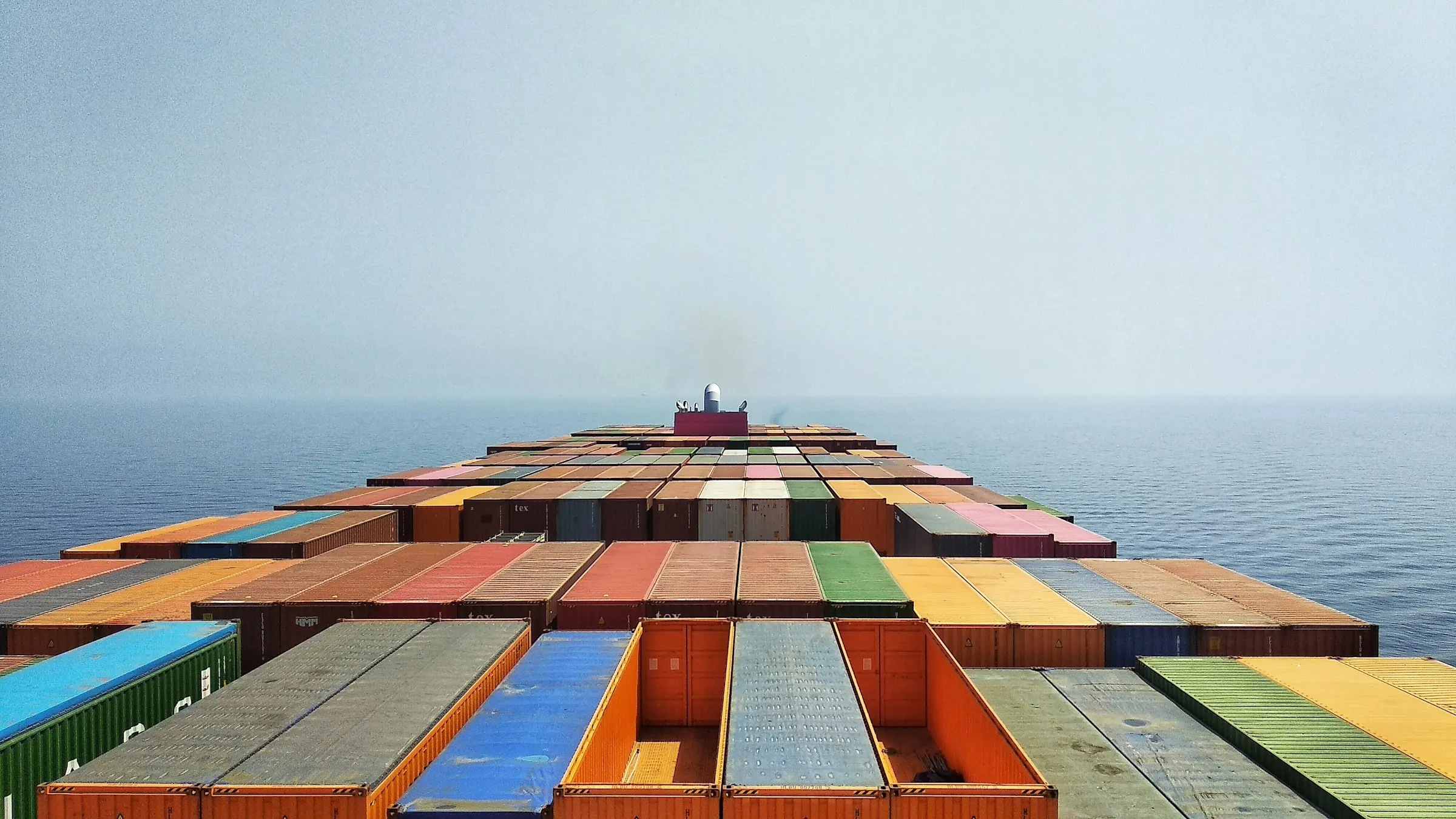
- Laem Chabang, about 120 km from Bangkok: 9.46 million TEUs handled in fiscal year 2024, the main port of entry for freight from southern China
Trade agreements and customs relations with China
Thailand has been a WTO member since 1995, with bound coverage of 76.9% of tariff lines (WTO, World Tariff Profiles 2026, 2025 data). It applies RCEP, in force since 1 January 2022, which brings together ten ASEAN countries, China, Japan, South Korea, Australia and New Zealand, around 30% of world population and GDP (Wikipedia, Regional Comprehensive Economic Partnership, accessed 27 September 2026).
It also applies ACFTA, the ASEAN-China free trade agreement (trade.gov, Trade Agreements, accessed 27 September 2026), with no entry-into-force date or coverage rate specified in this source: to be checked line by line. ASEAN remains a free trade area, not a customs union: with no common external tariff, each country applies its own national tariff.
Lue myös Tullikoodi HS, CN, TARIC: oikean koodin löytäminen ja sen merkitys
Import duties and VAT: how they are calculated
Thailand's tariff shows an average applied rate of 9.9% across all products in 2025, 28.2% for agriculture and 7.0% for non-agricultural goods (WTO, World Tariff Profiles 2026, 2025 data). Higher duties target automobiles, motorcycles, beef, pork, poultry, tobacco, beer and textiles (trade.gov, Import Tariffs, updated 9 April 2026).
For the categories most traded with China, in 2025: 2.1% for machinery, with 68.9% duty-free coverage; 6.6% for electronics, 46.0% duty-free; 8.5% for textiles, 2.9% duty-free; 29.6% for apparel, no duty-free coverage; 20.2% for transport equipment, 38.3% duty-free, up to a maximum of 80% (same source).
VAT applies to any import, registered or not, on a base equal to the CIF value plus customs duty, any special tax and other taxes (Revenue Department of Thailand, accessed 27 September 2026). The standard rate of 10% remains reduced to 7% until 30 September 2027, unless extended (PwC, Thailand Corporate, Other taxes).
Example on 100,000 baht of electrical equipment: duty at 6.6%, i.e. 6,600 baht; VAT base of 106,600 baht; VAT at 7%, i.e. 7,462 baht; total 14,062 baht, excluding customs clearance fees. A valid ACFTA or RCEP certificate can bring the duty down to 0% on many lines, to be confirmed code by code.
Lue myös Tullausarvo ja tullien laskenta: perusta, oikaisut, tullikanta · Maahantuodun tavaran kokonaiskustannus: täydellinen landed cost -kaava
Mandatory documents for customs clearance
A standard import relies on documents provided by the Chinese exporter before arrival, followed by filing the Customs Import Entry form (trade.gov, Import Requirements and Documentation, updated 9 April 2026).
The certificate of origin is no longer required for information technology products, but is still requested for ACFTA or RCEP preferential duty (same source). Using a freight forwarder remains recommended to handle customs clearance.
- Commercial invoice and packing list
- Ocean bill of lading or air waybill
- Letter of credit if this payment method was chosen
- ACFTA or RCEP certificate of origin for preferential duty
- Specific licence for pharmaceuticals, food, medical devices, cosmetics, hazardous substances, animals and agricultural products
Lue myös Tuonnin kauppalasku: tullille pakolliset tiedot · Packing list eli pakkauslista: määritelmä ja pakollinen sisältö
Standards, TISI certification and pre-shipment inspections
The Thai Industrial Standards Institute (TISI) requires mandatory certification for around 129 products across 18 sectors, including food, construction, consumer goods, electrical, electronics, steel, chemicals, medical devices and automotive (trade.gov, Standards for Trade, updated 9 April 2026). Since October 2025, six new electrical and electronic categories have been added to the list: the relevant codes should be checked product by product with TISI or a freight forwarder before starting production.
A specific authorization also governs the entry of pharmaceuticals, food, medical devices, cosmetics and hazardous substances (trade.gov, Import Requirements and Documentation, accessed 27 September 2026). Beef offal and pork products from animals treated with beta-agonists remain restricted, an audit of animal facilities is required every five years, and fumigation is mandatory for dried distillers grains (trade.gov, Trade Barriers, accessed 27 September 2026).
Lue myös Elektroniikan tuonti Kiinasta: LVD, EMC, RoHS, WEEE · Lastausta edeltävä tarkastus: PSI-protokolla Kiinassa
Prohibited products or those requiring a licence
Several categories remain subject to a licence or prior authorization: pharmaceuticals, food, medical devices, cosmetics, hazardous substances, live animals and agricultural products (trade.gov, Import Requirements and Documentation, accessed 27 September 2026). The complete list of formally prohibited products could not be confirmed from an up-to-date official source: it should be checked with customs, product by product.
Classification under the correct Harmonized System code determines both the applicable duty and any licence requirement: an error risks a customs hold, not just a tax bill. Any doubt about a sensitive category should be resolved before placing the order, never after loading.
Lue myös Elektroniikan tuonti Kiinasta: Shenzhen, vaatimustenmukaisuus, rahti
Ports, routes from southern China and recommended Incoterms
Laem Chabang, about 120 kilometres from Bangkok, operated by the Port Authority of Thailand, remains the main port for containerized freight: 9.46 million TEUs handled in fiscal year 2024, up from 8.67 million in 2023 (Port Authority of Thailand, data reported by Nation Thailand, 19 October 2024, accessed 27 September 2026).
Ocean freight remains the cheapest option from Shenzhen, Yantian or Guangzhou to Laem Chabang; air freight is reserved for urgent shipments, via Suvarnabhumi Airport. Transit times vary by carrier, to be confirmed at booking.
- FOB Chinese port: the Thai buyer arranges and pays for the main transport leg
- EXW factory: maximum control over the supply chain, but the heaviest logistics burden
- DDP not recommended for a first order: the Chinese seller acts as the declarant, losing visibility over the taxes actually paid
Lue myös FOB-toimitusehto: merkitys, velvoitteet ja hinta (Incoterms 2020) · Merirahti Kiina: FCL tai LCL, kustannukset, toimitusajat ja kynnysarvo
Payment, steps for a first order, and what Sorva does for you
On payment, the common practice among Chinese factories is a deposit on order followed by a balance before shipment, paid into the company's business account, never a personal account. A change of bank details received by email must be verified through another channel before any transfer.
A first order follows a tight sequence: define the product, vet the supplier, approve a sample, secure it with a proforma invoice, track production, arrange inspection before loading, then organize transport to Laem Chabang or Suvarnabhumi. Customs clearance remains the responsibility of the importer or their freight forwarder: Sorva never acts as the official importer in Thailand.
Sorva is a sourcing and trading house between China and the world, with a Chinese-speaking team in Guangzhou, and a licensed Chinese subsidiary authorized to buy, resell and export. For a Thai client, we vet the supplier, negotiate terms, arrange inspection before loading and organize the export from Guangzhou; customs clearance and TISI compliance remain the responsibility of the importer, and can be supported on a quoted basis.
In most cases, you open a file, we negotiate the goods on your behalf, and we take a commission on their ex-factory value, supplemented by options specific to each region, quoted on request.
Lue myös Kiinalaisen tavarantoimittajan maksaminen: tilisiirto, remburssi · Ensimmäinen tuonti: kymmenen vaihetta ja kalliit virheet
Keep in mind that in Thailand, duty ranges from 2.1% for machinery to 29.6% for apparel, and a valid ACFTA or RCEP certificate can bring it down to 0%, while 7% VAT applies in every case. First step: have the product code checked, along with any TISI requirement.
Tuotko Kiinasta?
Kerro meille, mitä haluat ostaa. Tiimimme vastaa WhatsAppissa ja kertoo tehtaista, aikatauluista ja maasi vaatimista asiakirjoista.
Usein kysytyt kysymykset
01What customs duty applies to importing from China to Thailand?
02Does Thailand have a free trade agreement with China?
03What VAT rate applies to an import into Thailand?
04What documents are needed to clear goods from China through Thai customs?
05Do you need TISI certification to sell a Chinese product in Thailand?
06What is the main port of entry for goods coming from China?
07Can Sorva clear my goods through customs on arrival in Thailand?
08How long does sea freight from southern China to Thailand take?
Mikä muuttuu juuri nyt
- Chine · Fiscalité export
Kiina: arvonlisäveron vientipalautus poistuu 271 tuoteryhmältä
1. huhtikuuta 2026 alkaen Kiina poisti arvonlisäveron vientipalautuksen 249 tuoteryhmältä ja laski akkujen palautusta 9 prosentista 6 prosenttiin. Toimenpide koskee erityisesti PVC:tä, lasia, keramiikkaa, aurinkosähkökennoja ja sähkösavukkeita, ja se nostaa automaattisesti tehtaan lähtöhintaa jokaiselle ostajalle, niin Aasian ja Tyynenmeren alueella kuin muuallakin.
Lue artikkeli - Australie · Biosécurité
Australia: tuonnin biosuojamaksut nousivat 1. heinäkuuta 2026
Australian maatalous-, kalastus- ja metsäministeriö (DAFF) on 1. heinäkuuta 2026 alkaen korottanut jokaiseen täydelliseen tuonti-ilmoitukseen sovellettavia biosuojan kustannustenperintämaksuja: 48 Australian dollariin lentorahdissa ja 71 Australian dollariin merirahdissa. Myös itse ilmoituksen käsittelymaksu nousee.
Lue artikkeli - Kazakhstan · Douane en ligne
Euraasian unioni: oma tullijärjestelmä verkkokaupalle heinäkuusta 2026 alkaen
Euraasian talouskomission neuvosto hyväksyi Euraasian talousunionin (UEEA) tullikoodeksiin uuden luvun, joka luo erityisen järjestelmän rajat ylittävälle verkkokaupalle; voimaantulo on ilmoitettu 1. heinäkuuta 2026. Kazakstan, viimeisenä viidestä jäsenvaltiosta, ratifioi tekstin joulukuussa 2025, kun taas Armenia, joka on myös unionin jäsen, on samojen ehtojen alainen.
Lue artikkeli
Sopiva palvelu
- PalkkioProvisio volyymistaAvaat toimeksiannon, me löydämme ja neuvottelemme tehtaan. Meille maksetaan vain tilaamastasi tavarasta.150 €toimeksiannon avausmaksuKatso palvelu
- SuunnittelutoimistoSäädöstenmukaisuusselvitysMitä tuotteesi on noudatettava kohdemaassaan, kirjallisesti ja lähteistettynä, ennen ensimmäistä tilausta.390 €per tuote ja kohdemaaKatso palvelu
- YksittäinTarkastus ennen lastaustaMäärät, pakkaus, merkinnät, kontin kunto, valokuvausraportti, ennen kuin tavara lähtee.229 €per lastausKatso palvelu