
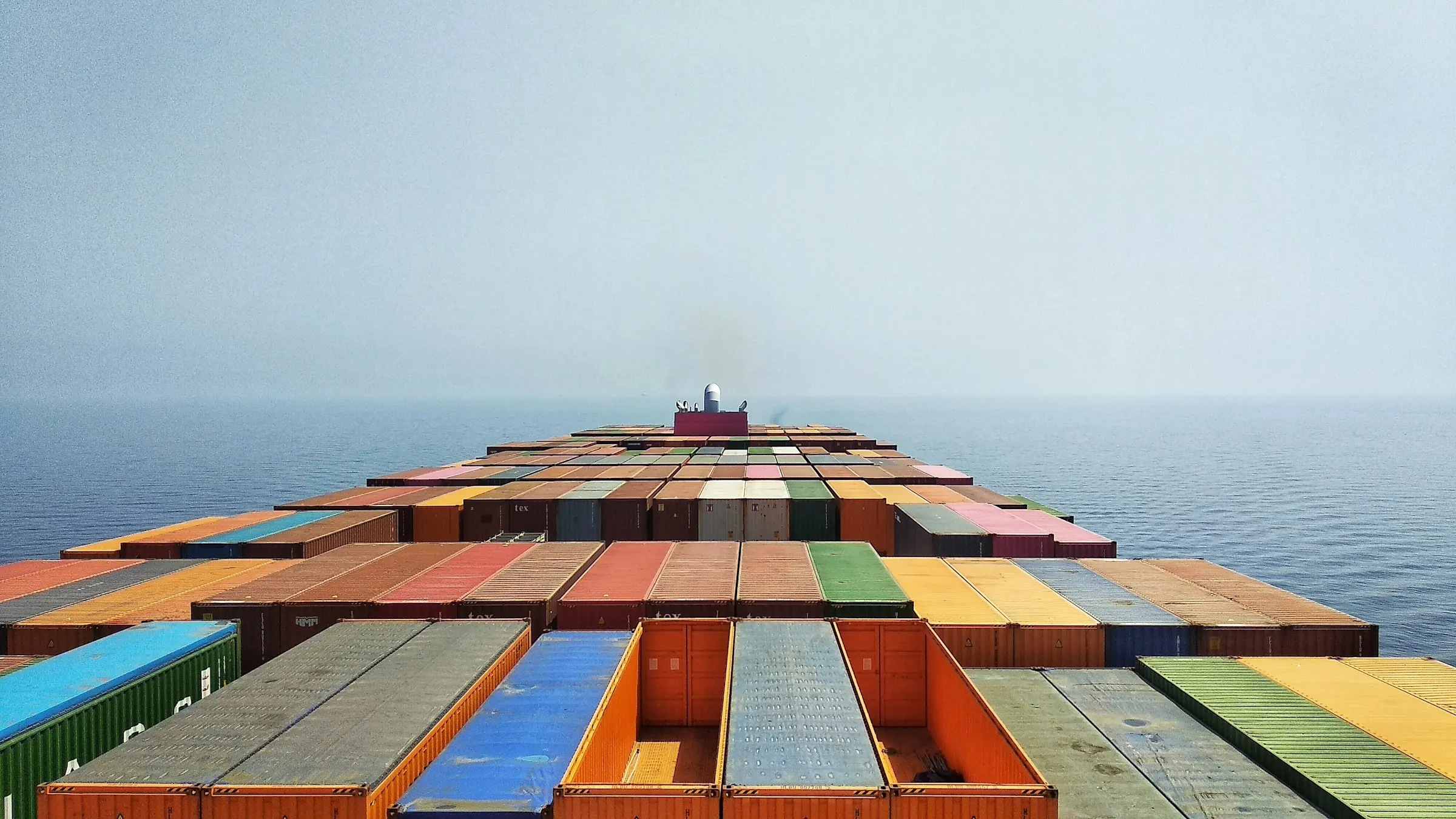
Importing From China to Turkey: Customs Union, VAT, Duties in 2026
Importing from China to Turkey plays out on two levels: a country tied to the European Union by a customs union since 1996, and a country that, outside that union, applies its own additional duties on part of the goods coming from China. This article brings together, with sources, the rates, documents and steps that matter to a Turkish importer, as of September 27, 2026.
Turkey and China: a trade flow under scrutiny
China and Russia rank among Turkey's top two suppliers, according to the official U.S. country commercial guide, updated on January 29, 2026. Turkey's trade profile on the World Bank's WITS portal, consulted on September 27, 2026, puts imports at around $361.9 billion against a trade deficit of $106.3 billion: a structurally import-dependent country, where sourcing from China stays an option to weigh tariff line by tariff line rather than a general given.
Three factors frame the profitability of a product line before you start looking for a factory: the customs union with the European Union, which governs industrial goods; additional duties that Turkey sometimes applies to goods from countries with a marked trade imbalance, with China and India cited by the U.S. guide; and compliance controls run by the Ministry of Trade and the Turkish Standards Institution (TSE). The climate also stays under watch: in February 2025, the World Trade Organization (WTO) set up a panel over Turkish measures targeting Chinese electric vehicles (dispute DS629).
- China and Russia: Turkey's top two suppliers (trade.gov, January 29, 2026)
- Turkish imports: $361.9 billion, trade deficit of $106.3 billion (WITS, World Bank)
Trade agreements and customs relations with China
Turkey has no free trade agreement with China: the official U.S. guide lists 24 in force, including with EFTA, the United Kingdom, South Korea, Singapore, the United Arab Emirates and Qatar, plus four preferential agreements, with China in none of them. Every Chinese good therefore enters under Turkey's standard tariff regime.
The customs union with the European Union, in force since January 1, 1996 for industrial goods, requires Turkey to align its external trade policy with the EU's, excluding agriculture, services and public procurement. Turkey and China are both WTO members, which sets a floor of most-favored-nation treatment.
Przeczytaj także Cła antydumpingowe na towary z Chin: jak sprawdzić, czy dotyczą Państwa
Customs duty, VAT and special consumption tax: rates and calculation
Turkey's tariff profile on WITS shows an average weighted duty of 7.95% at the most-favored-nation rate and 4.26% effectively applied. The exact rate depends on the twelve-digit code (GTİP) in the Turkish customs tariff: no average replaces the actual line, especially since Turkey sometimes applies additional duties on Chinese or Indian goods, with no per-product rate published in our sources.
Import VAT stands at 20% for most products, against 1% to 10% for agricultural goods, calculated on the customs value plus duties. A special tax, the ÖTV, is added on top for fuel, vehicles, alcohol and tobacco, running up to 220% for vehicles, with no confirmed rate for electronics.
Example based on the verified averages: on a customs value of $100,000, an average duty of 4.26% works out to about $4,260; the 20% VAT then applies to $104,260, or about $20,852. The total charge exceeds 25% of the customs value, before any additional duty specific to the Chinese line and before ÖTV where it applies.
- Average weighted duty: 7.95% MFN, 4.26% effectively applied (WITS)
- Import VAT: 20% in general, 1% to 10% for agricultural goods
- ÖTV: up to 220% for vehicles, rate not confirmed for electronics
Mandatory documents to clear a shipment through customs
The official U.S. guide on import formalities in Turkey lists, for any commercial shipment, a commercial invoice in three copies, a bill of lading or an AWB in original plus three copies, a packing list and a certificate of origin. This certificate, in duplicate and in English, with no corrections, is prepared by the exporter and then legalized by a chamber of commerce; an attached proforma invoice must not be more than six months old.
The commercial invoice carries the full description, quantity, unit price, Harmonized System code, incoterm and country of origin. Extra documents apply depending on the product: sanitary, phytosanitary or veterinary certificates. For most products, a Turkish importer only needs a tax number; weapons and hazardous materials require a specific authorization.
- Commercial invoice in three copies, with HS code, incoterm and country of origin
- Bill of lading or AWB in original plus three copies, packing list
- Certificate of origin in duplicate, in English, legalized by a chamber of commerce
- Sanitary, phytosanitary or inspection certificates depending on the product
Przeczytaj także Wartość celna i obliczanie cła: podstawa, korekty, stawka · Kod celny HS, CN, TARIC: jak znaleźć właściwy kod i dlaczego to się liczy
Standards, certification and pre-shipment inspection
Turkey's Ministry of Trade determines, through import and product safety and inspection communiqués, which goods need authorization or a conformity check; the relevant official page, updated on January 29, 2026, recommends checking, before exporting to Turkey, whether a product requires a permit, a license or a qualification.
The Turkish Standards Institution (TSE) is the national body for standardization, certification and testing. Our sources do not confirm exactly how CE marking, recognized under the customs union, interacts with any Turkey-specific mark: check with the TSE, product by product, before starting production.
Przeczytaj także Faktura handlowa importowa: dane obowiązkowe dla urzędu celnego · Świadectwo pochodzenia z Chin: do czego służy i kiedy jest wymagane
Products banned or subject to licensing
Turkey's Ministry of Trade bans the import of certain waste, specific chemical substances and scrap materials, to protect the environment, according to the official page updated on January 29, 2026. A second category stays subject to prior authorization or a conformity inspection, with no single list found in our sources: classification depends on international agreements and current trade policy. The practical rule stays the same whatever the product family: check, before starting production in China, whether the tariff line requires a permit, a license or a qualification.
Przeczytaj także Oznakowanie CE w imporcie: co obejmuje i jak je zweryfikować
Ports, routes from southern China and recommended incoterms
On the Sea of Marmara, the Kumport terminal, at Ambarli near Istanbul, lists a capacity of 2.1 million TEU and a draft of 16.5 meters, according to its official site consulted on September 27, 2026; other major terminals on the Mediterranean round out access for freight coming from Asia. Our sources give no verifiable transit time between southern China and Turkish ports: ask your freight forwarder directly.
FOB suits cases where the buyer arranges transport from the Chinese port itself, CIF or CFR when an intermediary handles freight through to the Turkish port. DDP stays inadvisable as long as the seller is not a registered customs declarant in Turkey, which is never the case for Sorva.
Payment, the steps of an order, and what Sorva does for you
On payment, the official U.S. guide on trade finance in Turkey states that private-sector Turkish importers traditionally use a documentary letter of credit, preferably irrevocable and confirmed by a top-tier bank. Always pay your Chinese supplier into its business account, never a personal account, and verify any change of bank details received by email with a direct phone call before wiring any funds.
A first order follows a set sequence: specifications, factory verification, approved sample, proforma invoice with incoterm, production monitoring, pre-shipment inspection, documents assembled, loading, then customs clearance by the importer or their agent in Turkey. Sorva, a sourcing and trading house based in Guangzhou's Tianhe district, backed by a Chinese subsidiary whose corporate purpose covers buying, reselling and exporting goods, and by a parent company in France, finds and vets factories, negotiates, has quality checked before loading and arranges freight to the chosen Turkish port. Sorva never acts as the official importer of record in Turkey, does not clear customs locally, and does not export vehicles without a licensed Chinese exporter. Our base offer is invoiced in dollars outside the European Union, and can be extended on quote with a documentary or product-specific inspection option.
Przeczytaj także Incoterm FOB: znaczenie, obowiązki i cena (Incoterms 2020) · Fracht morski z Chin: FCL czy LCL, koszty, terminy i próg opłacalności
Keep in mind that in Turkey, the customs union with the European Union does not remove the need to check the country's own tariff, or whether an additional duty applies to the Chinese line in question. First move: have the product's twelve-digit tariff code and its exposure to an additional duty checked with the Ministry of Trade or a customs broker, before approving the sample with the factory.
Importujesz z Chin?
Powiedz nam, co chcesz kupić. Nasz zespół odpowiada na WhatsApp, wskazując fabryki, terminy i dokumenty wymagane przez Twój kraj.
Często zadawane pytania
01Does Turkey apply the same customs tariff as the European Union on Chinese products?
02What is the import VAT rate in Turkey?
03Does Turkey have a free trade agreement with China?
04Are there additional customs duties specifically targeting China in Turkey?
05What documents are needed to clear goods coming from China through customs in Turkey?
06Do you need a special approval to import into Turkey?
07Which port should you choose for an import from southern China to Turkey?
08Can Sorva clear my goods through customs on arrival in Turkey?
Co zmienia się teraz
- Turquie · Droits de douane
Turcja: WTO uznaje za niezgodną z prawem 40-procentową taryfę na chińskie pojazdy
28 lipca 2026 roku zespół orzekający w sporze WTO przyznał rację Chinom w sporze z Turcją dotyczącym dodatkowej 40-procentowej taryfy stosowanej od lipca 2024 roku wobec pojazdów importowanych z Chin. Decyzja ta nie zobowiązuje Turcji do natychmiastowego zniesienia tego środka, który nadal obowiązuje na dzień 27 września 2026 roku.
Czytaj artykuł - Turquie · E-commerce
Turcja: koniec przyspieszonej odprawy celnej dla małych paczek z Chin
Od 1 lutego 2026 roku paczki handlu internetowego pochodzące z Chin nie korzystają już z przyspieszonego reżimu celnego, niezależnie od ich wartości. Tureckie ministerstwo Handlu ogłosiło ten środek 7 stycznia 2026 roku, po rozkwicie platform sprzedaży bezpośredniej, takich jak AliExpress i Temu.
Czytaj artykuł - Kazakhstan · Douane en ligne
Unia Eurazjatycka: odrębny reżim celny dla handlu internetowego od lipca 2026
Rada Eurazjatyckiej Komisji Gospodarczej zatwierdziła nowy rozdział Kodeksu Celnego Eurazjatyckiej Unii Gospodarczej (EUG), który tworzy odrębny reżim dla transgranicznego handlu internetowego, z zapowiedzianym wejściem w życie 1 lipca 2026 roku. Kazachstan, ostatnie z pięciu państw członkowskich, które ratyfikowało ten tekst, uczynił to w grudniu 2025 roku, natomiast Armenia, również członek unii, będzie podlegać tym samym warunkom.
Czytaj artykuł
Odpowiednia usługa
- ProwizjaProwizja od wolumenuOtwierasz dossier, znajdujemy i negocjujemy z fabryką. Jesteśmy opłacani tylko od towaru, który zamawiasz.150 €opłaty za otwarcie dossierZobacz usługę
- Biuro studiówBadanie zgodności regulacyjnejTo, co Twój produkt musi spełniać w kraju docelowym, spisane i udokumentowane, przed pierwszym zamówieniem.390 €za produkt i za kraj docelowyZobacz usługę
- Za sztukęKontrola przed załadunkiemIlości, opakowanie, oznakowanie, stan kontenera, raport fotograficzny, zanim towar opuści fabrykę.229 €za załadunekZobacz usługę