
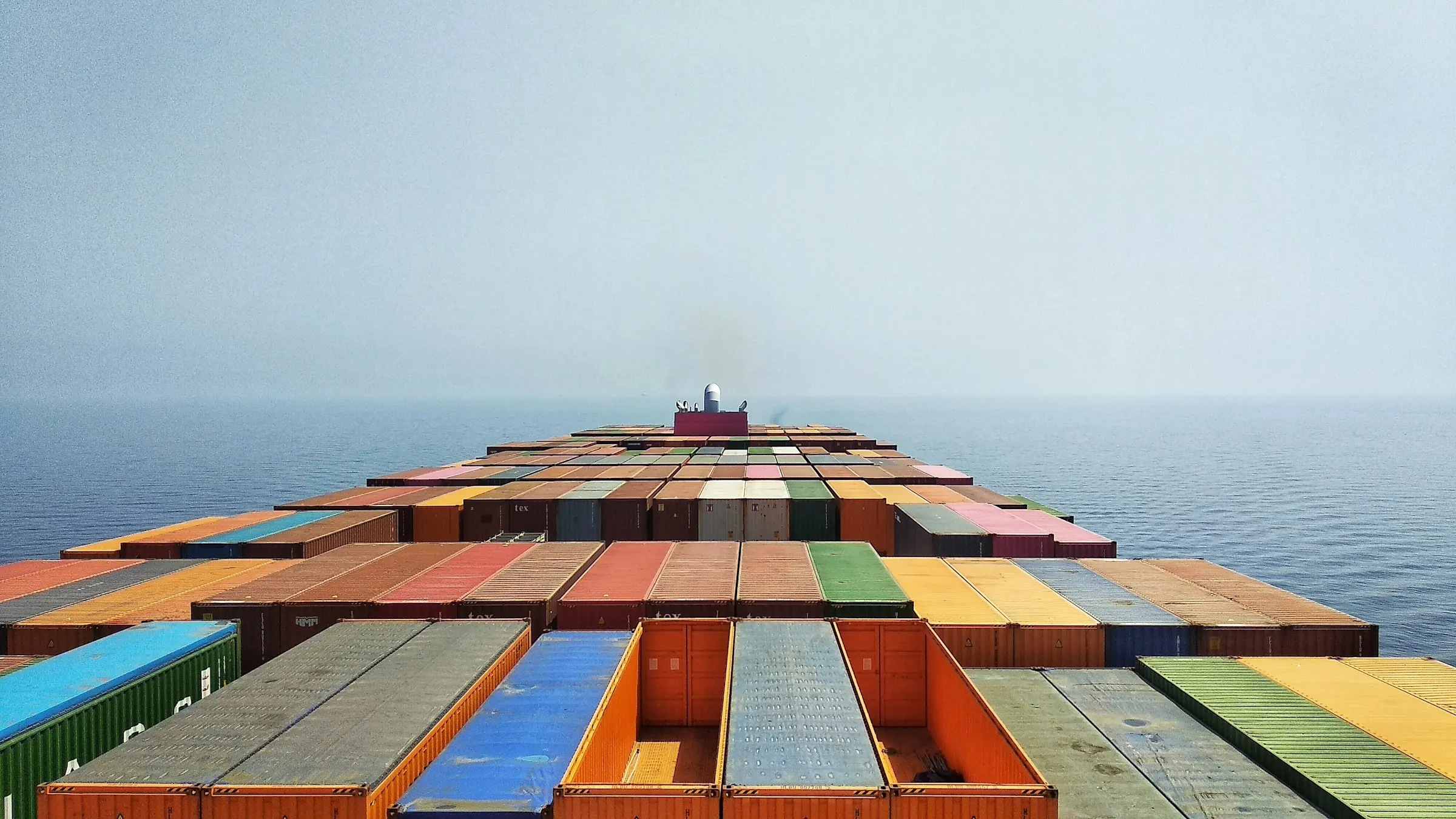
China-US Tariffs 2026: Section 301, CBP, De Minimis
Importing from China to the United States in 2026 means stacking several layers of rules: a stable base tariff, Section 301 surtaxes applied line by line since 2018, IEEPA measures revised several times since 2025, a de minimis regime suspended for China, and federal agencies, CBP, FDA, FCC, CPSC, that judge the product independently of the rate paid. This article lays out, with sources, this mechanism and the strategies useful to an Amazon or Shopify seller, as of September 27, 2026.
2026 overview: three layers of tariffs to distinguish
Every Chinese good entering the United States crosses three layers of rules. The base tariff, known as MFN, stems from World Trade Organization membership status and rarely changes. Section 301 surtaxes, set by the USTR since 2018, target precise lists of Chinese tariff codes. IEEPA measures, added since 2025, have been revised several times during 2026, with no definitive combined rate as of September 27, 2026. Our article Importing from China to the United States covers the base tariff and logistics; this one focuses on the surtaxes, the end of the de minimis regime, and customs obligations.
- Base MFN tariff: WTO commitments, stable year over year
- Section 301 surtaxes: by tariff line, USTR, since 2018
- IEEPA measures: by presidential order, revised since 2025, no definitive combined rate
Leia também Importing From China to the US: Customs, Tariffs and Standards in 2026
Section 301: four lists, one mechanism still active
The Section 301 mechanism stems from an investigation opened by the USTR in 2018 into Chinese practices of forced technology transfer. It resulted in four successive tariff actions, covering respectively 34, 16, 200, and 300 billion dollars of Chinese products, a structure still in force according to the USTR (ustr.gov, accessed September 27, 2026). Each list corresponds to precise Harmonized Tariff Schedule codes, not entire product families: verification happens line by line, never on a sector average.
- List 1: 34 billion dollars; List 2: 16 billion
- List 3: 200 billion dollars
- List 4A: 300 billion, with exclusions granted product by product
Leia também Código aduaneiro HS, NC, TARIC: encontrar o código certo, e porque importa
IEEPA measures: a timeline that kept shifting in 2026
Since 2025, a second layer of duties, based on IEEPA rather than ordinary trade law, has been added to Section 301. The executive order of May 12, 2025 brought the China reciprocal rate down from 34% to 10% for a 90 day suspension starting May 14, 2025, and lowered from 120% to 54% the alternative duty on low value Chinese shipments (White House, Executive Order 14298, whitehouse.gov, accessed September 27, 2026). A second order, dated July 31, 2025, changed the reciprocal rates for roughly sixty other countries without affecting the Chinese regime (White House, Executive Order 14326, whitehouse.gov, accessed September 27, 2026). Since then, several adjustments have occurred throughout 2026, up to a new bilateral announcement in late September 2026, with no definitive figures published.
- May 12-14, 2025: China reciprocal rate cut from 34% to 10%, 90 day suspension
- July 31, 2025: rate revision for roughly sixty other countries, Chinese regime unchanged
- 2026: repeated adjustments, latest bilateral announcement with no definitive figures as of September 27
Leia também Direitos antidumping sobre a China: como saber se está abrangido
The end of the de minimis regime for Chinese parcels
The de minimis regime, set out in Section 321, exempts from duties and formal entry any shipment valued under 800 dollars per recipient per day. This threshold remains the general rule for most countries, but no longer for shipments from mainland China and Hong Kong since 2025: Executive Order 14298 of May 12, 2025 confirms this shift, with these postal parcels remaining subject, from May 14, 2025 onward, to an alternative duty lowered from 120% to 54% of their value, or a flat 100 dollar fee per shipment depending on the formula used at customs clearance (White House, whitehouse.gov, accessed September 27, 2026). The exact date of the initial order removing the regime for China remains unconfirmed as of this writing: this point should be checked with CBP before shipping by parcel, rather than by consolidated freight, which is often more predictable.
- General threshold: 800 dollars per recipient per day, Section 321
- No longer applies to shipments from mainland China and Hong Kong since 2025
- Alternative duty on low value Chinese parcels, revised since May 2025
Leia também Express China França: custos DHL, FedEx, UPS e alfândega à chegada
UFLPA: the goods a surtax alone cannot describe
Beyond the surtaxes, goods can be refused entry regardless of the duty rate they carry. The Uyghur Forced Labor Prevention Act of 2021 creates, under 19 U.S.C. § 1307, a rebuttable presumption: any good mined, produced, or manufactured wholly or in part in the Xinjiang Uyghur Autonomous Region, or by an entity listed by the Department of Homeland Security, is presumed connected to forced labor and prohibited from importation (CBP, UFLPA page, cbp.gov, accessed September 27, 2026). Rebutting this presumption requires clear and convincing evidence covering the entire supply chain; CBP publishes a public dashboard on shipments reviewed. Cotton, polysilicon, and agricultural products remain closely watched sectors.
- Legal basis: 19 U.S.C. § 1307, rebuttable presumption
- Origin targeted: Xinjiang, or an entity on the DHS UFLPA list
- Burden of proof: on the importer, across the entire supply chain
Leia também Origem das mercadorias e marcação Made in: regras e armadilhas
CBP: importer of record, ISF, customs bond, and entry declaration
CBP does not require a general import license: the importer identifies itself with its federal Employer Identification Number or, failing that, its Social Security number. Being the importer of record carries personal responsibility for tariff classification, customs value, and payment of duties, surtaxes included. For an ocean shipment, the Importer Security Filing, the 10+2 rule, must be filed before the container is loaded in China, or the shipment risks being held on arrival. The entry declaration is filed next, followed by the entry summary and payment of duties within the deadline set by CBP. A customs bond, taken out with a surety company approved by the US Treasury, guarantees this payment, calculated case by case.
- Identification: federal Employer Identification Number or Social Security number
- Importer Security Filing, before loading, ocean freight
- Entry summary and duty payment within the set deadline, bond calculated case by case
Leia também Fatura comercial de importação: menções obrigatórias na alfândega · Packing list (lista de conteúdo): definição e conteúdo obrigatório
FDA, FCC, CPSC: three agencies that judge the product, not just its value
A surtax is calculated on a value; a regulatory non-compliance blocks the goods regardless of the duty paid. The FDA covers food, cosmetics, and medical devices, with foreign establishment registration and prior notice before arrival. The FCC governs any radiofrequency device, Wi-Fi, Bluetooth, or remote control, which must carry a valid equipment authorization before importation. The CPSC requires a written certificate of compliance, a General Certificate of Conformity for general consumer products, a Children's Product Certificate based on an accepted laboratory test for any product intended for children, toys included (CPSC, certificates of compliance, cpsc.gov, accessed September 27, 2026), issued before importation.
- FDA: establishment registration and prior notice
- FCC: equipment authorization before importation for radiofrequency devices
- CPSC: written certificate of compliance, stricter for children's products
Leia também Documentação técnica do produto: o que o importador deve possuir
Selling on Amazon and Shopify from China: what Sorva does for you
A seller who entrusts logistics to Amazon FBA remains the importer of record at entry into the United States, even though Amazon then handles storage and shipping: the platform does not take on this responsibility. A seller dropshipping through Shopify, under DDP Incoterms from China, must make sure that someone, their freight forwarder or a customs broker, actually acts as the importer of record registered with CBP: a Chinese supplier promising DDP without a clear US structure passes this risk on to the buyer.
Sorva is a sourcing and trading firm based in Guangzhou, in the Tianhe district, backed by a Chinese subsidiary whose corporate purpose covers purchasing, resale, and export, and by a parent company in France. Our Chinese speaking team finds and vets factories, negotiates, arranges quality control before loading, helps classify the product under the correct tariff code, and organizes freight to the chosen US port. We are never the importer of record in the United States: that role stays with the client or their licensed customs broker. Our base offer is billed in dollars, complemented by regional options quoted on request. A case opens through WhatsApp at +33 6 15 55 62 52 or by emailing [email protected].
Keep in mind that in the United States, in 2026, several layers of duties stack together, Section 301, IEEPA measures, and a de minimis regime suspended for China, and none of them can be read correctly without checking as of the order date. First move: classify your product under its exact tariff code and check, line by line, the Section 301 surtax and the IEEPA measure in force before negotiating a price with the factory.
Você importa da China?
Diga-nos o que você está buscando comprar. Nossa equipe responde pelo WhatsApp, com as fábricas, os prazos e os documentos exigidos pelo seu país.
Perguntas frequentes
01What tariff rate applies to importing from China to the United States in 2026?
02Does the de minimis regime still exist for parcels from China?
03What is the UFLPA and how does it differ from a surtax?
04Is a customs bond required to import into the United States?
05Who is responsible for customs clearance when selling on Amazon FBA?
06Does an electronic device imported from China need FCC authorization?
07Can Sorva act as the importer of record in the United States?
08How can I check the surtax that applies to my product before ordering?
O que está mudando agora
- États-Unis · Droits de douane
Estados Unidos e China reduzem tarifas aduaneiras sobre US$ 30 bilhões em produtos
Após uma visita do presidente chinês Xi Jinping a Washington em 26 de setembro de 2026, os dois países anunciaram uma redução cruzada de suas tarifas aduaneiras sobre cerca de 30 bilhões de dólares em trocas comerciais. Nenhuma tabela detalhada, linha tarifária por linha tarifária, havia sido publicada até esta data.
Ler o artigo - États-Unis · Douane
Estados Unidos: a franquia de minimis de 800 dólares não existe mais para a China
A franquia aduaneira de 800 dólares que dispensava pequenas remessas de tarifas e de declaração detalhada foi suspensa para a China e Hong Kong já em maio de 2025, depois para o resto do mundo, antes que uma norma de 24 de junho de 2026 formalizasse uma suspensão por prazo indeterminado para remessas que chegam por qualquer modal diferente da rede postal internacional. Toda remessa comercial, qualquer que seja seu valor, deve agora ser objeto de uma declaração aduaneira e pagar as tarifas normais.
Ler o artigo - Chine · Contrôle des exportations
China: novas restrições à exportação de terras raras visando empresas dos EUA
Em junho de 2026, a China acrescentou cerca de dez entidades americanas, entre elas produtoras de terras raras e de ímãs, à sua lista de controle de exportações, proibindo com efeito imediato a partir de 22 de junho de 2026 as exportações chinesas de produtos de duplo uso para essas entidades. Essa medida se soma a um sistema de licenças em vigor desde abril de 2025 que já restringe as exportações chinesas de sete elementos de terras raras.
Ler o artigo
As certificações que o seu país exige
Em dólares, mediante orçamento, adicionadas à mesma prestação de base.
Estados Unidos · FCC, CPSC, FDA Conformidade Estados Unidos
Mediante orçamentoIn US dollars
Autorização FCC para eletrônicos, certificados de conformidade CPSC para produtos de consumo e infantis, registros FDA para alimentos e dispositivos: nós preparamos os documentos do lado do fornecedor, o importador oficial continua sendo você.
- Identificação das normas federais que afetam o seu produto
- Relatórios de ensaio obtidos junto à fábrica, por um laboratório reconhecido quando exigido
- Minuta do certificado de conformidade e da rotulagem para validação
- Informações do fornecedor prontas para as suas declarações de importador
A prestação correspondente
- ComissãoComissão sobre volumeAbre um dossiê, nós encontramos e negociamos a fábrica. Só somos pagos sobre a mercadoria que encomenda.150 €taxas de abertura de dossiêVer o serviço
- Gabinete de estudosEstudo de conformidade regulamentarO que o seu produto deve cumprir no país de destino, por escrito e com fontes, antes da primeira encomenda.390 €por produto e por país de destinoVer o serviço
- Por unidadeControlo antes do carregamentoQuantidades, embalagem, marcação, estado do contentor, relatório fotográfico, antes de a mercadoria partir.229 €por carregamentoVer o serviço