
Importing from China to the Republic of the Congo: Customs, PCEC, VAT 2026
Importing from China to the Republic of the Congo means mastering three areas: the CEMAC tariff, the Congolese conformity assessment program, known as PCEC, which governs customs clearance for almost all goods, and transit through the port of Pointe-Noire. This article brings together, with sources, the rates, documents and timelines useful to a Congolese importer, as of 27 September 2026.
What the Republic of the Congo imports from China: promising niches
In 2024, Congo imported CFA francs 2,556 billion worth of goods from all origins combined, of which 35%, or CFA francs 901 billion, came from China, the country's leading supplier. The trade balance remains in surplus thanks to oil, which says nothing about the landed cost of a manufactured import.
The country still depends on imports for food security, with meat and offal accounting for close to 8% of imports in 2024. The State is looking to reduce its reliance on oil by developing forestry, agriculture, construction, transport and mining, sectors that are driving demand for materials and vehicles.
- Construction materials and equipment, a priority sector
- Vehicles and transport equipment, another priority sector
- Equipment for mining and forestry
- Processed food: meat and offal, close to 8% of imports in 2024
- Pointe-Noire: the country's only deep-water port, about 1 million TEU in 2021, 90% of it transshipment
Læs også Importing from China to Nigeria: customs, SONCAP, costs 2026
Trade relations and the customs framework between Congo and China
Congo belongs to CEMAC, alongside Cameroon, Gabon, Chad, the Central African Republic and Equatorial Guinea, six states with a common external tariff and no duties between them. No bilateral Congo-China agreement has been identified: Chinese goods pay the same CEMAC tariff as any third country.
A new CEEAC-CEMAC tariff, approved on 18 October 2024, took effect in Cameroon on 1 January 2026, with more tariff bands, up to 40% for some products; no application date has been found for Congo, so the four-band schedule below still needs to be reconfirmed, as of 27 September 2026, before any customs clearance. In the other direction, China removed customs duties from 1 December 2024 for the least developed African countries, then extended, from 1 May 2026 and for two years, a preferential tariff to other African countries with diplomatic relations with it, including Congo, which is not classified as least developed: this helps Congolese exports, not the direction that matters to an importer.
Læs også Importing from China to Senegal: Complete 2026 Guide
Customs duties and import taxes: categories and calculation
The CEMAC tariff splits goods into four categories, detailed below, ranging from 5% to 30%. A computer processing fee is added on top, announced at 20 to 60% of the cost-and-freight value (2024 figure), to be reconfirmed.
VAT applies at the standard rate of 18%, reduced to 10% for locally produced mineral water, cement, sugar and chicken, which has no effect on an import. Example: on CFA francs 5,000,000 classified in the 20% category, the duty comes to 1,000,000; VAT is calculated on the value plus duty, i.e. 6,000,000, giving 1,080,000 francs. The confirmed total reaches 2,080,000 francs, about 41.6% of the cost-and-freight value, before the computer processing fee and PCEC costs.
- Category 1, 5%: essential goods
- Category 2, 10%: raw materials and capital goods
- Category 3, 20%: intermediate products, including processed food
- Category 4, 30%: all other products, including most consumer goods
- VAT: 18%, reduced rate of 10% for a limited number of products
Læs også Toldkode HS, KN, TARIC: find den rette kode, og hvorfor den betyder noget · Leveret kostpris: den fulde landed cost-formel
Mandatory documents for an import
The confirmed core documentation includes the bill of lading, commercial invoice, import authorization, and a health certificate for agricultural products, plus a permit for hazardous materials. An older WTO review, to be reconfirmed, adds a customs declaration, the ADVI, and an import certificate stamped by the bank above CFA francs 5,000,000.
Customs clearance is computerized under SYDONIA++ at the Pointe-Noire, Brazzaville, Pokola and Nzassi offices, complemented since 2019 by the e-douanes portal in Pointe-Noire. Depending on the product, a certificate of origin, a phytosanitary certificate, and the PCEC certificate detailed further below may also be required, without which clearance remains blocked.
- Bill of lading and commercial invoice
- Import certificate stamped by the bank above CFA francs 5,000,000, threshold to be reconfirmed
- Certificate of origin and packing list
- Import authorization and health certificate for agricultural products
- Permit for hazardous materials, weapons, explosives and chemical products
- PCEC certificate, required for almost all products
Læs også Handelsfaktura ved import: obligatoriske oplysninger til tolden · Packing list (pakkeliste): definition, obligatorisk indhold
Standards, PCEC certification and pre-shipment inspection
Since 1 May 2022 (certificate required from 1 July 2022 for goods arriving), Congo applies the PCEC, the Congolese conformity assessment program, mandated by ACONOQ, created by Law No. 19-2015 of 29 October 2015. Bureau Veritas and other accredited bodies verify, before shipment, compliance with Congolese, regional or international standards, through document review, testing in an ISO/IEC 17025 accredited laboratory where needed, and inspection of markings. The program covers almost all products, including used goods, as soon as a shipment exceeds CFA francs 1,000,000 in FOB value, about EUR 1,525.
Exempt are gold and precious metals, precious stones, works of art, scrap metal, war materiel for the Congolese armed forces and police, certain fresh products, animals and plants, used personal effects, commercial samples, crude or partially refined oil, and postal parcels with no commercial value. Fees, borne by the exporter, range from 0.27% to 0.53% of the FOB value depending on the route, with a minimum of EUR 220 to 300, a common cap of EUR 7,000, plus EUR 375 in registration fees for the first fifteen products and EUR 20 per additional product. The technical specification also requires French-standard electrical plugs (NF C 61-314), 220 or 230 volts at 50 hertz, French-language labeling for mass-consumption products, and bans certain food and cosmetic additives such as hydroquinone.
Læs også Kontrol før lastning: PSI-protokollen i Kina · AQL-niveauer forklaret: 2,5, stikprøvetagning og talfæstede eksempler
Prohibited or licensed products, payment and precautions
Sugar and eggs are completely banned from import, and the private import of weapons and ammunition requires authorization from the Ministry of the Interior. The PCEC adds its own list, counterfeit and non-compliant products, which results in the certificate being refused, without which clearance is not possible.
On payment, the usual practice is a deposit followed by a balance before shipment, paid into the factory's business account, never a personal account: any change of bank details by email should be verified by a direct phone call before wiring funds. The CEMAC CFA franc, pegged to the euro at a fixed rate, hence the EUR 1,525 PCEC threshold, simplifies budgeting without eliminating the exchange-rate risk on the portion invoiced in dollars or yuan.
Læs også Betale en kinesisk leverandør: bankoverførsel, remburs
Ports, transport and the steps of a first order
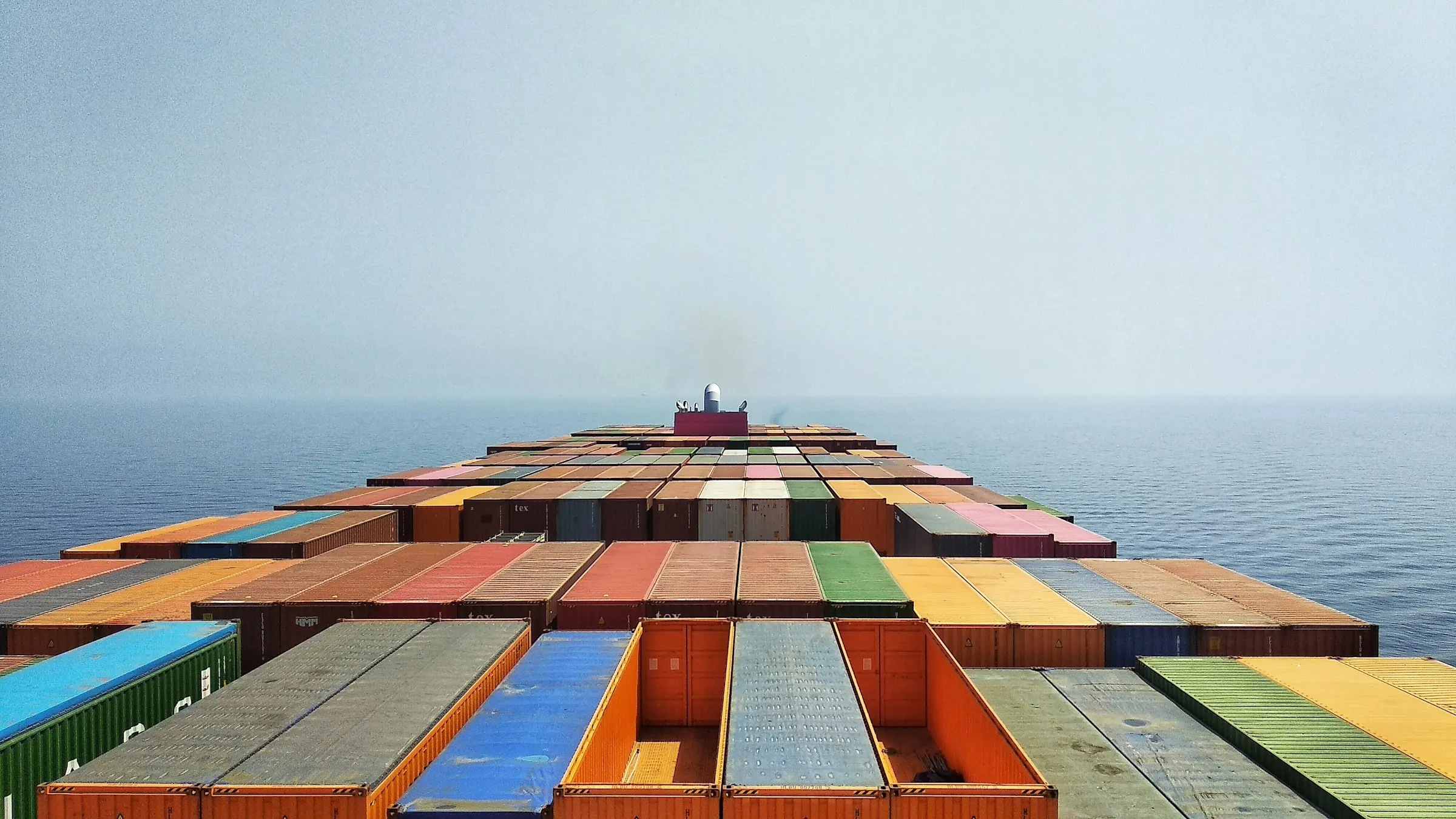
Pointe-Noire, the country's only deep-water port, handles almost all containerized freight from China, most often from Guangzhou, Shenzhen or Yantian, with no verifiable transit time identified: ask the freight forwarder. FOB suits those who arrange their own transport, CIF or CFR suits those who delegate it; DDP remains inadvisable as long as the seller is not a registered customs declarant in Congo.
A first order follows a precise sequence: specifications, factory verification, approved sample, proforma invoice with an Incoterm, PCEC application launched in parallel, production follow-up, pre-shipment inspection, PCEC certificate obtained, freight to Pointe-Noire, local customs clearance by the client or their licensed customs broker, with the PCEC certificate, the certificate of origin and, above the bank threshold, the stamped import certificate.
Læs også Incoterm FOB: betydning, forpligtelser og pris (Incoterms 2020) · Søfragt fra Kina: FCL eller LCL, omkostninger, tidsfrister, vippepunkt
What Sorva does for a client in the Republic of the Congo
Sorva is a sourcing and trading house between China and the world, based in Guangzhou (Tianhe), backed by a Chinese subsidiary whose business scope covers purchasing, resale and export, and by a parent company in France. The Chinese-speaking team finds and verifies factories, organizes visits and samples, negotiates, has the goods inspected before loading, and arranges freight to Pointe-Noire, gathering the documents that feed the exporter's PCEC application.
Sorva never acts as the official importer in Congo, does not clear goods through customs in Pointe-Noire, that responsibility remaining with the client or their local customs broker, and does not export any vehicle without going through a Chinese exporter licensed by China's Ministry of Commerce. In most cases, no fee is due on the supplier search: Sorva negotiates the goods and takes a commission on their ex-factory value, with the base offer billed in dollars outside the European Union, supplemented if needed by regional options such as support with the compliance file, on request.
Læs også Første import: de ti trin og de fejl, der koster dyrt
Remember that in Congo, the PCEC certificate must be requested before shipment, not after, and it governs customs clearance for almost all goods in Pointe-Noire, even before the customs tariff. First step: check whether the product exceeds the CFA francs 1,000,000 FOB value threshold and start the PCEC file as soon as production begins.
Importerer du fra Kina?
Fortæl os, hvad du ønsker at købe. Vores team svarer på WhatsApp med fabrikkerne, tidsfristerne og de dokumenter, som dit land kræver.
Ofte stillede spørgsmål
01What customs duties apply when importing from China to the Republic of the Congo?
02What is the PCEC and from what value does it apply?
03What is the VAT rate on imports into Congo?
04What documents are needed to clear goods from China through customs?
05Which products are banned or licensed in the Republic of the Congo?
06Which port should I use for an import from southern China?
07Can Sorva clear my goods through customs on arrival in Congo?
Hvad der ændrer sig lige nu
- Angola · Commerce extérieur
Angola: Kina ophæver tolden på angolanske produkter (maj 2026)
Siden den 1. maj 2026 anvender Kina en nultold på varer importeret fra de 53 afrikanske lande, som landet har diplomatiske forbindelser med, herunder Angola. Kun Eswatini, som diplomatisk anerkender Taiwan, er udelukket fra denne foranstaltning.
Læs artiklen - RDC · Douane numérique
DR Congo: den elektroniske dokumentbunke bliver obligatorisk i hele landet
En interministeriel cirkulæreskrivelse af 17. december 2025 kræver udelukkende elektronisk fremsendelse af udenrigshandelens dokumentbunke, fra den integrerede enstrengede sagsbehandling (GUICE) til tolden (DGDA). Udrulningen, som begyndte i Kinshasa, skal udbredes til hele det congolesiske territorium senest den 18. februar 2026.
Læs artiklen
De certificeringer, dit land kræver
I dollar, efter tilbud, tilføjet den samme grundydelse.
Vest- og Centralafrika Obligatorisk inspektion før afsendelse
Efter tilbudIn US dollars
Flere lande i Vest- og Centralafrika kræver en inspektion før ombordtagning udført af et statsligt bemyndiget organ, for eksempel Bureau Veritas (BIVAC), Cotecna eller SGS afhængigt af landet, som udsteder den attest, der kræves ved fortoldning.
- Identifikation af det bemyndigede organ for dit land
- Proformafaktura og pakliste udarbejdet sammen med fabrikken
- Adgang til fabrikken og varer klar på inspektionsdagen
- Vores egen kontrol før inspektørens besøg
Den tilhørende ydelse
- KommissionVolumenprovisionDu åbner en sag, vi finder og forhandler fabrikken. Vi betales kun på de varer, du bestiller.150 €sagsåbningsgebyrSe ydelsen
- StudiebureauRegulatorisk overholdelsesanalyseHvad dit produkt skal overholde i bestemmelseslandet, skriftligt og med kildeangivelse, før den første bestilling.390 €pr. produkt og pr. bestemmelseslandSe ydelsen
- Per stykKontrol før lastningMængder, emballage, mærkning, containerens tilstand, fotorapport, før varerne afsendes.229 €per lastningSe ydelsen