
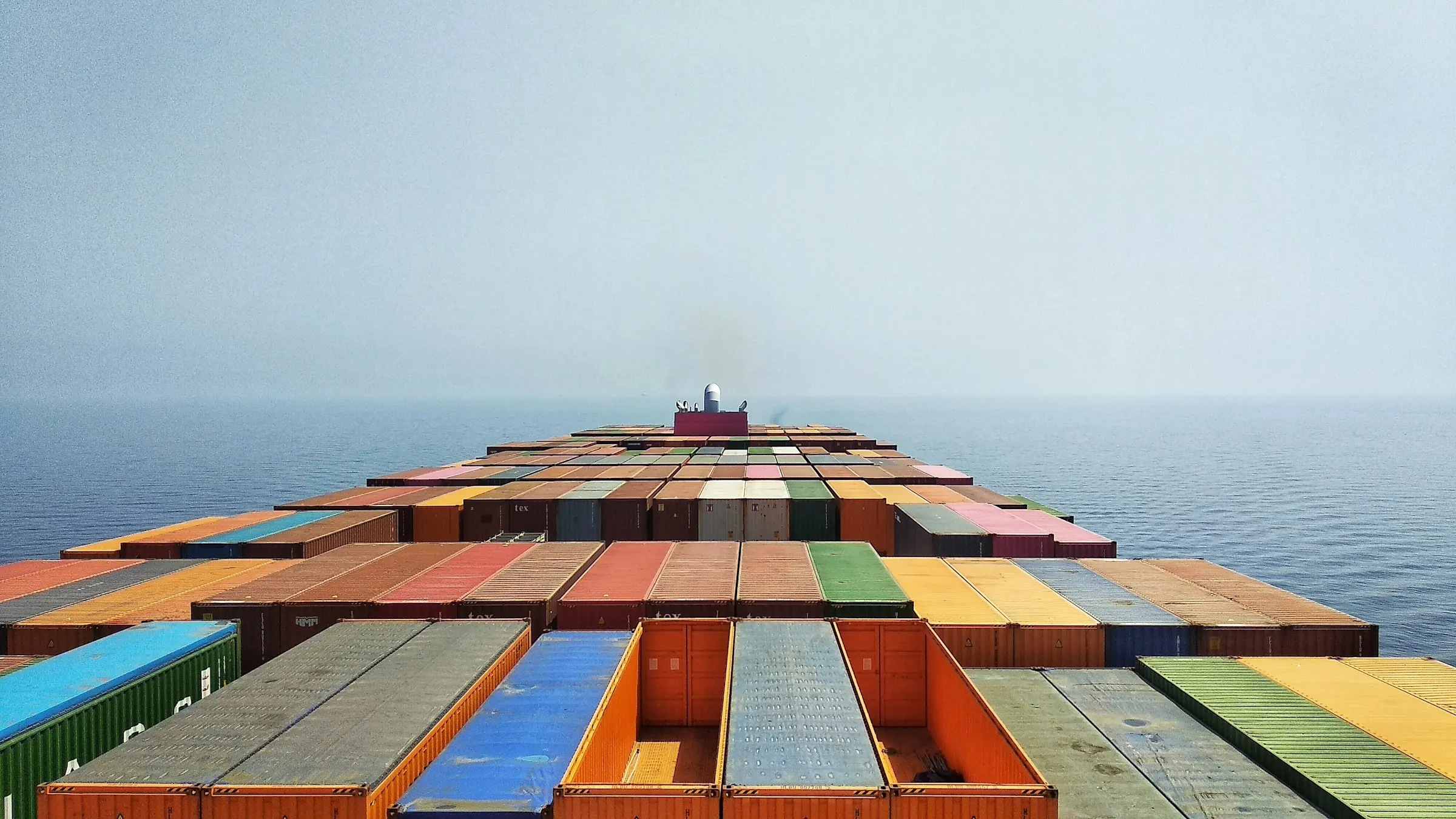
Importing from China to Mauritius: customs, VAT, free port 2026
Importing from China to Mauritius rests on an advantage few African countries have: a free trade agreement with China in force since January 2021, backed by a free port ranked number one in Africa for re-export. This article brings together, with sources, the rates, documents and timelines that matter to a Mauritian importer, as of 27 September 2026.
What Mauritius imports from China: niches and the free port's role
China became Mauritius's top supplier in 2024, accounting for 17.3% of total imports, ahead of India at 10.8%, according to the trade guide published by the US Department of Commerce, a position reinforced by the free trade agreement that took effect in January 2021.
Mauritius's manufacturing sector makes up 12.8% of GDP and employed 60,000 people in 2024, across textiles, processed seafood, jewellery and light engineering, with the latter alone accounting for 13,500 jobs, or 22% of total manufacturing employment. These industries source a large share of their inputs abroad, with China as the country's top supplier.
- Textiles, apparel and inputs for local garment manufacturing
- Consumer electronics and household appliances
- Building materials and construction equipment
- Solar and storage equipment, in line with the national target of 60% renewable electricity by 2030
- Goods intended for re-export to southern and eastern Africa via the free port
Mauritius and China: trade agreements and customs relations
The free trade agreement between Mauritius and China, the first of its kind China signed with an African country, took effect in January 2021. It grants duty-free access on 7,504 tariff lines on the Chinese side, according to the trade guide published by the US Department of Commerce; the rules of origin are set out in Annex II of the agreement, and meeting them, proven by a certificate of origin, is what triggers the preferential rate on entry into Mauritius.
Mauritius also belongs to COMESA and SADC, duty-free with most members, and to the AfCFTA, effective since January 2021, which adds preferential terms with 23 countries or customs unions, useful for re-exporting Chinese goods from the free port.
Lees ook Douanecode HS, GN, TARIC: de juiste code vinden, en waarom die telt
Customs duties and import VAT: the full calculation
Mauritius's customs tariff applies ad valorem duties spread across six official bands, 0, 5, 10, 15, 30 and 100%, according to the trade guide published by the US Department of Commerce on 18 February 2026. The exact rate must be checked line by line in the Mauritius Revenue Authority's integrated tariff, on the CIF value. VAT is added at 15%, calculated on the CIF value plus the customs duty. Additional excise duties also apply to vehicles, household appliances, petroleum products, alcohol and cigarettes, at rates to be reconfirmed with the Mauritius Revenue Authority.
Example on a CIF value of 100,000 Mauritian rupees, with a 15% duty, one of the six official bands: customs duty 15,000 rupees, VAT base 115,000 rupees, VAT at 15% equalling 17,250 rupees, total 32,250 rupees, just under a third of the CIF value. Chinese goods covered by a 0% line under the agreement, with a certificate of origin, then bear only VAT.
- Customs duty: 0, 5, 10, 15, 30 or 100% depending on the tariff line, on the CIF value
- Import VAT: 15%, on the CIF value plus customs duty
- Additional excise duties on vehicles, household appliances, petroleum products, alcohol and tobacco
- Preferential rate as low as 0% under the China-Mauritius agreement, with a certificate of origin
Lees ook Douanewaarde en berekening van de rechten: grondslag, aanpassingen · Btw bij invoer en verlegging: hoe het werkt in Frankrijk
Mandatory documents for customs clearance
The Mauritius Revenue Authority requires an Import Bill of Entry for every clearance, accompanied by the bill of lading or air waybill, and a detailed commercial invoice. For the preferential rate under the agreement with China, a certificate of origin complying with Annex II must accompany the file; without it, the goods pay the standard duty rate. The Mauritius Trade Easy portal centralises, product by product, the applicable procedures, duties, taxes and documents.
Depending on the product, an additional licence may be required on top of this base set: consumer protection, food safety, toy safety, or agricultural regulation.
- Import Bill of Entry filed with the Mauritius Revenue Authority
- Bill of lading or air waybill
- Detailed commercial invoice
- Certificate of origin complying with Annex II, for the preferential rate
- Additional licence or permit depending on the product category
Lees ook Handelsfactuur bij import: verplichte vermeldingen voor de douane · Certificaat van oorsprong China: waarvoor het dient en wanneer verplicht
Mauritius Standards Bureau standards and inspections
The Mauritius Standards Bureau is the national standards body; it aligns its catalogue with ISO, IEC, ASTM and Codex standards. A standard becomes mandatory once a regulatory text refers to it, otherwise it remains voluntary. The Bureau acts as the sole product certification body for items posing a risk to health, safety or the environment, with a mark valid for two years, renewable under surveillance.
The Mauritius Accreditation Service, MAURITAS, accredits conformity assessment bodies on a voluntary basis. Any draft technical regulation is published in the official Gazette for public consultation. Our sources found no widespread pre-shipment inspection programme for Mauritius: check on a product-by-product basis with the Bureau.
Lees ook Technische productdocumentatie: wat de importeur moet bezitten
Products banned or subject to licence on import
The trade guide published by the US Department of Commerce lists, among prohibited goods, ivory, tortoise shell, spearfishing guns, certain used vehicles, chlorofluorocarbon appliances, blue asbestos, Covid-19 rapid antibody tests, and any material contrary to public morality or religion.
A second list requires a permit from the Ministry of Commerce and Consumer Protection for petroleum oils, rice, flour, Covid-19 self-test kits, narcotics, firecrackers, weapons and ammunition, and used vehicles. Goods falling under either list must be identified before placing the order, not at loading time in China.
Port Louis, the free port and recommended Incoterms
Port Louis remains the country's only major port, managed by the Mauritius Ports Authority, certified ISO 9001:2015 and ISO 14001:2015. In the 2024-2025 financial year, total traffic grew by 14.6%, container traffic by 5.8% and vessel traffic by 17.7%. From southern China, Guangzhou, Shenzhen or Yantian remain the most common ports of departure; transit time should be confirmed case by case with the freight forwarder.
Mauritius's free port, created in 1992, ranks first in Africa; in 2023, it handled 797 million dollars in trade across 259,007 tonnes, with 268 operators and 5,500 jobs. Goods reconditioned or re-exported there benefit from duty- and VAT-free import, a 3% corporate tax rate, 100% foreign ownership and, above an investment of 50 million rupees, an eight-year income tax exemption.
Free on board suits cases where the buyer arranges transport; cost, insurance and freight when an intermediary handles it through to Port Louis. Delivered duty paid remains inadvisable unless the Chinese supplier is itself a registered customs declarant in Mauritius.
Lees ook Incoterm FOB: betekenis, verplichtingen en prijs (Incoterms 2020) · Zeevracht China: FCL of LCL, kosten, levertijden en omslagpunt
Payment, order steps and what Sorva does for you
On payment, common practice remains a deposit on order followed by a balance before shipment, paid into the Chinese company's business account, never a personal account: any change of bank details received by email should be verified with a direct call before any transfer.
A first order follows a set sequence: specifications, factory verification, approved sample, proforma invoice with the chosen Incoterm, preparation of the certificate of origin where the preferential rate applies, production follow-up, pre-shipment inspection, freight to Port Louis or to the free port depending on the project, then customs clearance by the client or their local freight forwarder on arrival.
Sorva is a sourcing and trading house based in Guangzhou, in the Tianhe district, backed by a Chinese subsidiary whose business scope covers buying, reselling and exporting goods, and by a parent company in France. Our Chinese-speaking team finds and vets factories, arranges visits and samples, negotiates, has quality checked before loading, gathers the certificate of origin needed for the free trade agreement, and arranges freight to Port Louis or to the free port. Sorva never acts as the official importer of record in Mauritius, does not clear goods through customs locally, and does not export vehicles itself without going through a licensed Chinese exporter. Our base service is invoiced in US dollars, with zone options quoted on request.
Lees ook Een Chinese leverancier betalen: overschrijving, kredietbrief · Eerste invoer: de tien stappen en de fouten die duur uitvallen
Remember that in Mauritius, the free trade agreement with China and the free port form a pairing unique in Africa: the first cuts customs duty to as low as zero, with a certificate of origin, the second allows re-export free of duty and VAT. First move: check whether your tariff line is covered by the agreement before signing the proforma.
Importeert u uit China?
Vertel ons wat u wilt kopen. Ons team antwoordt op WhatsApp, met de fabrieken, de termijnen en de documenten die uw land vereist.
Veelgestelde vragen
01What customs duties apply when importing from China to Mauritius?
02What is the import VAT rate in Mauritius?
03Does Mauritius have a free trade agreement with China?
04What documents are needed to clear goods from China through customs?
05What is the Mauritius free port and what is it for?
06What products are banned or subject to licence on import to Mauritius?
07Can Sorva clear my goods through customs on arrival in Mauritius?
Wat er nu verandert
- Kenya · Droits de douane
Kenia: hogere EAC-invoerrechten op meubels, luiers en tassen
De Raad van ministers van de Oost-Afrikaanse Gemeenschap heeft, met ingang van 1 juli 2026, de invoerrechten verhoogd op verschillende categorieën consumptiegoederen die vaak vanuit Azië naar Kenia worden geïmporteerd. Meubels gaan van 35 naar 45%, babyluiers en handtassen van 25 naar 35%.
Artikel lezen - Ouganda · Droits de douane
Oeganda: nieuwe EAC-invoerrechten op oliën, koekjes, worsten en luiers
Vanaf 1 juli 2026 past Oeganda uitgebreide invoerrechten toe, tussen 36 en 60%, op een verruimde lijst van producten die als gevoelig zijn geclassificeerd, zoals spijsoliën, boter, koekjes en worsten. Voor pvc-artikelen en babyluiers stijgt het invoerrecht van 25 naar 35%.
Artikel lezen - Rwanda · Droits de douane
Rwanda: vrijstelling van invoerrechten voor elektrische en hybride bussen
Sinds 1 juli 2026 past Rwanda een nultarief toe op elektrische en hybride bussen, alsook op chipkaarten, in het kader van de jaarlijkse herziening van het gemeenschappelijk buitentarief van de EAC. Omgekeerd stijgt het invoerrecht op aluminium keukengerei van 25 naar 35%.
Artikel lezen
De bijpassende dienst
- CommissieVolumecommissieU opent een dossier, wij vinden en onderhandelen met de fabriek. Wij worden alleen betaald over de goederen die u bestelt.150 €openingskosten dossierBekijk de dienst
- Per stukLeveranciersonderzoek · volledigEen aanbesteding voor u uitgevoerd, een cijfermatig overzicht, de monsters in handen.279 €per productBekijk de dienst
- Per stukControle voor ladenHoeveelheden, verpakking, markering, staat van de container, fotoverslag, voordat de goederen vertrekken.229 €per ladingBekijk de dienst