
Importing Sports and Outdoor Goods from China: Standards and Testing
Sports goods cover very different products, from pool inflatables to bicycles, each with its own standards and its own tests. This article details these safety regimes and the question of seasonality, which weighs on lead times as much as on price.
A sector that spans very different product families
Sports and outdoor goods are not a single regulatory category: a technical jersey falls under textiles, a pool inflatable under flotation and safety standards, a bicycle under mechanical standards, a tent under flammability requirements depending on its use. Each family has its own regime, and a supplier competent in one is not necessarily competent in another.
Before choosing a factory, identify precisely your product's family and the regulatory text that applies to it. An inflatable intended for children does not follow the same rules as an inflatable for adults, and a technical garment follows the textile rules already in force for composition labelling.
This diversity also shows up within the factories themselves: some manufacture exclusively PVC inflatable items, others focus on metal frames or composites. A supplier that offers the full catalogue on a minisite does not necessarily manufacture everything on site, and subcontracts some of the families furthest from its original trade.
Inflatables and pool items: identify the applicable standard correctly
An inflatable or pool toy intended for a child under fourteen most often falls under the Toy Safety Directive 2009/48/EC, with the tests associated with the EN 71 series of standards. An item intended for adults, a swimming buoy or an inflatable leisure structure for adults, falls under other safety standards depending on the intended use: flotation, swimming or leisure structure.
Do not trust a CE marking applied without a clear basis: ask the factory for the exact test standard used for your reference and the corresponding test report, established on the finished product and not on a generic model of the range.
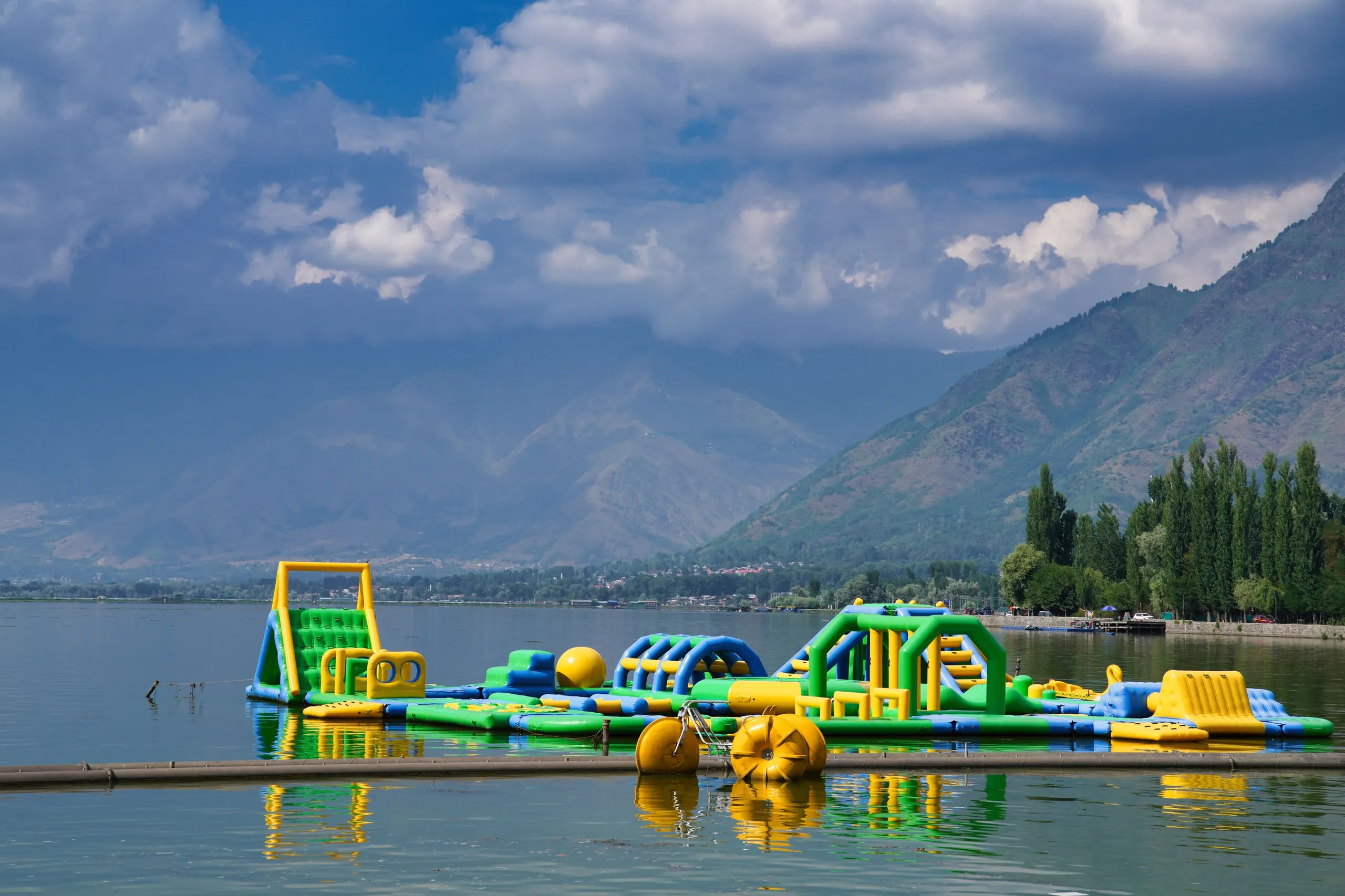
Larger inflatable structures, event inflatable games or soft above-ground pools, add checkpoints specific to their use: seam strength under pressure, ground anchoring, assembly and supervision instructions. These elements must be checked on the actual product, not on a sales sheet.
Read next CE Marking on Imports: What It Covers and How to Verify · Product technical documentation: what the importer must hold
Bicycles and fitness equipment: mechanical standards to check
A bicycle, a scooter or a fitness machine carries its own mechanical risk: frame strength, weld quality, braking reliability, structural stability under repeated load. These products fall under dedicated technical standards, which require more thorough strength and fatigue tests than a simple visual check.
Systematically request the test reports matching the product's actual use, child or adult, domestic or intensive use, and have a production sample checked, not just the prototype validated upstream, which may differ slightly from production.
The stated maximum weight and the load actually supported deserve independent verification, particularly on folding fitness machines or electric bicycles, where the battery adds an electrical safety requirement on top of the mechanical one.
Read next Importing electronics from China: LVD, EMC, RoHS, WEEE · GPSR Regulation 2023/988: Importer Obligations
Seasonality: scheduling production ahead of peak season
Outdoor goods sell within a short window: pools and inflatables in spring, camping in early summer, winter sports at year end. A Chinese factory often works on several brands in parallel in these same categories, and production slots are booked months ahead for peak-demand periods.
Chinese New Year closes most factories for several weeks, generally between late January and early March depending on the year, which delays orders placed just before it accordingly. Base your backward schedule on this closure and on the targeted selling season, not just on the production lead time announced by the factory.
Read next Chinese New Year 2027: factory calendar and import timeline
Pre-shipment inspection, with criteria specific to each family
Pre-shipment inspection of a sports item must be adapted to the product: an inflation test and leak check for a pool item, checking tightening and braking for a bicycle, a full assembly test for a tent or camping gear. A generic inspection, designed for a different type of product, lets category-specific defects through.
The AQL levels of ISO 2859-1 apply as in other sectors, with thresholds adapted to the severity of the defect: a safety defect, leak, braking, structure, must be treated as a critical defect, not a minor one, even if it is not visible in the product's general appearance.
Read next Pre-shipment inspection: the PSI protocol in China · Quality defects import from China: product families and prevention
What Sorva does for you
Sorva is a brokerage and sourcing house. Our Chinese-speaking team in Guangzhou identifies the standard applicable to your product before the order, has the corresponding test reports required, schedules production around seasonality and Chinese New Year, and organizes a pre-shipment inspection adapted to the product family.
In most cases, you pay no fees: you open a file with us, we negotiate the goods for you, and we take a commission on their ex-factory value.
Sports and outdoor goods span very different families, each with its own standard and its own test, within a short selling window. First step: identify the exact standard for your product and schedule production around the target season and Chinese New Year.
Let's talk about your project
Frequently asked questions
01Which standard applies to a pool inflatable for children?
02Why schedule the order around Chinese New Year?
03How do you inspect a bicycle before shipment?
04Does an adult sports item need CE marking?
05Does an inflatable item need different quality control?
The service that matches
- CommissionVolume commissionYou open a file, we find and negotiate the factory. We are paid only on the goods you order.€150file opening feeView service
- Engineering studiesRegulatory compliance studyWhat your product must meet in its destination country, written up and sourced, before the first order.€390per product and destination countryView service
- One-off servicePre-shipment inspectionQuantities, packing, marking, container condition and a photo report, before the goods leave.€229per loadingView service