
Importing packaging from China: boxes, cartons, printing
Packaging is often an afterthought, ordered from whichever factory is closest to hand, with no brief. This article sets out the specifications to write down, the print checks to demand, the food contact rules, and the importer's EU obligations.
Packaging, a product in its own right
Packaging protects the goods, carries the brand, and faces the same regulation as the product it holds. Yet it rarely gets a brief of its own. Many importers order it at the end of a project, from whichever factory is closest to hand, and discover the flaws when unboxing: dull colours, warped boxes, glue that gives way, a smell of solvents. These flaws are solved upstream, with written specifications.
Each family is described by its own parameters. Corrugated board is specified by its flute, its weight and its crush resistance. A folding carton is specified by the weight of its board, its coating or its lamination. A bag is specified by its material, its thickness, its handles. Write these parameters down before asking for a price, or every factory will quote a different object.
- Flute, weight and crush resistance for corrugated board
- Board weight, coating or lamination for a folding carton
- Material, thickness and handle type for a bag
- Materials in direct contact if the packaging touches food
- Colour references and finishes, marked on a technical drawing
Read next Food contact materials: Regulation (EC) No 1935/2004 for importers
Boxes, cartons, bags: each family has its own factories
Packaging factories are specialised. A corrugated board maker owns a corrugator, the large machine that produces the fluted board, and makes shipping cases and mailer boxes. A carton printer owns offset presses, die-cutters and gluing machines. A film converter makes soft pouches and bags. Rigid, fabric-covered boxes go through labour-intensive workshops. Asking a corrugated board factory for a folding carton, or the reverse, gets you a rough, unreliable quote.
The industry is concentrated in southern and eastern China, particularly in Guangdong, Zhejiang and Jiangsu. Many printers subcontract die-cutting, lamination or finishing to nearby workshops: ask who makes each step, and where. On platforms like Alibaba or 1688, many packaging listings come from traders, not factories. The Canton Fair, which our team attends every session, is also a place to compare several packaging makers side by side.
Read next Sourcing platforms in China: Alibaba, 1688, Made-in-China · Canton Fair user guide: dates, phases, and buyer badge in Guangzhou
Printing: lock down the colour before the production run
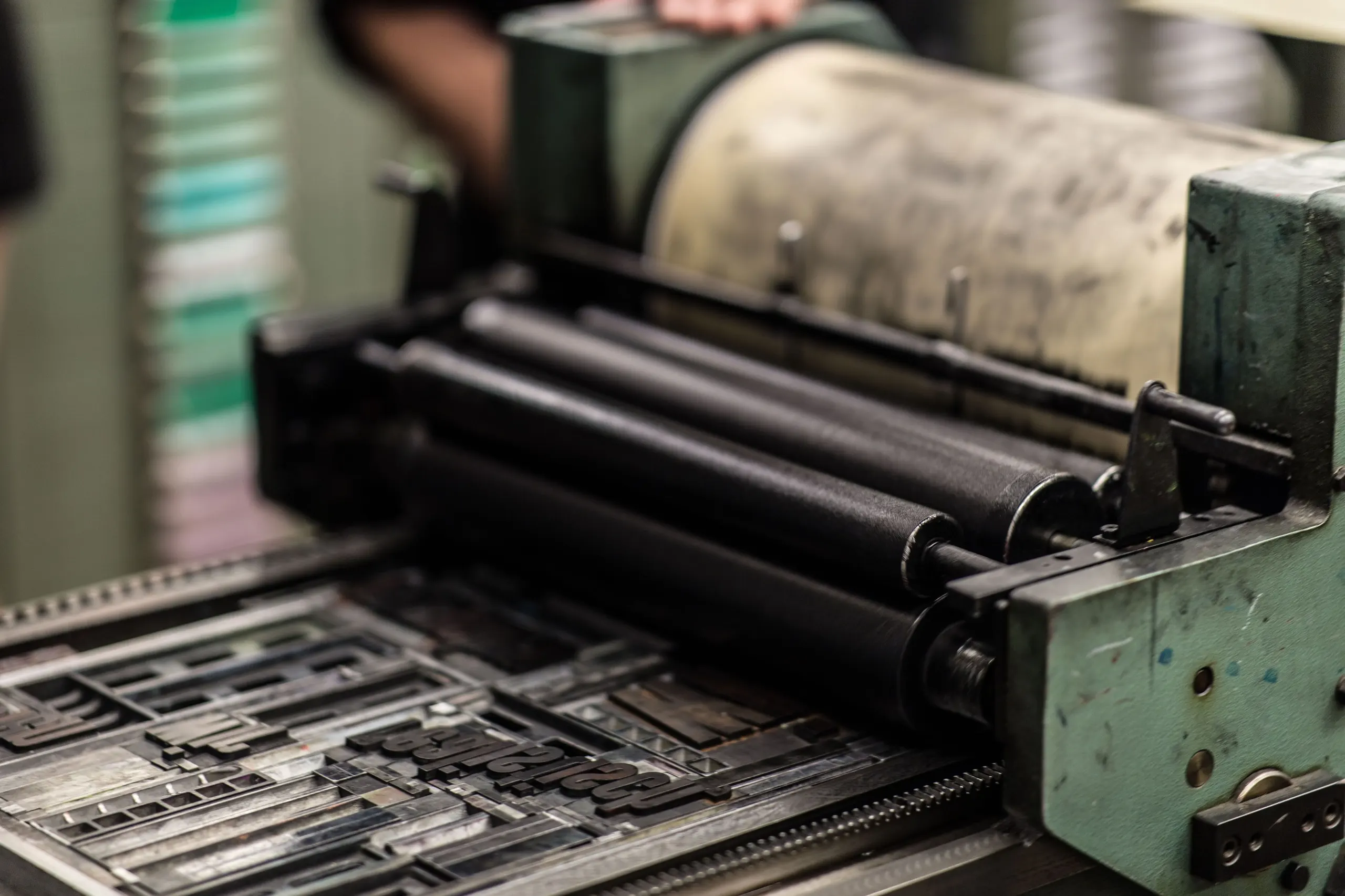
Printing is negotiated with files, not with adjectives. Supply a vectorised technical drawing, with cut lines and bleed, and colours in CMYK or spot inks, referenced for example against the Pantone colour chart. Demand a proof to validate the layout, then a pre-production sample printed on the actual machine and signed off by both sides. That sample becomes the colour reference for the whole run.
The same flaws recur through a production run: misaligned registration, colour drifting from one batch to the next, coating that scuffs, lamination that peels, a crease that cracks, insufficient bonding, a smell of solvents. Every extra finish, hot foil stamping, embossing, spot varnish, adds a step and often a subcontractor. A pre-shipment inspection, using an AQL level set in advance, checks colour, assembly and smell on the actual production, not on pieces picked out for you.
Read next Pre-shipment inspection: the PSI protocol in China · China factory sample: golden sample and pre-series
Food contact: packaging follows the product
If the packaging touches food, it falls under Regulation (EC) No 1935/2004: the material must not release constituents in a dangerous quantity, or change the composition, taste, smell or appearance of the food. For plastics, Regulation (EU) No 10/2011 sets a list of authorised substances and migration limits. For paper and board, there are no harmonised rules at EU level: Article 6 of the regulation leaves each member state to apply its own provisions, such as the recommendations from Germany's BfR.
Inks follow the same logic: no harmonised EU rule, and the Swiss Ordinance (RS 817.023.21) is often cited as a reference for its lists of substances. A Chinese factory works to the GB 4806 series for its domestic market: compliant with China does not mean compliant with the EU. Demand a named and dated declaration of compliance for every layer, body, coating and inks included, then have it confirmed by migration tests at an independent laboratory, on samples from your production.
Read next REACH and Regulated Substances: The Importer's Checks
MOQ, tooling and logistics: where the price is decided
The price of custom packaging depends less on the material than on the setup. Every format requires a machine setting, every extra colour an ink, every shape a die or an engraved cylinder. That is why special formats carry high minimum order quantities, while common formats can be ordered in smaller batches. Ask for the tooling cost to be quoted separately from the unit price: this investment does not repeat from one order to the next, but it ties your design to one factory.
Packaging weighs little and takes up volume. By sea, a shipment of packaging hits the container's volume limit before its weight limit, and freight is then priced by the cubic metre. Ship the cartons flat when the technique allows it, and size the master box to the product, not to habit. Delivered with the product, packaging also enters its customs value. Finally, plan ahead for the calendar: printing workshops get saturated in the weeks before Chinese New Year.
Read next Sea freight from China: FCL or LCL, costs, transit times and break-even point · Chinese New Year 2027: factory calendar and import timeline
Empty packaging is still a regulated product
Empty or full, packaging placed on the European market triggers obligations. In France, the importer is treated as a producer under the extended producer responsibility schemes: they register with an accredited compliance scheme, declare the tonnage of packaging placed on the market, and pay the corresponding eco-fees. The French sorting label also applies to packaging aimed at households.
Regulation (EU) 2025/40 on packaging and packaging waste adds a further layer, most of which applies from August 2026: packaging recyclability, harmonised labelling, recycled content for plastics. If you claim certified paper, demand an FSC chain of custody and exact marking. These documents should be requested at the quote stage: a factory that can neither supply nor name them disqualifies itself.
What Sorva does for you
Sorva is a sourcing and brokerage house. From Guangzhou, our Chinese-speaking team asks printers the questions missing from most quotes: who makes each step, which inks and glues, which documents for food contact, which proof of colour. We build these requirements into the brief, compare packaging makers, in particular at the Canton Fair which we attend every session, and follow the pre-production run through to the signed sample. Where your file requires it, our regulatory compliance review and pre-shipment inspection complete the setup.
In most cases you pay no fees: you open a file with us, we negotiate the goods on your behalf, and we take a commission on their ex-factory value.
Imported packaging deserves the same brief as the product itself: the factory identified step by step, colour locked down by a signed sample, declarations of compliance as soon as food is involved, eco-fees taken care of. First thing to do: write the specifications for each piece, flute, weight, inks, finishes, before asking for a single price.
Let's talk about your project
Frequently asked questions
01What is the minimum order quantity for custom boxes?
02Is a Chinese factory's food grade claim enough?
03How do you keep the same colour across a whole production run?
04Do you need a declaration of compliance for a shipping carton?
05Who pays the eco-fees on imported packaging?
The service that matches
- CommissionVolume commissionYou open a file, we find and negotiate the factory. We are paid only on the goods you order.€150file opening feeView service
- Engineering studiesRegulatory compliance studyWhat your product must meet in its destination country, written up and sourced, before the first order.€390per product and destination countryView service
- One-off servicePre-shipment inspectionQuantities, packing, marking, container condition and a photo report, before the goods leave.€229per loadingView service