
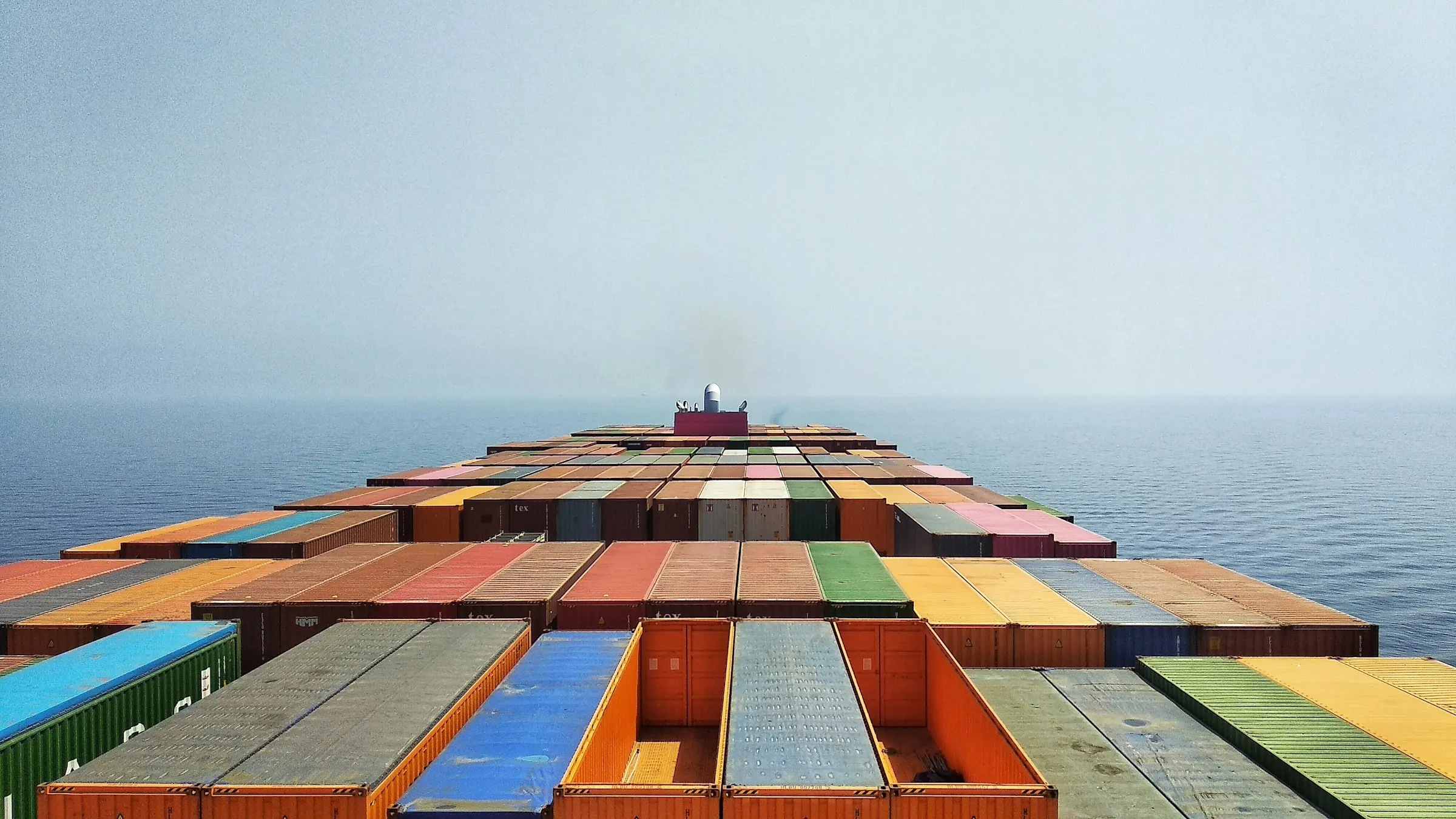
Importing from China to Malaysia: customs, SST and SIRIM in 2026
Importing from China to Malaysia relies on an ASEAN member country, open onto the Strait of Malacca and covered by two trade agreements with China, RCEP and the ACFTA. This article brings together, with sources, the rates, documents and steps useful to an importer or entrepreneur based in Malaysia, as of 27 September 2026.
What Malaysia imports from China and the promising niches
Malaysia ranks among the most trade-open economies in Southeast Asia, with total imports of 298.5 billion dollars in 2024, of which 273.3 billion excluding agricultural products (WTO, World Tariff Profiles 2026, 2024 data). The link with China also runs the other way: China is Malaysia's leading non-agricultural export market, with 107.9 billion dollars in 2024 (same source).
The most common categories in trade with China remain the most open to import: electrical and electronic machinery, mechanical machinery and computing equipment, textiles, and transport equipment. Each is traded under the preferential ACFTA or RCEP regime, subject to a valid certificate of origin, and may also trigger a SIRIM certification requirement. Port Klang, on the Strait of Malacca, handles most of the flows arriving from southern China.
Trade agreements and customs relations with China
Malaysia has been a member of the World Trade Organization since 1995, with bound coverage of 83.8% of its tariff lines (WTO, World Tariff Profiles 2026). It applies the Regional Comprehensive Economic Partnership, in force for Malaysia since 18 March 2022, which brings together the ten ASEAN countries, China, Japan, South Korea, Australia and New Zealand, and covers 29% of world trade (trade.gov, Malaysia Country Commercial Guide, Trade Agreements, accessed September 27, 2026).
Malaysia also applies the ASEAN-China Free Trade Area, the ACFTA, signed on 29 November 2004 for the goods component and fully implemented for Malaysia as of 1 January 2010, following a phased tariff reduction that began in July 2005 (fta.miti.gov.my, Malaysia's Ministry of Investment, Trade and Industry, accessed September 27, 2026). The exact preferential rate depends on the harmonized system code and the tariff track applied, normal or sensitive, and should be checked line by line rather than assumed from RCEP alone. The Royal Malaysian Customs Department remains the customs authority with jurisdiction across the whole territory.
Lea también Código aduanero SA, NC, TARIC: encontrar el código correcto, y por qué importa
Import customs duties and SST: how they are calculated
Malaysia's customs tariff shows a simple average applied rate of 5.5% across all products in 2025, and 5.3% for non-agricultural goods; the trade-weighted average falls to 3.0% for non-agricultural goods (WTO, World Tariff Profiles 2026, 2025 data). On the categories most commonly imported from China, the averages stay low: 4.0% for electronics, with 76.0% of lines duty-free, maximum 35%; 2.5% for mechanical machinery and computing equipment, with 79.6% of lines duty-free, maximum 30%; 8.9% for textiles, with 30.9% of lines duty-free, maximum 30%; 10.3% for transport equipment, maximum 50% (same source). The U.S. government's trade guide confirms an average of 6.1% for industrial products, calculated on a value-added-inclusive basis, with higher specific duties on alcohol, wine, poultry and pork, and reinforced duties where local production is significant (trade.gov, Malaysia Country Commercial Guide, Import Tariffs, updated June 30, 2026, accessed September 27, 2026).
The Sales and Service Tax, the SST, applies to taxable imported goods at a rate of 5% or 10%, or at a specific rate depending on the category (same source): the exact rate by harmonized system code should be checked on the MySST portal before confirming an order. Example on a customs value of 100,000 ringgit of electrical equipment: duty at 4.0%, i.e. 4,000 ringgit; SST base of 104,000 ringgit; SST at 10%, the rate most often cited for common manufactured goods, i.e. 10,400 ringgit; total of 14,400 ringgit, excluding clearance fees. A valid RCEP or ACFTA certificate of origin can bring the duty down to 0% on many lines, to be confirmed code by code.
Lea también Valor en aduana y cálculo de los derechos: base, ajustes, tipos · Coste de desembarque: la fórmula completa del landed cost
Mandatory documents to clear an import through customs
A standard import relies on documents that the Chinese exporter must provide before the goods arrive (trade.gov, Malaysia Country Commercial Guide, Import Requirements and Documentation, accessed September 27, 2026).
- Commercial invoice, packing list and bill of lading
- Catalogue or technical data sheet when the harmonized system code is open to discussion
- Transport insurance certificate
- Ocean bill of lading or air waybill
- Letter of credit if this payment method was chosen
- Product-specific permits, licenses and certificates, including the RCEP or ACFTA certificate of origin
- Proof of freight payment
- Customs Form No. 1, a declaration filed through the uCustoms portal with parcel, description, value, weight, quantity and country of origin
Lea también Factura comercial de importación: menciones obligatorias en aduana · Packing list (lista de empaque): definición, contenido obligatorio
Standards, SIRIM certification and pre-shipment inspections
SIRIM QAS International is the Malaysian body associated with SIRIM standards and product certification, particularly for electrical, electronic and certain communication equipment. We were unable to verify, from a primary source, the full list of categories subject to mandatory certification, nor a public schedule of costs or timelines: this point should be confirmed directly with SIRIM QAS before starting production. A pre-shipment inspection at the factory, independent of any product certification, remains the best protection against a non-compliant batch discovered too late.
Lea también Importar electrónica de China: baja tensión, CEM, RoHS, RAEE · Inspección previa a la carga: el protocolo PSI en China
Prohibited products or products requiring a license
Malaysian policy limits quantitative restrictions to a small number of products, to protect local industries or for security reasons (trade.gov, Malaysia Country Commercial Guide, Prohibited and Restricted Imports, accessed September 27, 2026). However, 17% of tariff lines, mainly in construction equipment, agricultural products, minerals and motor vehicles, remain subject to a non-automatic import license (same source). The Royal Malaysian Customs Department maintains the list of prohibited and restricted products, to be checked by harmonized system code before any order; a complete, up-to-date list could not be verified in a single source.
Lea también Importar electrónica de China: Shenzhen, conformidad, flete
Ports, routes from southern China and recommended incoterms
Port Klang, on the west coast of the Malay Peninsula, describes itself as one of the largest multipurpose gateways in the national port system, through its Northport terminal, operated by MMC Port Holdings Berhad, the country's leading port operator (northport.com.my, accessed September 27, 2026). A second terminal, Westports, presents itself as one of the largest container ports in the world (westportsholdings.com, accessed September 27, 2026). We found no verifiable transit time from Guangzhou, Shenzhen or Yantian: ask your freight forwarder, with air freight reserved for urgent or low-volume shipments.
FOB from southern China suits buyers who arrange transport themselves; CIF or CFR suits cases where an intermediary handles it through to Port Klang. DDP is not recommended as long as the Chinese seller is not itself a registered customs declarant in Malaysia.
Lea también Incoterm FOB: significado, obligaciones y precio (Incoterms 2020) · Flete marítimo China: FCL o LCL, costes, plazos y umbral de cambio
Payment, the steps of a first order and what Sorva does for you
On payment, common practice remains a deposit on order followed by a balance before shipment, paid into the Chinese company's business account, never a personal account: a change of bank details received by email should be verified with a direct call before any transfer, as this fraud remains common in sourcing from China.
A first order follows these steps: specifications, factory verification, an approved sample, a proforma invoice with the chosen incoterm, verification of any SIRIM certification needed, production follow-up, a pre-shipment inspection, freight to Port Klang, then customs clearance handled by the client or their local freight forwarder.
Sorva is a sourcing and trading house based in Guangzhou, in the Tianhe district, backed by a Chinese subsidiary and a French parent company. Our Chinese-speaking team finds and verifies factories, negotiates, arranges pre-shipment quality control and organizes freight through to Port Klang, gathering the documents needed for any SIRIM certification. We never act as the official importer of record in Malaysia and do not handle customs clearance on site. Our base offer is priced in dollars, with zone options quoted on request.
Lea también Pagar a un proveedor chino: transferencia, carta de crédito · Primera importación: las diez etapas y los errores que salen caros
Keep in mind that in Malaysia, the standard duty stays moderate, between 2.5% and 10.3% depending on the category, and can fall to 0% under RCEP or ACFTA with a valid certificate of origin, but an electrical or electronic product often also needs SIRIM certification before arrival. First step: check whether your product falls under SIRIM certification or a non-automatic import license before starting production.
¿Importa usted desde China?
Cuéntenos qué desea comprar. Nuestro equipo responde por WhatsApp, con las fábricas, los plazos y los documentos que exige su país.
Preguntas frecuentes
01What customs duty applies to imports from China to Malaysia?
02What is the SST rate on imports into Malaysia?
03Does Malaysia have a free trade agreement with China?
04What documents are needed to clear goods from China through customs?
05Does a Chinese electronic product need SIRIM certification before entering Malaysia?
06What is the main port of entry for goods coming from China?
07Can Sorva clear my goods through customs on arrival in Malaysia?
Lo que está cambiando ahora
- Chine · Fiscalité export
China: la devolución del IVA a la exportación desaparece para 271 categorías de productos
Desde el 1 de abril de 2026, China suprimió la devolución del IVA a la exportación para 249 categorías de productos y redujo la de las baterías del 9 al 6 %. La medida afecta en particular al PVC, el vidrio, la cerámica, las células fotovoltaicas y los cigarrillos electrónicos, y encarece mecánicamente el precio de salida de fábrica para cualquier comprador, en Asia-Pacífico como en el resto del mundo.
Leer el artículo - Australie · Biosécurité
Australia: aumento de las tasas de bioseguridad a la importación desde el 1 de julio de 2026
Desde el 1 de julio de 2026, el Departamento de Agricultura, Pesca y Silvicultura de Australia (DAFF) elevó las tasas de recuperación de costes de bioseguridad aplicadas a cada declaración de importación completa, a 48 dólares australianos para el transporte aéreo y 71 dólares para el transporte marítimo. Las tasas de tramitación de la propia declaración también aumentan.
Leer el artículo - Kazakhstan · Douane en ligne
Unión Euroasiática: un régimen aduanero propio para el comercio en línea desde julio
El Consejo de la Comisión Económica Euroasiática aprobó un nuevo capítulo del Código Aduanero de la Unión Económica Euroasiática (UEEA) que crea un régimen específico para el comercio transfronterizo en línea, con una entrada en vigor anunciada para el 1 de julio de 2026. Kazajistán, el último de los cinco Estados miembros en ratificar el texto, lo hizo en diciembre de 2025, mientras que Armenia, también miembro de la unión, quedará sujeta a las mismas condiciones.
Leer el artículo
La prestación que corresponde
- ComisiónComisión por volumenUsted abre un expediente, nosotros encontramos y negociamos la fábrica. Solo cobramos sobre la mercancía que usted pide.150 €gastos de apertura de expedienteVer el servicio
- Oficina de estudiosEstudio de conformidad reglamentariaLo que su producto debe cumplir en su país de destino, por escrito y con fuentes, antes del primer pedido.390 €por producto y por país de destinoVer el servicio
- Por unidadControl antes de la cargaCantidades, embalaje, marcado, estado del contenedor, informe fotográfico, antes de que la mercancía salga.229 €por cargaVer el servicio