
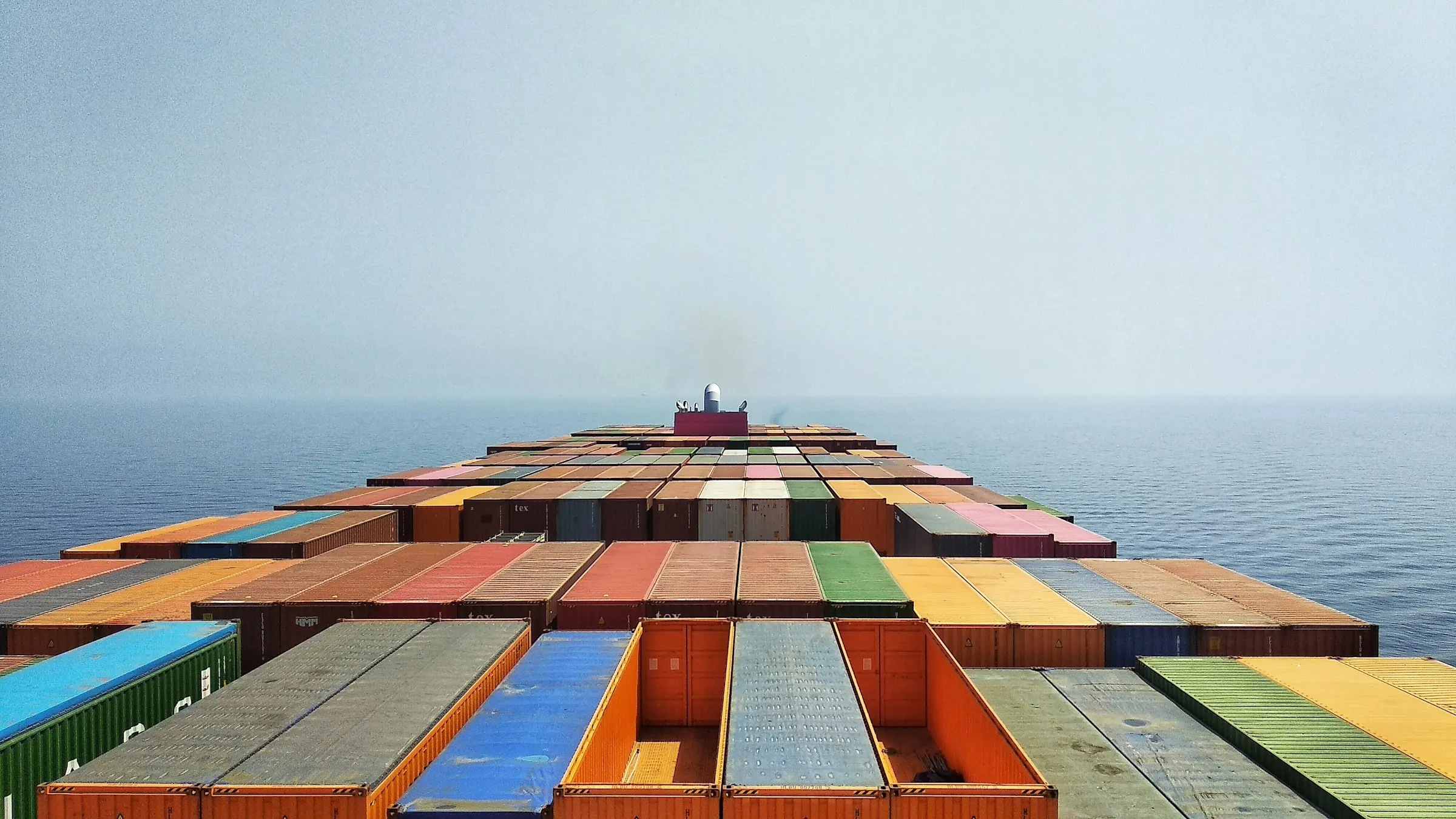
Importing From China to Burkina Faso: WAEMU Customs and Costs in 2026
Importing from China to Burkina Faso means juggling three regimes at once: the WAEMU common external tariff, which the country still applies after leaving ECOWAS on 29 January 2025, a new levy from the Alliance of Sahel States, and mandatory foreign port corridors, since the country has no coastline. This article brings together, with sources, the rates, documents, bodies and timelines that matter to a Burkinabe importer, as of 27 September 2026.
What Burkina Faso Imports From China: Promising Niches
China is Burkina Faso's second-largest supplier, just behind the European Union, with 15.8% of imports, around 1.02 billion dollars in 2024, ahead of Côte d'Ivoire at 15.3%, according to the World Trade Organization. Across all countries of origin, Burkina Faso mainly imports petroleum products, 36.5% of the total, medicines, 2.7%, clinker cement, 2.6%, and electricity, 2.5%.
- Two-wheelers: tyres for two-wheeled vehicles are among the few categories requiring prior authorisation
- Solar equipment, encouraged amid power cuts, but subject to a quota
- Clinker cement, around 2.6% of imports
- Textiles and apparel, in a country that is also a cotton exporter
- Medicines and medical equipment, subject to prior authorisation from the Ministry of Trade
Trade Relations With China: Leaving ECOWAS, Staying in WAEMU
Burkina Faso left ECOWAS on 29 January 2025, together with Mali and Niger, now joined in the Alliance of Sahel States (AES). It remains a member of WAEMU and applies its common external tariff, which shares four of the five ECOWAS tariff bands but not the 35% band that ECOWAS reserves for around one hundred and thirty lines. No bilateral Burkina Faso-China agreement altering this regime has been identified.
Since 28 March 2025, the AES has applied a 0.5% confederal levy on goods from third countries, including China, to fund its operations. Goods from a WAEMU country, transit shipments and humanitarian aid are exempt; line-by-line implementation is still recent and should be confirmed with your freight forwarder.
Read next HS, CN, TARIC customs codes: finding the right one, and why it matters
Customs Duties and Import Taxes: How They Are Calculated
The WAEMU tariff sorts goods into four bands on the CIF value: 0% for social goods, 5% for raw materials and capital goods, 10% for intermediate goods, 20% for final consumer goods. On top of that come a 1% statistical fee and a 1% WAEMU community solidarity levy, then, since March 2025, the 0.5% AES levy for a Chinese good. VAT, harmonised at 18% by WAEMU directive No. 02/98/CM/UEMOA, applies last, on the CIF value plus these duties.
Example on 5,000,000 CFA francs taxed at 20%: customs duty 1,000,000, statistical fee 50,000, solidarity levy 50,000, AES levy 25,000, VAT base 6,125,000, VAT 1,102,500. Total duties and taxes: around 2,227,500 CFA francs, excluding transit and handling. Have each rate reconfirmed by your freight forwarder.
- Customs duty: 0, 5, 10 or 20% of the CIF value depending on the WAEMU band
- Statistical fee: 1% of the CIF value
- WAEMU community solidarity levy: 1% of the CIF value
- AES confederal levy: 0.5% of the CIF value for a good from outside WAEMU
- VAT: 18% on the CIF value plus the duties and levies above
Read next Customs Value and Duty Calculation: Base, Adjustments, Rates · Import VAT and Reverse Charge: How It Works in France
Documents Required to Clear an Import Through Customs
The US Commercial Guide lists the basic documents: commercial invoice, packing list, bill of lading or air waybill, certificate of origin and, depending on the product, a health or technical certificate, all in French to avoid delays.
The Directorate General of Customs (DGD) classifies and values goods based on the Harmonized System, and offers an advance ruling on classification or origin, with a turnaround described as long: start the process early if your product is open to dispute.
- Commercial invoice and packing list
- Bill of lading or air waybill
- Certificate of origin
- Health or technical certificate depending on the product
- Customs declaration, the importer's responsibility
Read next Commercial invoice for import: mandatory details for customs · Packing List: Definition and Mandatory Contents
Standards, Certification and Pre-Shipment Inspection
The Burkina Faso Agency for Standardization, Metrology and Quality (ABNORM), the national standardization and certification body, can be reached at +226 25 37 14 43 or [email protected]. Burkina Faso generally adopts ISO and IEC standards, with a preference for European standards.
Food, pharmaceutical and electrical products are subject to mandatory inspection and certification before being placed on the market, a process described as costly and slow, with no published fee schedule: ask ABNORM for a quote before ordering. Cotecna, the company in charge of pre-shipment inspection, saw its contract with customs end on 7 September 2018 without renewal: the DGD has since checked value, origin and classification itself. Confirm with the DGD whether any inspection still applies to your product.
- ABNORM: standardization, certification, metrology, inspection, testing
- Mandatory inspection: food, pharmaceuticals, electrical equipment
- Since 2018, the DGD has checked value, origin and classification itself, with no third-party inspection company
- Technical regulations published in the Official Gazette of Burkina Faso
Read next Product technical documentation: what the importer must hold · Certificate of origin for China: purpose and when it's required
Prohibited Products or Products Subject to Licensing
According to the US Commercial Guide, updated in 2025, banned items include adulterated alcohol, alcoholic energy drinks, mercury-based cosmetics, certain targeted medicines and herbicides, and non-biodegradable plastics.
- Prior authorisation from the Ministry of Trade: weapons, gold and precious materials, oilseeds (sesame, raw cashew, shea), scrap metal, cotton seeds, seeds, pharmaceutical and veterinary products, medical equipment, staple foods (sugar, flour, oils, potatoes, onions), two-wheeler tyres
- Under quota or suspension: solar panels, wheat, sugar
Ports, Routes From Southern China and Recommended Incoterms
Burkina Faso has no coastline. According to the Burkinabe Shippers' Council, cited by the Digital Logistics Capacity Assessments platform, around 98% of imported goods travel by sea and then by road from four neighbouring ports: Abidjan (Côte d'Ivoire), Lomé (Togo), Cotonou (Benin) and Tema (Ghana). A 517-kilometre metre-gauge rail line links Ouagadougou to the port of Abidjan via Bobo-Dioulasso, operated by Sitarail, a subsidiary of the Bolloré group; the split of freight between rail and road is not published, so ask your freight forwarder.
From southern China, freight usually leaves from Guangzhou, Shenzhen or Yantian to the chosen port, then completes its route by truck or rail. We found no verifiable total transit time for this sea-plus-road route; ask your freight forwarder. FOB from southern China suits you if you organise transport yourself; CIF or CFR if an intermediary handles it up to the port. DDP is not recommended, since no Chinese factory can act as customs declarant in Burkina Faso.
Read next FOB Incoterm: Meaning, Obligations and Price (Incoterms 2020) · Sea freight from China: FCL or LCL, costs, transit times and break-even point
Payment, Order Steps and What Sorva Does for You
The CFA franc (XOF) has been pegged to the euro at 655.957 francs per euro since 1999, with a convertibility guarantee from the French Treasury, but it floats against the dollar or the yuan. On payment, common practice remains a deposit on order followed by a balance before shipment, paid into the Chinese company's business account, never a personal account: any change of bank details received by email must be verified with a direct phone call.
A first order follows a precise sequence: specifications and factory verification, an approved sample, a proforma invoice with the chosen incoterm, production follow-up, inspection before loading, an ABNORM file if needed, freight to the chosen port and on to Ouagadougou, and customs clearance, handled by the client or their local freight forwarder.
Sorva is a sourcing and trading house based in Guangzhou, in the Tianhe district, backed by a Chinese subsidiary whose corporate purpose covers buying, reselling and exporting goods, and by a parent company in France. Our Chinese-speaking team finds and vets factories, arranges visits and samples, negotiates, has quality checked before loading and arranges freight to the chosen port among Abidjan, Lomé, Cotonou or Tema. We never act as the official importer in Burkina Faso, do not clear goods through customs locally, and do not export vehicles ourselves without going through a licensed Chinese exporter. Our base offer is billed in dollars, supplemented by zone-specific options quoted on request.
Read next Paying a Chinese Supplier: Wire Transfer, Letter of Credit · First import: the ten steps and the mistakes that cost dearly
Keep in mind that in Burkina Faso, the applicable tariff is WAEMU's, not ECOWAS's since 29 January 2025, and that a 0.5% AES confederal levy now applies on top for any Chinese good. First step: have your freight forwarder reconfirm all the rates and the chosen transit port before placing an order.
Importing from China?
Tell us what you want to buy. Our team answers on WhatsApp with the factories, the lead times and the documents your country asks for.
Frequently asked questions
01What customs duties apply to importing from China to Burkina Faso?
02Does Burkina Faso still apply the ECOWAS customs tariff?
03What is the AES confederal levy?
04What is the import VAT rate in Burkina Faso?
05What documents are needed to clear goods from China through customs?
06Which products are banned or subject to licensing in Burkina Faso?
07Which port should an import from southern China to Burkina Faso transit through?
08Can Sorva clear my goods through customs on arrival in Burkina Faso?
What is changing right now
- Mali · Burkina Faso · Niger · Douane
Mali, Burkina Faso, Niger: AES common customs levy stays in force
Since late March 2025, and still as of 27 September 2026, Mali, Burkina Faso and Niger apply a common customs levy of 0.5% on goods imported from countries outside their alliance. This levy is added on top of existing national customs duties and funds the operations of their confederation, the Alliance of Sahel States (AES).
Read the article - Ghana · Normes
Ghana: pre-shipment inspection for used vehicles from October
From 1 October 2026, the Ghana Standards Authority is requiring a conformity certificate issued before shipment for every used vehicle imported. Vehicles older than 15 years will be refused entry, regardless of origin.
Read the article - Côte d'Ivoire · Logistique
Ivory Coast: OIC launches SYSANEV to forecast import costs
The Ivorian Shippers' Council brought into service, on 19 May 2026, a platform called SYSANEV that lets importers estimate their logistics costs before the goods arrive. The tool aims to give better visibility over actual transport and clearance costs.
Read the article
The certifications your country requires
In US dollars, on quotation, added to the same core service.
West and Central Africa Mandatory pre-shipment inspection
On quotationIn US dollars
Several West and Central African countries require a pre-shipment inspection by a government-appointed body, such as Bureau Veritas (BIVAC), Cotecna or SGS depending on the country, which issues the certificate required for customs clearance.
- Identification of the appointed body for your country
- Pro forma invoice and packing list prepared with the factory
- Factory access and goods ready on inspection day
- Our own check before the inspector arrives
The service that matches
- CommissionVolume commissionYou open a file, we find and negotiate the factory. We are paid only on the goods you order.€150file opening feeView service
- One-off servicePre-shipment inspectionQuantities, packing, marking, container condition and a photo report, before the goods leave.€229per loadingView service
- One-off serviceSupplier search · fullA bidding round run for you, one priced grid, samples in your hands.€279per productView service