
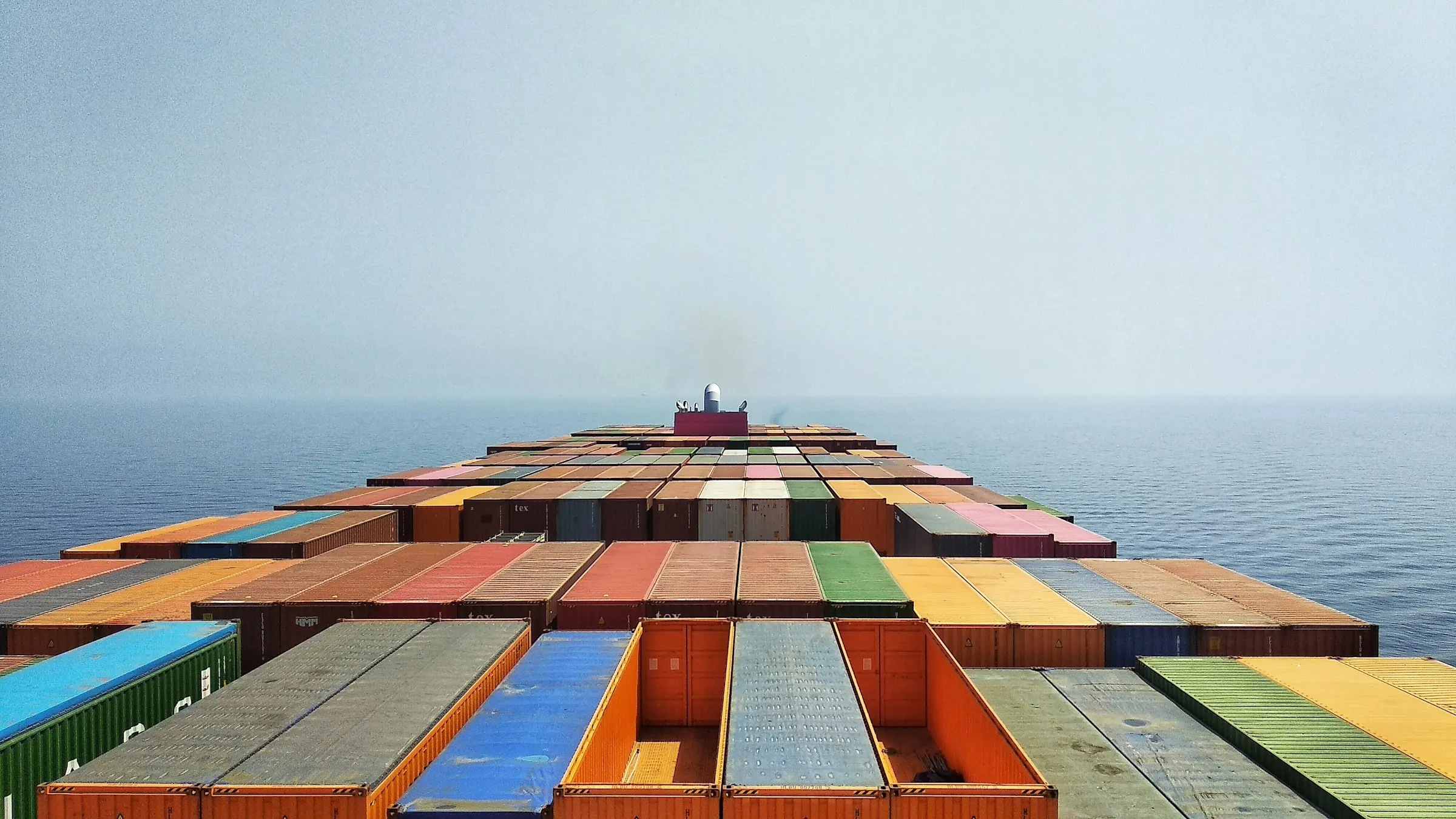
Importing from China to Nigeria: customs, SONCAP, costs 2026
Importing from China to Nigeria means handling three issues at once: the ECOWAS Common External Tariff, the SONCAP certificate that gates customs clearance, and a foreign exchange regime that weighs on your real landed cost. This article brings together, with sources, the rates, documents and timelines that matter to a Nigerian importer, as of 27 September 2026.
What Nigeria imports from China: the strongest niches
According to China's ambassador to Nigeria, bilateral trade reached 18 billion dollars in the first half of 2026, up 35 percent year on year. We found no official, verifiable breakdown by product category for this period; the country remains heavily dependent on imports of finished goods.
- Vehicles and spare parts: the age limit for used vehicles is stated as between 12 and 15 years depending on the source, revised several times in 2026, to be checked before shipping
- Motorcycles and utility tricycles, in strong demand for urban and rural transport
- Construction and agricultural equipment, solar equipment, in a country where the gap between electricity demand and generation is still estimated at 40,000 megawatts
- Electronics, appliances and textiles, largely subject to the SONCAP certificate
Trade and customs relations between Nigeria and China
Nigeria has applied the ECOWAS Common External Tariff since 2015, in its 2022-2026 revised version, identical for all non-ECOWAS countries: we found no bilateral free trade agreement with China in our sources. The duty-free access China granted from 1 May 2026 to 53 African countries, including Nigeria, works the other way around: it eases Nigerian exports to China, not the imports you are concerned with.
Customs is modernising clearance around a Single Window portal and the PAAR, obtained online before arrival, with a stated target of 48 hours set by the 2023 Customs Act. Goods are inspected on arrival rather than before loading, except for SONCAP products, which are checked before shipment.
Read next HS, CN, TARIC customs codes: finding the right one, and why it matters
Customs duties and import VAT: how they are calculated
The ECOWAS Common External Tariff splits goods into five duty bands, detailed below. The cumulative effective rate, duties, levies and VAT combined, exceeds 50 percent on more than eighty tariff lines: 95 percent on tobacco, 75 to 95 percent on alcohol, 85 percent on wheat, 75 percent on sugar, 70 percent on rice, 55 percent on cement, capped at 70 percent per line.
The calculation starts from the CIF value converted to naira at the Central Bank's official rate, distinct from the parallel market rate. Example: on a CIF value of 5,000,000 naira at a 20 percent duty rate, the base duty comes to 1,000,000 naira, plus the levies below, then VAT on that total. Have a freight forwarder reconfirm the exact rate before you order: the inspection levy in particular is reported by some sources to have been revised in 2026, without official confirmation.
- Base duty: 0, 5, 10, 20 or 35 percent depending on the CET band
- Surcharge: 7 percent of the duty
- ECOWAS ETLS levy: 0.5 percent of the CIF value
- Inspection levy: about 1 percent of the FOB value, to be reconfirmed
- VAT: 7.5 percent on CIF plus duties and levies
Read next Customs Value and Duty Calculation: Base, Adjustments, Rates · Import VAT and Reverse Charge: How It Works in France
Mandatory documents to clear an import shipment
The importer first opens a Form M with an authorised bank, which declares the transaction before shipment and gates access to official foreign exchange. For a SONCAP product, the Product Certificate comes before the Form M is opened, not after. Once loaded, the shipment is declared on the Single Window to obtain the PAAR, which speeds up customs clearance on arrival.
- Form M, opened through an authorised bank before shipment
- SONCAP Product Certificate, required ahead of the Form M for regulated products
- Commercial invoice, packing list, bill of lading or air waybill, certificate of origin
- Local insurance, taken out with an insurer registered in Nigeria
- PAAR, generated on the Single Window before arrival
- Certificate of Conformance and SONCAP certificate for regulated products
Read next Commercial invoice for import: mandatory details for customs · Packing List: Definition and Mandatory Contents
Standards, SONCAP certification and pre-shipment inspection
SONCAP, run by the Standards Organisation of Nigeria, checks before shipment that a regulated product meets a Nigerian standard or its equivalent. It works in two stages: a Product Certificate costing 500, 1,000 or 2,000 dollars depending on the exporter's status, then, for every shipment, a Certificate of Conformance issued by a body accredited to ISO/IEC 17025, which unlocks the SONCAP certificate. Registering a new product adds 350 dollars.
Food, medicines, military equipment and used goods other than vehicles are exempt from SONCAP; food, pharmaceuticals and cosmetics fall under NAFDAC instead. According to several sources, SONCAP procedures moved onto a single portal in 2026, to be confirmed on the Standards Organisation of Nigeria's website.
Read next Importing electronics from China: LVD, EMC, RoHS, WEEE · Product technical documentation: what the importer must hold
Prohibited and licensed goods, and foreign exchange controls
Nigeria bans outright weapons, counterfeit goods, used clothing, used compressors, prints deemed indecent, spirits above a set alcohol content with some exceptions, and nuclear or toxic waste. A second list requires a licence or quota for frozen poultry, pork, beef, refined oils, sugar, processed cocoa, pasta, certain fruit juices, a range of medicines, bagged cement, used tyres, corrugated paper, footwear, carpets, glass bottles, and used vehicles beyond an age limit: 15 years in the oldest customs list still documented, 12 years according to several specialist sources in 2026. The rule has been revised several times this year, so reconfirm it with your freight forwarder before shipping anything.
The Central Bank restricts access to the official foreign exchange market for rice, cement, meat, poultry, textiles and furniture, which pushes some importers toward a parallel market at a less favourable rate.
Read next Anti-dumping duties on China: how to know if you are affected
Ports, sea and air routes, and recommended Incoterms
Almost all containerised freight from China passes through the Lagos area. Apapa handles most of the container traffic, Tin Can Island specialises in Ro-Ro vehicles and bulk cargo, and the new, fully automated Lekki deep-sea port takes the largest container ships. In the first half of 2026, average port dwell time there was 3.3 days, against 5.1 at Tin Can Island and 6.1 at the older Lagos port: these are port handling times, not sea transit times.
From southern China, freight most often departs from Guangzhou, Shenzhen or Yantian for Lagos; we found no single, verifiable transit time, so ask your freight forwarder at the time of booking. Air freight remains reserved for urgent or light shipments. FOB from southern China suits buyers who arrange transport themselves; CIF or CFR suits those who leave it to an intermediary as far as the Nigerian port. DDP is not advisable unless the seller is itself a licensed customs declarant in Nigeria.
Read next FOB Incoterm: Meaning, Obligations and Price (Incoterms 2020) · Sea freight from China: FCL or LCL, costs, transit times and break-even point
Payment, the steps of an order, and what Sorva does for you
On payment, the common practice is a deposit followed by a balance before shipment, paid exclusively into the Chinese company's business account, never a personal account: any change of bank details received by email should be verified with a direct phone call before any transfer. The Central Bank's official exchange rate, used at customs, often differs from the parallel rate that restricted categories rely on: that gap should be built into your landed cost from the quotation stage.
A first order follows a set sequence: specification, factory verification, approved sample, proforma invoice with an Incoterm, opening the Form M, the SONCAP file started alongside production, production follow-up, pre-shipment inspection, Certificate of Conformance then SONCAP certificate, freight, the PAAR, then arrival at port and customs clearance handled by the client or their local freight forwarder.
Sorva is a sourcing and trading house based in Guangzhou, in the Tianhe district, backed by a Chinese subsidiary whose registered scope covers buying, reselling and exporting goods, and by a parent company in France. Our Chinese-speaking team finds and verifies factories, arranges visits and samples, negotiates, has quality checked before loading, and organises freight to the Nigerian port of your choice, while gathering the documents your SONCAP file and Form M need. We never act as the official importer of record in Nigeria, do not clear goods through customs ourselves, and do not export vehicles without going through a licensed Chinese exporter. Our base service is priced in dollars, with optional add-ons priced by region, including SONCAP support quoted on request.
Read next Paying a Chinese Supplier: Wire Transfer, Letter of Credit · First import: the ten steps and the mistakes that cost dearly
Remember that in Nigeria, the SONCAP certificate is arranged before the Form M is opened, not after, and that the real cost of an import depends as much on the official exchange rate as on customs duties. First step: check whether your product falls under SONCAP and start that file as soon as production begins.
Importing from China?
Tell us what you want to buy. Our team answers on WhatsApp with the factories, the lead times and the documents your country asks for.
Frequently asked questions
01What customs duties apply to importing from China to Nigeria?
02How much does a SONCAP certificate cost?
03What is the import VAT rate in Nigeria?
04What documents are needed to clear goods coming from China?
05Which products are banned from import into Nigeria?
06Which port should I choose for a shipment from southern China?
07Can Sorva clear my goods through customs on arrival in Nigeria?
What is changing right now
- Nigeria · Douane
Nigeria moves SONCAP and import permits onto single window
Since 27 March 2026, Nigeria's SONCAP and import permits can only be processed through the National Single Window (NSW) platform. The change aims for 24-hour clearance and removes the separate channels accredited bodies previously used.
Read the article - Bénin · Niger · Transit
Benin-Niger: border still shut, freight rerouted via Kamba corridor
The direct border between Benin and Niger, closed since 2023, still has no confirmed reopening date as of 27 September 2026. An alternative corridor via Nigeria, reopened on 9 February 2026 to clear around 1,600 stranded trucks, remains the workaround route used for freight between the two countries.
Read the article - Ghana · Normes
Ghana: pre-shipment inspection for used vehicles from October
From 1 October 2026, the Ghana Standards Authority is requiring a conformity certificate issued before shipment for every used vehicle imported. Vehicles older than 15 years will be refused entry, regardless of origin.
Read the article
The certifications your country requires
In US dollars, on quotation, added to the same core service.
Nigeria SONCAP pack
On quotationIn US dollars
The conformity assessment programme of the Standards Organisation of Nigeria (SON) requires, for regulated products, a product certificate and then a certificate for each shipment, issued by an accredited body.
- Check of your product’s status under SONCAP
- Test reports and technical documents obtained from the factory
- Coordination of the factory inspection with the accredited body
- A file ready for the application you file as the importer
West and Central Africa Mandatory pre-shipment inspection
On quotationIn US dollars
Several West and Central African countries require a pre-shipment inspection by a government-appointed body, such as Bureau Veritas (BIVAC), Cotecna or SGS depending on the country, which issues the certificate required for customs clearance.
- Identification of the appointed body for your country
- Pro forma invoice and packing list prepared with the factory
- Factory access and goods ready on inspection day
- Our own check before the inspector arrives
The service that matches
- CommissionVolume commissionYou open a file, we find and negotiate the factory. We are paid only on the goods you order.€150file opening feeView service
- Engineering studiesRegulatory compliance studyWhat your product must meet in its destination country, written up and sourced, before the first order.€390per product and destination countryView service
- One-off servicePre-shipment inspectionQuantities, packing, marking, container condition and a photo report, before the goods leave.€229per loadingView service