
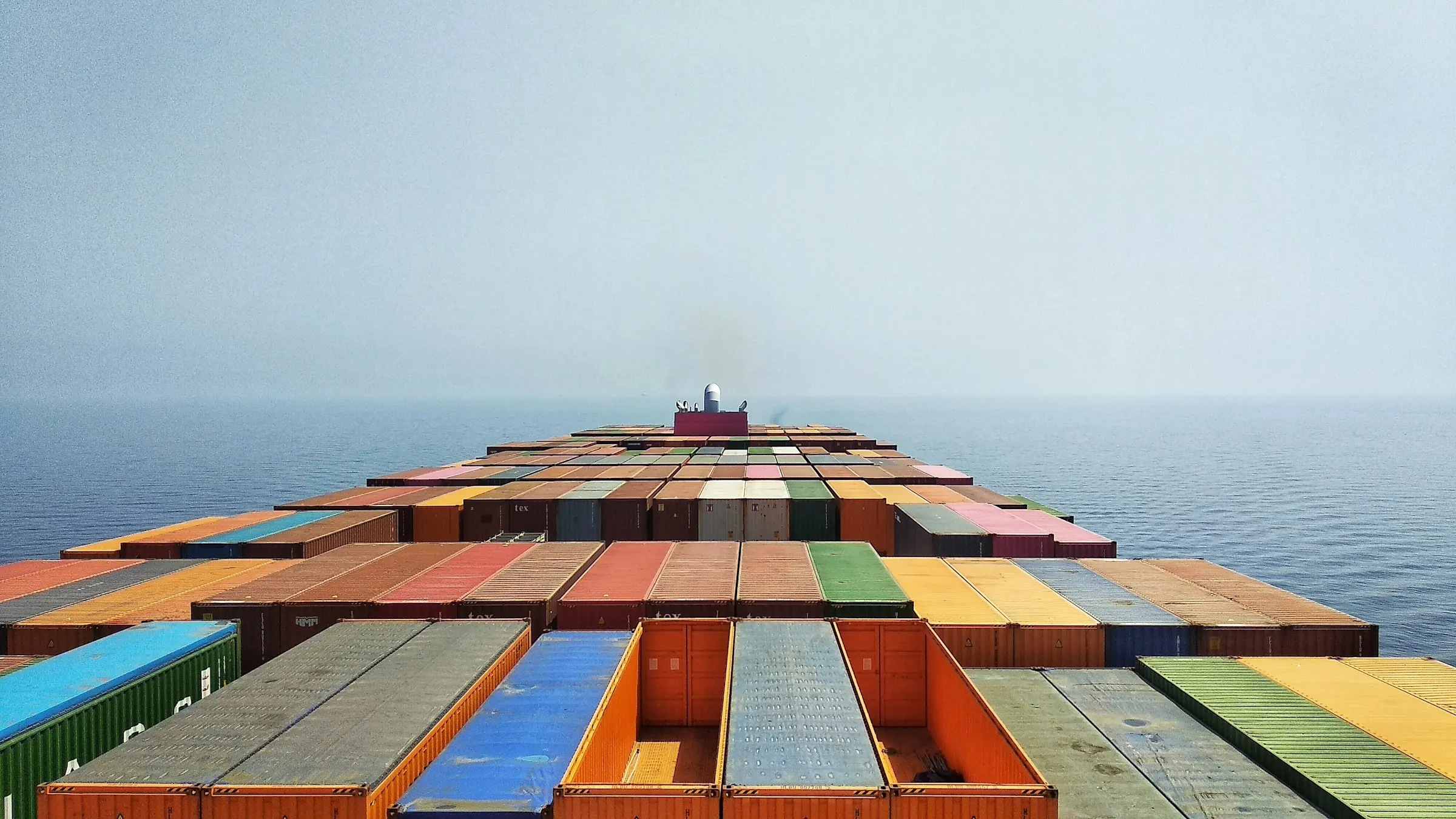
Importing From China to Ethiopia: Customs, ECAE and Djibouti Port
Importing from China to Ethiopia means dealing with three realities at once: strict foreign exchange control for paying the Chinese supplier, an ECAE conformity certificate often required before shipment, and a landlocked country that routes almost all its trade through the port of Djibouti. This article gathers, with sources, the rates, documents and timelines that matter to an Ethiopian importer, as of 27 September 2026.
What Ethiopia imports from China: promising niches
China is Ethiopia's top source of imports: it supplies 40% of imports coming from Asia, a continent that accounts for 61% of the country's total imports, according to the US government's trade guide. Chinese companies remain particularly active in infrastructure and textiles, which drives demand for machinery, construction materials and industrial equipment.
One niche has grown since January 2024: the ban on using foreign currency to import new petrol or diesel vehicles has made Chinese electric and hybrid vehicles, exempt from VAT, one of the few categories still fully accessible. Virtually all Chinese goods bound for Ethiopia pass through the Djibouti corridor, detailed further below.
- Machinery, electrical equipment and industrial gear, driven by Chinese investment in infrastructure
- Chinese electric and hybrid vehicles, the only category of new vehicles still fully favored since January 2024
- Construction materials and textiles, sectors where Chinese companies are most active in Ethiopia
Trade and customs regime between Ethiopia and China
Ethiopia is not a member of the World Trade Organization: no bound tariff rate applies, according to the US government's trade guide. No bilateral free trade agreement with China has been identified: Ethiopia's 0 to 10% preference applies to goods from the Common Market for Eastern and Southern Africa, not to Chinese goods, which are subject to the general tariff.
Since 1 December 2024, China has in turn granted duty-free access on 100% of its tariff lines to least developed countries with diplomatic relations with it, including Ethiopia. This eases Ethiopian exports to China, with no effect on the duties Ethiopia applies to imports.
Leia também Código aduaneiro HS, NC, TARIC: encontrar o código certo, e porque importa
Customs duties and import taxes: how to calculate them
Ethiopia's tariff applies customs duties of 0 to 35%, averaging about 17%, depending on the Harmonized System code, according to the US government's trade guide and an archived government fact sheet. A 15% VAT then applies to the customs value plus duty and excise; staple foods, certain services, and electric and hybrid vehicles are exempt.
An excise tax is added on eighteen categories, ranging from 10% for textiles and most goods up to 100% for alcohol, according to this undated fact sheet, to be checked line by line. A surtax also exists on many imports, with no officially confirmed rate: check with a customs broker.
Example, CIF value of 10,000 dollars and an illustrative duty of 20% (confirmed range 0 to 35%): duty 2,000 dollars, VAT base 12,000 dollars, VAT at 15% is 1,800 dollars. Confirmed total: 3,800 dollars, 38% of the CIF value, before excise and surtax specific to the tariff line.
- Customs duty: 0 to 35%, averaging about 17%, depending on the Harmonized System code
- VAT: 15%, on the CIF value plus duty and excise; electric vehicles exempt
- Excise: 10 to 100% depending on category, across eighteen product classes
- Surtax: exists on many imports, exact rate not officially confirmed
Leia também Valor aduaneiro e cálculo dos direitos: base, ajustes, taxas · IVA na importação e autoliquidação: como funciona em França
Mandatory documents for importing into Ethiopia
The importer must first obtain a registration number: since July 2022, the procedure, decentralized to regional offices, is handled online in about thirty minutes with a complete file, according to the US trade guide, but the associated foreign exchange authorization often takes several months in practice.
Food products and medicines require prior registration with the Ethiopian Food and Drug Authority (EFDA), with a certificate of analysis for pharmaceuticals and processed foods; agricultural inputs require authorization from the Ministry of Agriculture.
- Agency agreement and bank permit
- Bill of lading or air waybill, certificate of origin, commercial invoice
- Customs declaration and transit document
- Foreign exchange authorization, import license, TIN certificate
- Transport insurance, packing list, VAT certificate
- Pre-shipment inspection report (PVoC) for regulated products
Leia também Fatura comercial de importação: menções obrigatórias na alfândega · Packing list (lista de conteúdo): definição e conteúdo obrigatório
Standards, ECAE certification and pre-shipment inspections
The Ethiopian Conformity Assessment Enterprise (ECAE), a federal public body under the Ministry of Trade and Regional Integration, oversees pre-shipment verification of conformity (PVoC) for regulated products, with checkpoints as far as Djibouti and the Kenyan port of Lamu. The ministry mandates accredited inspection bodies present in Chinese export zones.
The inspection includes a document review, physical inspection, testing if needed, container sealing and a certificate of conformity, required at customs clearance. According to the TUV Rheinland fee schedule, an accredited body as of 27 September 2026, fees range from 0.30 to 0.75% of the FOB value depending on route and zone, with a floor of 250 to 265 dollars and a cap of 2,500 to 2,700 dollars; the certificate is mandatory from 3,000 euros of FOB value. Ask for a precise quote before starting production.
Leia também Documentação técnica do produto: o que o importador deve possuir · Controlo de qualidade China: gerir o QC durante a produção
Prohibited or license-restricted products
Since January 2024, using foreign currency to import a new petrol or diesel vehicle has been banned, a measure presented as a way to cut the imported fuel bill and speed up electromobility. Electric vehicles, hybrids and charging equipment remain importable and VAT-exempt.
Food products and medicines remain subject to EFDA registration, and agricultural inputs to authorization from the Ministry of Agriculture. A list of prohibited or license-restricted goods exists and is regularly updated: check with the Ministry of Trade and Regional Integration before placing any order.
Leia também Direitos antidumping sobre a China: como saber se está abrangido
Port of Djibouti, rail corridor and recommended incoterms
As a landlocked country, Ethiopia routes at least 90% of its foreign trade through the port of Djibouti, and the International Monetary Fund estimates that 95% of Djibouti's port traffic is fed by Ethiopian trade. The Doraleh container terminal (SGTD) has a 1,050 meter quay and 18 meter draft, with a stated capacity of 1.25 million twenty-foot equivalent units.
The Addis Ababa-Djibouti railway, 754 km, almost entirely electric, in commercial service since January 2018, has cut freight transit from three days by road to about twelve hours. From southern China, freight mostly departs from Guangzhou, Shenzhen or Yantian: no single, verifiable transit time was found, so ask your freight forwarder. FOB suits an importer who arranges transport itself; CFR or CIF when an intermediary handles it. DDP is not recommended as long as the Chinese seller cannot itself clear customs in Ethiopia.
Leia também Incoterm FOB: significado, obrigações e preço (Incoterms 2020) · Frete marítimo China: FCL ou LCL, custos, prazos e ponto de equilíbrio
Payment, order steps and what Sorva does for you
Any transfer to a Chinese supplier requires authorization and must go through a bank supervised by the National Bank of Ethiopia. The foreign exchange regime was reformed on 29 July 2024 (the birr moved to a market-based system); directive FXD/05/2026, in effect since 25 May 2026, lets banks approve letters of credit and cash-against-documents payments on their own, and allows placing an order before bank approval.
For a first supplier, favor an irrevocable letter of credit confirmed by a recognized international bank: other payment methods carry higher risk, according to the US government's trade finance guide. Pay into the Chinese company's business account and verify by direct phone call any change of bank details received by email, as this type of fraud remains common in sourcing.
A first order typically runs as follows: specifications, factory verification, sample, proforma invoice with incoterm, PVoC file if regulated, pre-loading inspection, freight to Djibouti, rail to Addis Ababa, customs clearance by the client or its local forwarder.
Sorva is a sourcing and trading house based in Guangzhou, backed by a Chinese subsidiary and a parent company in France. Our Chinese-speaking team researches and verifies factories, arranges visits and samples, negotiates, has quality checked before loading, and organizes freight to Djibouti, gathering the documents needed for PVoC and EFDA files. We never act as the official importer in Ethiopia, do not clear customs locally, and do not export vehicles without a licensed Chinese exporter. Base offer in dollars, zone options quoted on request. Contact: [email protected] or WhatsApp +33 6 15 55 62 52.
Leia também Pagar um fornecedor chinês: transferência, carta de crédito · Primeira importação: as dez etapas e os erros que saem caros
Keep in mind that in Ethiopia, foreign exchange control and the ECAE certificate must be prepared before shipment, and that a new vehicle can no longer be imported unless it is electric or hybrid since January 2024. First step: check whether your product falls under PVoC and secure your letter of credit before starting production.
Você importa da China?
Diga-nos o que você está buscando comprar. Nossa equipe responde pelo WhatsApp, com as fábricas, os prazos e os documentos exigidos pelo seu país.
Perguntas frequentes
01What customs duties and taxes apply when importing from China to Ethiopia?
02Do you need an import permit to buy from China from Ethiopia?
03What is the ECAE certificate and is it mandatory?
04How much does a PVoC inspection cost in Ethiopia?
05Can you import a petrol or diesel vehicle from China to Ethiopia?
06How do you pay a Chinese supplier from Ethiopia despite foreign exchange control?
07Which port and route do Chinese goods use to reach Ethiopia?
08Can Sorva clear my goods through customs on arrival in Ethiopia?
O que está mudando agora
- Éthiopie · Douane et devises
Etiópia: preços aduaneiros de referência obrigatórios para cartas de crédito
Desde 27 de janeiro de 2026, os bancos etíopes devem utilizar os preços de referência da Comissão de Alfândegas para abrir uma carta de crédito ou emitir uma licença de importação. A medida se insere na reforma da taxa de câmbio iniciada em julho de 2024 e nas negociações de adesão da Etiópia à Organização Mundial do Comércio, que entraram em uma fase considerada decisiva no fim de abril de 2026.
Ler o artigo - Kenya · Droits de douane
Quênia: aumento das tarifas aduaneiras da EAC sobre móveis, fraldas e bolsas
O Conselho de Ministros da Comunidade da África Oriental elevou, com efeito a partir de 1º de julho de 2026, as tarifas aduaneiras sobre várias categorias de bens de consumo comumente importados da Ásia para o Quênia. Os móveis passam de 35% para 45%, as fraldas de bebê e as bolsas de mão de 25% para 35%.
Ler o artigo - Ouganda · Droits de douane
Uganda: novas tarifas aduaneiras da EAC sobre óleos, biscoitos, salsichas e fraldas
A partir de 1º de julho de 2026, Uganda aplica tarifas aduaneiras ampliadas, entre 36% e 60%, sobre uma lista estendida de produtos classificados como sensíveis, como óleos alimentares, manteiga, biscoitos e salsichas. Os artigos de PVC e as fraldas de bebê têm sua tarifa elevada de 25% para 35%.
Ler o artigo
A prestação correspondente
- ComissãoComissão sobre volumeAbre um dossiê, nós encontramos e negociamos a fábrica. Só somos pagos sobre a mercadoria que encomenda.150 €taxas de abertura de dossiêVer o serviço
- Gabinete de estudosEstudo de conformidade regulamentarO que o seu produto deve cumprir no país de destino, por escrito e com fontes, antes da primeira encomenda.390 €por produto e por país de destinoVer o serviço
- Por unidadeControlo antes do carregamentoQuantidades, embalagem, marcação, estado do contentor, relatório fotográfico, antes de a mercadoria partir.229 €por carregamentoVer o serviço