
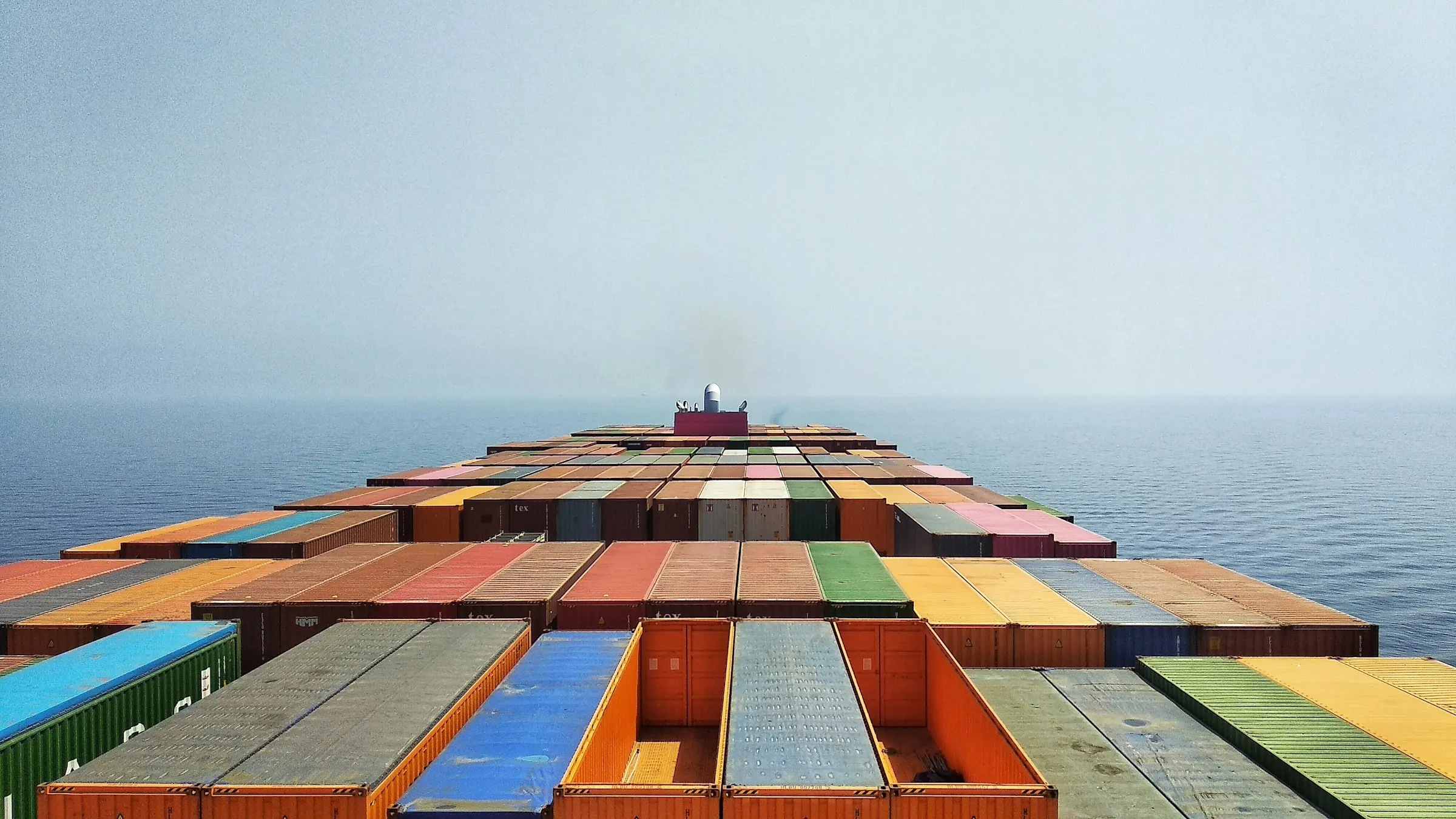
Importing from China to Mexico in 2026: Customs, NOM and Padrón
Importing from China to Mexico means dealing with the absence of a free trade agreement between the two countries: every shipment pays the standard duty rate, often needs NOM certification before entry, and the importer must be registered in the padrón de importadores. This article gathers, with sources, the rates, documents, agencies, and steps that matter for a Mexican importer, as of September 27, 2026.
What Mexico imports from China, and the niches that are growing
Mexico has no free trade agreement with China, which puts most Chinese goods under the standard duty rate, creating niches in products that Mexico's thirteen trade agreements, including the USMCA, don't cover and that local industry doesn't make at a competitive price.
Nearshoring is pushing factories based in Mexico to assemble for the North American market using Chinese components: the IMMEX program lets these exporting companies temporarily import, duty and VAT free, the inputs and equipment used in products that get re-exported. An IMMEX authorization requires the company to post more than $500,000 in annual export sales, or failing that, to bill at least 10% of total revenue to exports, under the Ministry of Economy's IMMEX decree.
Since August 15, 2025, express shipments from countries with no agreement with Mexico, China chief among them, pay a flat 33.5% rate above the duty free threshold, versus 19% for USMCA origin above $117: the margin that used to exist on small parcels has narrowed sharply.
Trade and customs relations between Mexico and China
The official US guide to Mexico's trade agreements does not list any free trade agreement between Mexico and China. Mexico has thirteen agreements with fifty countries, including the USMCA with the United States and Canada since July 1, 2020, the European Union, EFTA, Japan, Israel, ten Latin American countries, and the Comprehensive and Progressive Agreement for Trans-Pacific Partnership; it is also a member of the WTO, APEC, the G20, the OECD, and the Pacific Alliance.
Since January 1, 2025, every import declaration must carry the RFC, the importer's tax ID number, regardless of value or mode of transport. Since December 9, 2025, the Manifestación de Valor, an electronic customs value declaration filed through the VUCEM system, has been mandatory. Mexico's tariff classification uses eight digits plus two NICO digits, with no systematic match to the US tariff schedule.
Read next HS, CN, TARIC customs codes: finding the right one, and why it matters
Import duties and VAT: rates and calculation
Without a free trade agreement, a Chinese product pays the IGI, the general import tax, at the rate of its eight digit tariff line: there is no single rate, and each line needs checking with a customs broker or in the SIAVI system before ordering. As a benchmark, Mexico's trade weighted average applied tariff across all origins stood at 5.24% according to WITS, World Bank (2023 data, accessed September 27, 2026); that figure blends zero rated lines with much higher ones and doesn't replace checking the exact code.
Mexican VAT (IVA) applies at the general rate of 16% on the customs value. Mexico also charges a customs processing fee, the DTA, on every clearance operation: for a standard permanent import, Article 49 of the Ley Federal de Derechos sets this fee at 8 per thousand, or 0.8% of the customs value, as of September 27, 2026.
Example for a $200 express shipment, above the $50 duty free threshold: the 33.5% flat rate in effect since August 15, 2025 for non-USMCA origin comes to $67 in charges, before the 16% IVA, whose exact base under this express regime wasn't confirmed this session, check with the carrier.
Read next Customs Value and Duty Calculation: Base, Adjustments, Rates · Import VAT and Reverse Charge: How It Works in France
Required documents for a standard import
The pedimento de importación is Mexico's reference customs declaration, filed by a licensed customs broker or an authorized legal representative meeting technical and experience requirements. It comes with a commercial invoice written in Spanish, a bill of lading or air waybill, and any document proving payment guarantee for additional duties in case an undervaluation is found.
The Complemento Carta Porte, mandatory since August 1, 2023, electronically documents the route. Before any operation, the importer must be registered in the padrón de importadores kept by the Ministry of Finance, and, for more than four hundred tariff headings (textiles, chemicals, electronics, auto parts, agricultural goods), in an additional sector-specific padrón.
- Pedimento de importación, invoice in Spanish, bill of lading or air waybill
- Complemento Carta Porte since August 1, 2023
- Importer's RFC on the declaration since January 1, 2025
- Manifestación de Valor via VUCEM since December 9, 2025
- Padrón de importadores, plus a sector-specific padrón depending on the product
Read next Commercial invoice for import: mandatory details for customs · Packing List: Definition and Mandatory Contents
NOM standards, certification, and pre-shipment inspections
Compliance with the Normas Oficiales Mexicanas, the NOMs, is mandatory for the product categories they cover: a product made outside Mexico must present, on entry, a certificate of conformity issued by an accredited body. The government continuously publishes and updates, in the Diario Oficial, the list of products covered, by tariff heading.
Accreditation of certification bodies falls to Mexico's national accreditation entity, the EMA: ANCE for electrical goods, IMNC for quality, INNTEX for textiles, ONNCCE for construction, NORMEX for food, alongside UL de México and Intertek. On the US side, only Underwriters Laboratories and Intertek Testing Services NA are accredited under the USMCA framework. Certification costs and timelines by body weren't found this session, ask the chosen body directly.
Read next Product technical documentation: what the importer must hold
Prohibited products, and items needing a license or sector registry
The official US guide to trade barriers lists as licensed or prohibited: weapons, ammunition, explosives and pyrotechnic articles (SEDENA), chemical precursors and hazardous substances (CICOPLAFEST), pharmaceuticals and medical devices (COFEPRIS), and species protected under CITES (SEMARNAT).
Textiles, apparel, and footwear require registration under sector 11 of the padrón and face a five business day wait before clearance. Steel and iron and steel products under chapters 72 and 73 require an automatic import notice, the AAIPS, via VUCEM, with mill certificates specifying chemical composition and country of melt. A reference pricing mechanism also applies to certain goods to flag undervaluation.
Read next Anti-dumping duties on China: how to know if you are affected
Ports, routes from southern China, incoterms, and payment
Manzanillo, in the state of Colima, and Lázaro Cárdenas, in Michoacán, are the two main maritime gateways on Mexico's Pacific coast for containerized freight from Asia. We didn't find verifiable traffic statistics or transit time figures this session for these ports from southern China, ask a freight forwarder. Air freight moves through major international airports, including Mexico City's, for urgent shipments.
FOB works when the Mexican buyer arranges transport; CIF or CFR when an intermediary handles it through to the arrival port. DDP is not advisable unless the seller is a registered customs declarant in Mexico. On payment, common practice remains a deposit followed by a balance before shipment, paid into the Chinese factory's business account, never a personal account; the peso floats against the dollar, which makes invoicing in dollars simpler to track.
Read next FOB Incoterm: Meaning, Obligations and Price (Incoterms 2020) · Sea freight from China: FCL or LCL, costs, transit times and break-even point
Steps for a first order, and what Sorva does for you
A first import follows a set order: specifications, factory verification, an approved sample, a proforma invoice with an incoterm, padrón registration on the Mexican side if needed, production follow-up, pre-shipment inspection, NOM certification through an accredited body for products that require it, freight with a Complemento Carta Porte, then filing of the Manifestación de Valor and the pedimento by the client's customs broker.
Sorva, a sourcing and trading house based in Guangzhou's Tianhe district, backed by a Chinese subsidiary whose corporate purpose covers buying, reselling, and exporting goods, and by a parent company in France, finds and vets factories, negotiates, arranges quality control before shipment, and organizes freight to the chosen port, while gathering the documents needed for NOM certification. We never act as the official importer in Mexico, we don't handle customs clearance on site, and we don't export vehicles without a licensed Chinese exporter. Our base offer is invoiced in dollars, with a NOM certification option quoted on request.
Read next Paying a Chinese Supplier: Wire Transfer, Letter of Credit · First import: the ten steps and the mistakes that cost dearly
Keep in mind that in Mexico, the absence of a free trade agreement with China puts tariff code accuracy, NOM certification, and padrón de importadores registration at the center of every import, before freight even comes up. First step: check whether the product in question appears on the mandatory NOM list and on a sector-specific padrón before confirming the order with the factory.
Importing from China?
Tell us what you want to buy. Our team answers on WhatsApp with the factories, the lead times and the documents your country asks for.
Frequently asked questions
01What import duties apply when importing from China to Mexico?
02Does Mexico have a free trade agreement with China?
03What is the padrón de importadores, and do I need to register?
04What is a NOM standard, and how does a Chinese product comply?
05Do small parcels from China escape import duties in Mexico?
06Which port should I choose for an import from southern China?
07Can Sorva clear my goods through customs on arrival in Mexico?
What is changing right now
- Mexique · Droits de douane
Mexico: customs duties up to 50% on Chinese products from January 2026
A decree published in the Diario Oficial de la Federación on 29 December 2025 raises, from 1 January 2026, customs duties on around 1,463 tariff lines imported from countries with no free trade agreement with Mexico, including China, with rates ranging from 5% to 50% depending on the product.
Read the article - États-Unis · Droits de douane
US and China cut tariffs on $30 billion of goods
Following a visit by Chinese President Xi Jinping to Washington on 26 September 2026, the two countries announced a mutual cut in tariffs on roughly $30 billion of trade. No detailed, line-by-line tariff schedule had been published as of that date.
Read the article - États-Unis · Douane
United States: the $800 de minimis exemption no longer applies to China
The $800 customs exemption that spared small shipments from duties and formal declaration was suspended for China and Hong Kong as early as May 2025, then for the rest of the world, before a rule of 24 June 2026 formalised an indefinite suspension for shipments arriving by any mode other than the international postal network. Every commercial shipment, regardless of value, must now be formally declared to customs and pay the normal duties.
Read the article
The certifications your country requires
In US dollars, on quotation, added to the same core service.
Latin America Import documents
On quotationIn US dollars
Certificate of origin (on the free trade agreement form where one exists, as with Chile, Peru, Costa Rica or Ecuador), invoice and packing list with the required particulars, translations into Spanish or Portuguese.
- List of the documents your customs authority asks for
- Certificate of origin requested in China on the right form
- Commercial invoice and packing list with the required particulars
- Review of the documents before shipment
The service that matches
- CommissionVolume commissionYou open a file, we find and negotiate the factory. We are paid only on the goods you order.€150file opening feeView service
- Engineering studiesRegulatory compliance studyWhat your product must meet in its destination country, written up and sourced, before the first order.€390per product and destination countryView service
- One-off servicePre-shipment inspectionQuantities, packing, marking, container condition and a photo report, before the goods leave.€229per loadingView service