
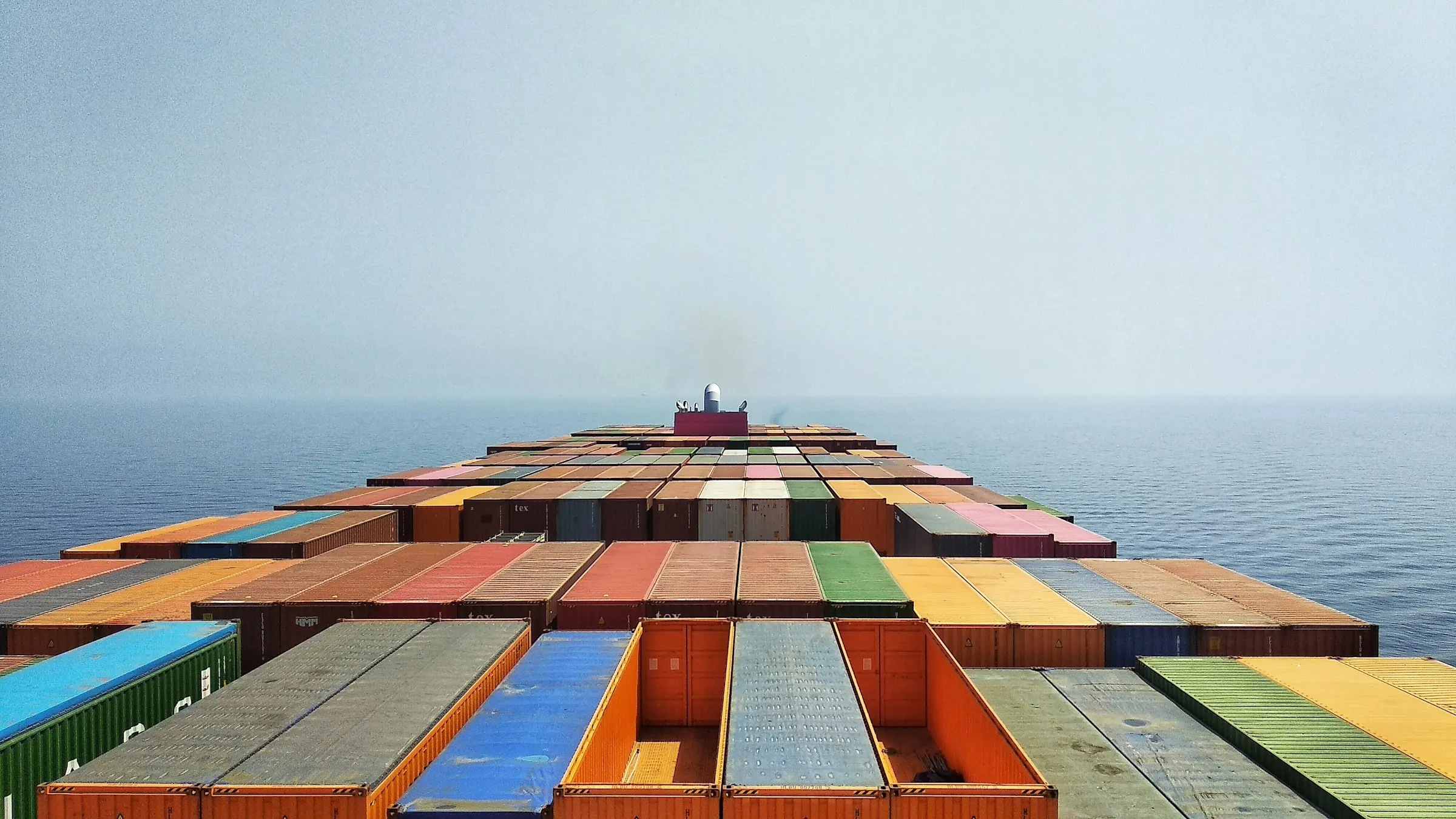
Importing from China to Switzerland: Customs, VAT and Rules 2026
Importing from China to Switzerland means dealing with a bilateral free trade agreement in force since 2014, an import VAT collected by the Federal Office for Customs and Border Security (FOCBS), and technical rules that Switzerland largely aligns with those of the European Union without being a member. This article gathers, with sources, the rules and steps that matter for a Swiss importer, as of 27 September 2026.
What Switzerland imports from China: the big picture and promising niches
Switzerland buys a wide range of goods from China: electronics, machinery and components, furniture, textiles, sporting goods, outdoor equipment, packaging, and parts for precision engineering or the medical sector. The Swiss market stands out for high purchasing power and strong quality expectations, which favours technical products and premium items over entry-level volumes.
Three benchmarks shape an import project: the free trade agreement that took effect in 2014, an elimination of Swiss customs duties on industrial goods announced for 2024 but not confirmed on any official page, and the import VAT collected by FOCBS. The resale channel chosen changes nothing about the customs obligations, which fall on the importer.
Lea también Glosario del sourcing en China: negociar, encargar y pagar a una fábrica
Trade agreements and customs relations with China
The free trade agreement between Switzerland and China was signed on 8 July 2013 and took effect on 1 July 2014. It covers trade in goods, with tariff schedules for each party, and trade in services. Switzerland and Liechtenstein form a bilateral customs union, which has no bearing on an importer dealing with a company established in Switzerland.
Negotiations to modernise this agreement were concluded on 20 August 2026 according to the State Secretariat for Economic Affairs (SECO), with a briefing document published the same day; the date it takes effect is not yet specified on the pages reviewed.
Switzerland does not belong to the European Union customs union and applies its own external tariff, which can be checked via Tares, despite close regulatory alignment on many technical standards.
Lea también Certificado de origen China: para qué sirve y cuándo se exige
Customs duties and import VAT: how it is calculated
The Swiss customs tariff is administered by FOCBS and can be checked product by product in the Tares database, which assigns each item a tariff number that determines the applicable rate. A reform that took effect on 1 January 2024 eliminated Swiss customs duties on most non-agricultural industrial products, regardless of origin; agricultural products and certain processed goods remain outside this exemption. This point, widely reported in the trade press but not confirmed on any official page reviewed directly while writing this, should be checked line by line on Tares before placing an order.
Swiss VAT has three rates as of 27 September 2026, according to the Federal Tax Administration (FTA): a standard rate of 8.1%, a reduced rate of 2.6% for essential goods, and a special rate of 3.8% for accommodation. Import VAT is calculated on the customs value, plus any customs duty and the transport and insurance costs to the Swiss border.
Example: for a shipment from Guangzhou with a customs value of 10,000 Swiss francs, transport and insurance included, on a non-agricultural industrial line covered by the 2024 exemption, the duty is zero. VAT at 8.1% then applies to those 10,000 francs, meaning 810 Swiss francs owed before release. On an agricultural line still subject to duty, the duty is added to the customs value first.
Lea también Código aduanero SA, NC, TARIC: encontrar el código correcto, y por qué importa · Coste de desembarque: la fórmula completa del landed cost
Documents required to clear customs in Switzerland
FOCBS requires an electronic customs declaration for any goods imported into or transiting through Switzerland, most often filed by a freight forwarder on the importer's behalf, who remains responsible for the accuracy of the information submitted.
- Electronic customs declaration with FOCBS
- Complete commercial invoice, the basis for the customs value
- Detailed packing list
- Transport document, ocean bill of lading or air waybill
- Proof of Chinese origin for a preferential rate on a line still subject to duty
- Retention of commercial documents for several years
Lea también Factura comercial de importación: menciones obligatorias en aduana · Packing list (lista de empaque): definición, contenido obligatorio
Standards, certification and pre-shipment inspection
For most of its industrial products, Switzerland applies the Cassis de Dijon principle: a product lawfully marketed in the European Union can be placed on the Swiss market without further checks, except where SECO has published an exception. A product coming directly from China must meet the Swiss technical requirements for its category directly, under the Federal Act on Technical Barriers to Trade.
Certain categories remain subject to specific regimes: foodstuffs, plants and seeds fall under general import permits from the Federal Office for Agriculture (FOAG), while medicines and medical devices require authorisation from Swissmedic. Sorva does not issue any of these authorisations: our team identifies factories able to supply the technical documentation the Swiss customer's compliance file needs.
A pre-shipment inspection, carried out by a third party in China before the container leaves, remains a private precaution rather than a legal Swiss requirement; it prevents a defect from being discovered only after several weeks in transit.
Lea también Documentación técnica del producto: lo que el importador debe conservar · Marcado CE en la importación: qué cubre y cómo verificarlo
Prohibited or licence-controlled products
Weapons and war material fall under a strict authorisation regime administered by FOCBS and SECO. Protected species and their derivatives fall under CITES, overseen by the Federal Food Safety and Veterinary Office (FSVO). Counterfeit goods, narcotics and chemical precursors remain prohibited or licence-controlled.
Foodstuffs, plants, seeds and certain products of animal origin require a general import permit before shipment, or the goods can be held at the border. Each sensitive category should be checked with the relevant federal office before placing an order; an exhaustive list could not be reviewed in detail while writing this.
Lea también Estafas en el sourcing en China: cómo detectarlas y evitarlas
Ports, routes from South China, Incoterms and payment
Switzerland has no sea coast: goods shipped from Guangzhou, Shenzhen or Yantian first reach a European port, most often Rotterdam, Antwerp, Hamburg or Genoa, before reaching Switzerland by rail or along the Rhine to the Rhine ports of Basel, the country's only river link to the sea. Some freight also travels on a direct China-Europe rail service to a hub such as Duisburg, finishing the journey by truck. Air freight, more expensive, is reserved for urgent shipments and mostly arrives via Zurich or EuroAirport Basel-Mulhouse.
FOB or FCA ex South China works when the buyer arranges transport itself; DAP to Basel or Zurich works when a freight forwarder handles the whole route. DDP is not recommended unless the Chinese seller is itself registered as an importer and VAT payer in Switzerland, which remains rare.
On payment, the common practice is a deposit on order followed by a balance before shipment, paid into the Chinese company's business account, never a personal account. Any change of bank details received by email should be verified with a direct phone call, as this type of fraud is common in sourcing.
Lea también Incoterms para importar de China: EXW, FOB, DDP, cuál elegir · Flete marítimo China: FCL o LCL, costes, plazos y umbral de cambio · Tren China Europa: plazos, costes y productos adecuados
Steps for a first order and what Sorva does for you
A first import follows a set sequence: specifications, factory verification, an approved sample, a proforma invoice with an incoterm, any sector-specific authorisations, pre-shipment inspection, transport to Switzerland, then customs clearance by the customer or their freight forwarder.
Sorva is a sourcing and trading house based in Guangzhou, in the Tianhe district, backed by a Chinese subsidiary whose corporate purpose covers buying, reselling and exporting goods, and by a parent company in France. Our Chinese-speaking team on the ground finds and vets factories, arranges visits and samples, negotiates terms, has quality checked before loading and organises freight to the chosen delivery point. We never act as the official importer in Switzerland, do not clear customs in the destination country, and do not export vehicles ourselves without a Chinese exporter holding the required licences. Our base offer is invoiced in US dollars for clients outside the European Union, with regional options quoted on request.
Lea también Primera importación: las diez etapas y los errores que salen caros · Pagar a un proveedor chino: transferencia, carta de crédito
Remember that in Switzerland the 8.1% VAT applies almost every time, the customs duty has been zero on most industrial goods since 2024 but should be checked line by line on Tares, and compliance often runs through the Cassis de Dijon principle rather than a separate Swiss standard. First step: find your product's tariff number on Tares before starting production.
¿Importa usted desde China?
Cuéntenos qué desea comprar. Nuestro equipo responde por WhatsApp, con las fábricas, los plazos y los documentos que exige su país.
Preguntas frecuentes
01What customs duties apply when importing from China to Switzerland?
02What is the import VAT rate in Switzerland?
03Does Switzerland have a free trade agreement with China?
04What documents are needed to clear Chinese goods through Swiss customs?
05How do Swiss standards apply to a product imported from China?
06Which products are banned or require authorisation to import into Switzerland?
07Which route does Chinese cargo take to reach Switzerland?
08Can Sorva clear my goods through customs on arrival in Switzerland?
Lo que está cambiando ahora
- Suisse · Douane et numérisation
Suiza: la reforma del derecho aduanero adoptada, entrada en vigor prevista para 2027-2028
El Consejo Nacional suizo adoptó el 6 de marzo de 2024 la revisión total de la ley de aduanas, que la divide en una ley sobre los aranceles y una nueva ley sobre la ejecución y la evaluación por la Oficina Federal de Aduanas y de Seguridad de las Fronteras (OFDF). El plazo de referéndum corrió hasta octubre de 2025 sin llegar a una votación, pero los profesionales del sector aduanero suizo ya no esperan una entrada en vigor del nuevo texto antes de 2027 o 2028.
Leer el artículo - Turquie · Droits de douane
Turquía: la OMC declara ilegal el arancel del 40 % sobre los vehículos chinos
El 28 de julio de 2026, un panel de solución de diferencias de la OMC dio la razón a China frente a Turquía sobre su arancel adicional del 40 % aplicado desde julio de 2024 a los vehículos importados de China. Esta decisión no obliga a Turquía a retirar de inmediato la medida, que sigue vigente a 27 de septiembre de 2026.
Leer el artículo - Kazakhstan · Douane en ligne
Unión Euroasiática: un régimen aduanero propio para el comercio en línea desde julio
El Consejo de la Comisión Económica Euroasiática aprobó un nuevo capítulo del Código Aduanero de la Unión Económica Euroasiática (UEEA) que crea un régimen específico para el comercio transfronterizo en línea, con una entrada en vigor anunciada para el 1 de julio de 2026. Kazajistán, el último de los cinco Estados miembros en ratificar el texto, lo hizo en diciembre de 2025, mientras que Armenia, también miembro de la unión, quedará sujeta a las mismas condiciones.
Leer el artículo
La prestación que corresponde
- ComisiónComisión por volumenUsted abre un expediente, nosotros encontramos y negociamos la fábrica. Solo cobramos sobre la mercancía que usted pide.150 €gastos de apertura de expedienteVer el servicio
- Por unidadBúsqueda de proveedores · completaUna licitación realizada para usted, una tabla con precios, las muestras en mano.279 €por productoVer el servicio
- Por unidadControl antes de la cargaCantidades, embalaje, marcado, estado del contenedor, informe fotográfico, antes de que la mercancía salga.229 €por cargaVer el servicio