
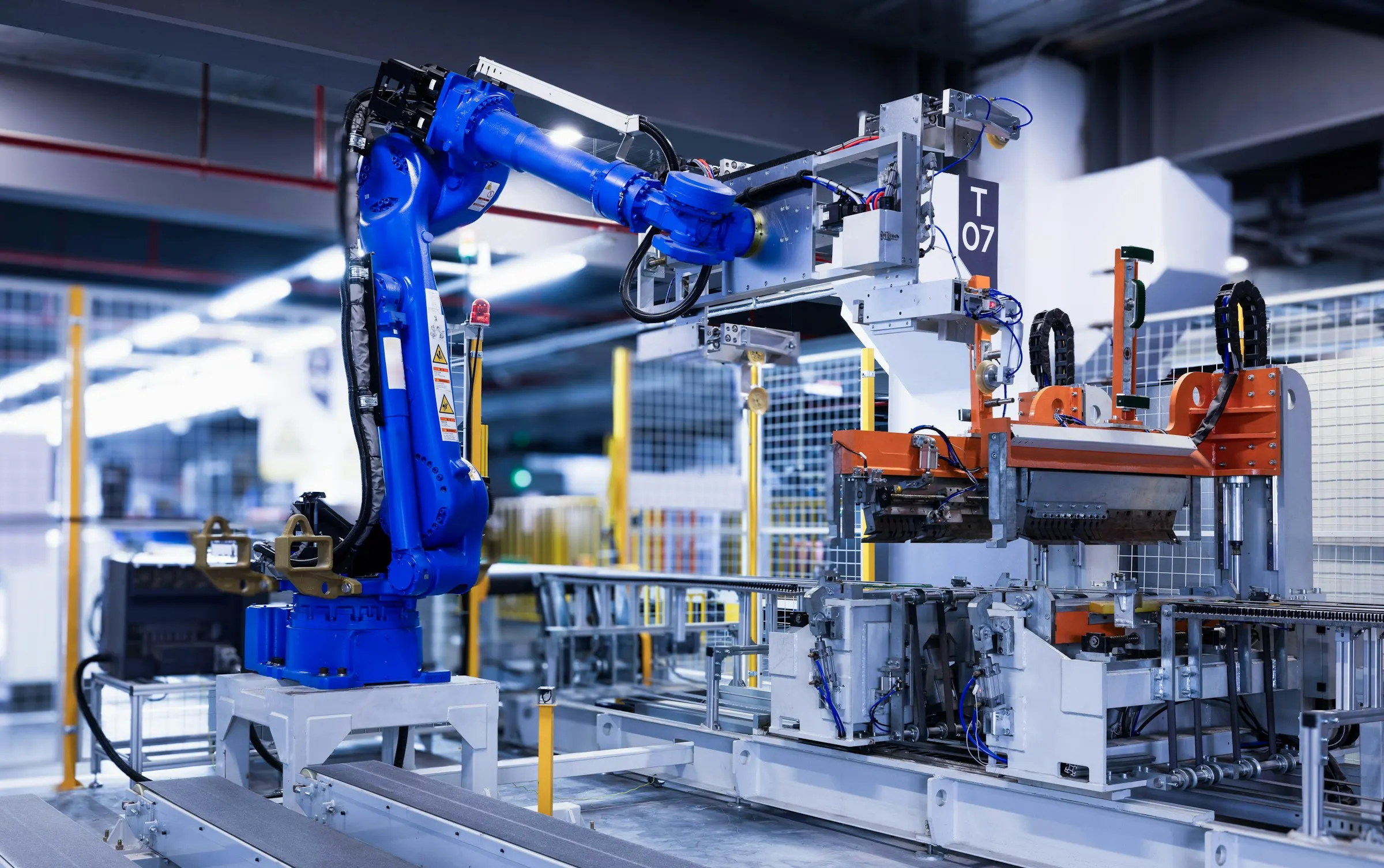
Importing electronics from China: Shenzhen, compliance, freight
The electronics sector concentrates everything that trips up an importer: multiple suppliers, stacked compliance requirements, batteries under transport constraints. This article covers the Shenzhen landscape, the legislation to set out from the quote stage, and the logistics to lock down before the first payment.
Shenzhen, a supply chain within reach
Shenzhen concentrates China's electronics manufacturing: components, wiring, plastic moulds, final assembly and packaging all meet within the same industrial cluster in Guangdong, on the border with Hong Kong. The Huaqiangbei district is home to one of the largest electronics markets in the world: a chip, a connector or a chassis can be bought there within the day, and assembled the following week. This density explains the sector's speed: a new product can be developed in a few months, and catalogues change constantly.
For a European buyer, this abundance cuts both ways. Suppliers are plentiful, but so are intermediaries: trading offices that present themselves as manufacturers, workshops with no quality control, batches assembled from rejects. The port of Shenzhen, with its Yantian and Shekou terminals, ships to Europe by sea and by rail. The Canton Fair, in Guangzhou, lets you meet many electronics exhibitors during its first phase, before going to see the production lines.
Read next Canton Fair user guide: dates, phases, and buyer badge in Guangzhou
Understanding who is selling to you: factory, ODM or trading company
Three profiles coexist behind the same online storefront. The assembly factory produces in volume and accepts limited customisation. The ODM, designer and manufacturer, sells platforms it adapts: circuit board, housing, logo. The trading company, finally, buys on your behalf from one or the other. Each has its use, provided you know who you are dealing with, since promises, minimum quantities and margins differ between them.
The Chinese business licence shows the company's real nature and the scope of its registration; it is read in Chinese and cross-checked against the stated production address. A head office in an office tower, a workshop in an outlying industrial park, a contact who changes between the quote and the order: every detail counts. On platforms like Alibaba, 1688 or Made-in-China, filter by company type, then cross-check the stated address with a visit or an audit before any bulk payment.
- Business licence read and translated, scope of activity consistent with what is promised
- Production address visited or audited, assembly lines seen running
- A paid pre-production sample, then a reference sample archived on both sides
- Customisation and service levels confirmed in writing, in the proforma
Read next Sourcing agent or broker: who does what, and who pays whom · Factory audit in China: points to check and documents to request
Compliance is built at the quote stage, not at customs clearance
Electronics stack up the legislation: the Low Voltage Directive 2014/35/EU, the EMC Directive 2014/30/EU, RoHS 2011/65/EU, the Radio Equipment Directive 2014/53/EU as soon as the product communicates, WEEE 2012/19/EU on import, and Regulation (EU) 2023/988 on general product safety. Our article on electronics compliance covers each of these in detail. Here, remember the order of operations: requirements are written into the brief and the proforma, before any balance is paid.
Demand the EU version of the product: an adapted plug, a rating plate at 230 volts and 50 hertz, a manual in the language of the country of sale, the required markings. Validate these points on the pre-production sample, never on a catalogue photo. Be wary of pre-certified modules: an approved radio module fitted into any old housing does not make the finished product compliant, since it is the finished product that must be assessed. Factories readily produce generic test reports: a report run on a similar model does not cover your reference.
Read next Importing electronics from China: LVD, EMC, RoHS, WEEE · GPSR Regulation 2023/988: Importer Obligations
Lithium batteries: a file of their own, from regulation to container
Batteries have their own EU regulation: Regulation (EU) 2023/1542, applicable since February 2024, is gradually replacing the Batteries Directive 2006/66/EC. Marking, safety requirements, producer responsibility: the file needs preparing from the cell selection stage, especially when the battery is built into the device. A battery sold separately is treated as a standalone product, with its own documents and its own marking.
Transport is the second front. Lithium-ion batteries shipped alone fall under UN number 3480, those contained in or packed with equipment under UN number 3481; in both cases, the cell manufacturer must hold the UN 38.3 test report. By air, IATA in particular caps the state of charge at 30% for batteries shipped alone, and each carrier has its own acceptance rules. By sea, the IMDG code applies. In practice, pickup refusals rarely come from the battery itself: they come from an incomplete file or failed labelling.
- Safety data sheet for the cell, supplied by its manufacturer
- UN 38.3 test report, dated, named, consistent with the reference ordered
- Dangerous goods declaration and labelling matching the transport mode chosen
- State of charge controlled before pickup for any air shipment of batteries alone
Read next Air freight China: when to choose it and how it is priced
Freight and customs: what changes for electronics
For a production run, sea freight remains the default: full container or consolidated cargo depending on volume, out of Yantian or Shekou for Shenzhen factories, with FOB advisable to keep control of the main transport leg. Air express serves prototypes and urgent parts, and rail links Guangdong to Europe as a middle ground between cost and lead time. Each mode has its own battery constraints and insurance regime: get all three quoted before deciding.
For customs, electronics mostly fall under chapter 85 of the nomenclature, where every subheading carries its own duty rate: check the code and the declared customs value, since checks readily target high unit-value products, and certain categories subject to anti-dumping duties need identifying before the order. Add import VAT with its self-assessment mechanism, and a valid EORI number before the first customs clearance. A serious freight forwarder raises these questions from the moment the file is opened.
Read next HS, CN, TARIC customs codes: finding the right one, and why it matters · Anti-dumping duties on China: how to know if you are affected
What Sorva does for you
Sorva is a sourcing and brokerage house, with a Chinese-speaking team in Guangzhou, close to the Shenzhen cluster. On electronics, we vet suppliers before the first payment: the company's real nature, the production address visited, references checked, claimed compliance checked against the applicable legislation. We write the requirements into the brief and the proforma, our Chinese-speaking team negotiates in Chinese, we follow the samples and then the production run, and we have the goods inspected before loading, batteries included, with the dangerous goods transport file checked.
In most cases you pay no fees: you open a file with us, we negotiate the goods on your behalf, and we take a commission on their ex-factory value. Our pay follows the volume, not the incidents: it aligns our work with your interest, from the first proforma to customs clearance.
Importing electronics from China plays out on three fronts: the supplier's real nature in Shenzhen, the compliance foundation written before payment, and the battery file through to the transport mode chosen. First thing to do: demand the business licence, named test reports and the batteries' UN 38.3 report, supplied by their manufacturer, before accepting a proforma.
Let's talk about your project
Frequently asked questions
01Do you need to visit Huaqiangbei to buy components?
02Can lithium batteries be shipped by air express?
03Can the same electronic product fall under several pieces of legislation at once?
04What is the difference between an assembly factory and an ODM?
The service that matches
- CommissionVolume commissionYou open a file, we find and negotiate the factory. We are paid only on the goods you order.€150file opening feeView service
- One-off serviceSupplier checkWho the company really is: business licence, capital, permitted scope, export rights.€79per supplierView service
- One-off servicePre-shipment inspectionQuantities, packing, marking, container condition and a photo report, before the goods leave.€229per loadingView service