
Importing from China to Namibia: customs, VAT and NSI in 2026
Importing from China to Namibia means getting to grips with three issues at once: the common external tariff of the Southern African Customs Union, the Namibian Standards Institution's certificate of conformity that governs clearance for many products, and a port of Walvis Bay that also serves as a gateway for Zambia and Botswana. This article brings together, with their sources, the rates, documents and timelines that matter to a Namibian importer, as at 7 October 2026.
What Namibia imports from China: niches and the role of the port of Walvis Bay
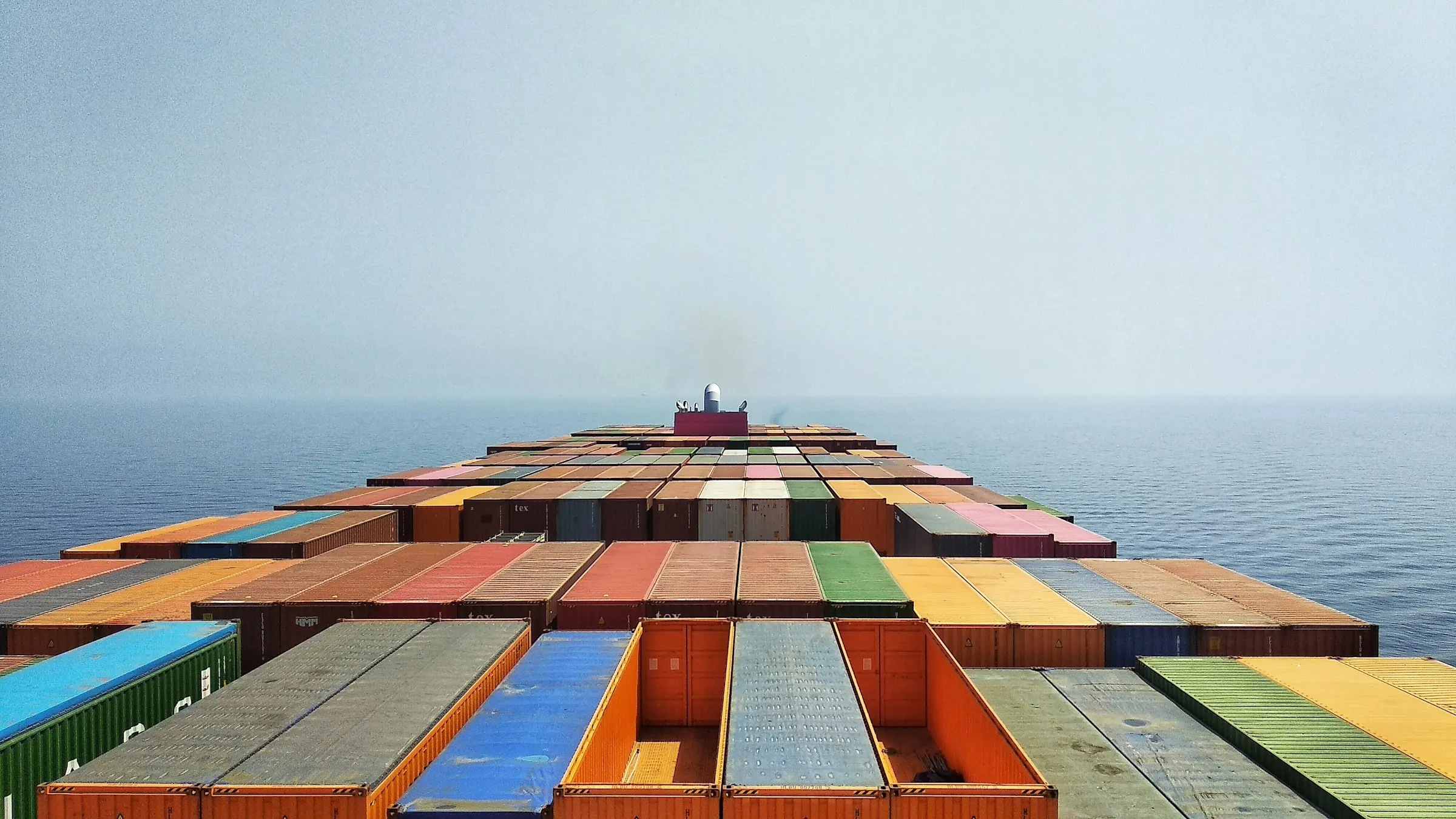
Namibia imported around 978 million dollars worth of Chinese goods in 2024, according to the United Nations Comtrade database: machinery and mechanical appliances led with 200.13 million, followed by electrical and electronic equipment at 174.93 million, aircraft and aeronautical parts at 134.86 million, vehicles at 81.29 million and articles of cast iron or steel at 46.18 million. Almost all of these goods pass through the port of Walvis Bay, the country's only major deep-water port, before being cleared through customs in Windhoek or forwarded inland.
- Electronics, household appliances and telecommunications equipment: subject to NSI certification and, for radio equipment, CRAN type approval
- Vehicles, spare parts and equipment for mining and construction
- Solar equipment, driven by off-grid electricity needs
- Textiles, clothing and household goods
Read next Importing electronics from China: Shenzhen, compliance, freight
Namibia and China: trade and customs relations
Namibia does not import alone: it belongs to the Southern African Customs Union, the world's oldest customs union, founded in 1910 with Botswana, Eswatini, Lesotho and South Africa. The five states apply an identical common external tariff, and the duty collected feeds a common fund administered by South Africa, redistributed according to a formula based on customs, excise and development. No free trade agreement between SACU and China was identified in our sources: trade remains governed by most-favoured-nation status at the World Trade Organization.
Since 1 May 2026, China has in turn granted duty-free access to 53 African countries with which it has diplomatic relations, including Namibia, with the notable exception of Eswatini. This regime benefits Namibian exports, not the duty Namibia collects on what it imports.
Read next HS, CN, TARIC customs codes: finding the right one, and why it matters
Customs duty and import VAT: the full calculation
SACU's common external tariff, identical across the five member states including South Africa, averaged 7.5% in 2024 according to the World Trade Organization, with 7.4% on non-agricultural goods and 8.5% on agricultural goods. This figure masks wide disparities: finished clothing at 40%, light vehicles at 25% through to 2035, original automotive components at 20%, certain fibres at 7.5%. The precise tariff line can be checked on the tariff tool of the Namibia Revenue Agency, NamRA, before any quotation.
Import VAT, at the standard rate of 15%, is calculated on whichever is higher of two bases: the free on board value marked up by a flat 10%, or the market value of the goods. Example on 100,000 Namibian dollars of finished clothing free on board: duty at 40%, i.e. 40,000, VAT base of 150,000 (110,000 marked up by 10% plus duty), VAT at 15%, i.e. 22,500. Combined duty and VAT reach 62,500 Namibian dollars, nearly two thirds of the starting value. An import VAT account allows this payment to be deferred to the 20th of the following month.
- SACU customs duty: 0 to 45% depending on the tariff line
- VAT: 15%, calculated on the free on board value marked up by 10%, or the market value if higher
- Excise duty: on spirits, tobacco, alcohol and fuel
- NamRA fuel levy: 1.20 Namibian dollars per litre of petrol or diesel
- Environmental taxes: vehicles, light bulbs, lubricants, tyres, batteries and plastic bags
Read next Customs Value and Duty Calculation: Base, Adjustments, Rates · Import VAT and Reverse Charge: How It Works in France
Mandatory documents for clearing an import through customs
NamRA, the Namibian revenue authority created in 2017, processes declarations on the electronic ASYCUDA World system, deployed across its 29 customs offices. The importer lodges a Bill of Entry, form SAD 500 or 501. Under section 44 of the Customs and Excise Act, an accurate and sufficient commercial invoice from the Chinese supplier is mandatory: its absence blocks clearance. For goods subject to licensing, a permit is obtained in advance on the IMEX system of the Ministry of International Relations and Trade, valid for one calendar year.
- Bill of Entry, form SAD 500 or 501, lodged on ASYCUDA World
- Full commercial invoice and proforma invoice
- Bill of lading or air waybill
- Certificate of origin for preferential treatment where applicable
- IMEX import permit and NSI certificate of conformity for the products concerned
Read next Commercial invoice for import: mandatory details for customs · Packing List: Definition and Mandatory Contents
NSI, standards and inspections before clearance
The Namibian Standards Institution, the NSI, is the national standards body created by the Standards Act of 2005. The Minister of Industrialisation can make a standard mandatory for a product category; this is already the case for cement and hand sanitisers, and almost all electrical and consumer electronic goods are also subject to it under its imported products verification scheme.
For electrical and electronic goods, three checks are required before a Certificate of Conformity is issued: electrical safety, electromagnetic compatibility and energy efficiency, with the NSI accepting reports from ISO 17025 accredited laboratories. Labelling must show the origin, specifications and instructions for use in English; the certificate remains valid for one year. Radio equipment is additionally subject to type approval from the Communications Regulatory Authority of Namibia, the CRAN, model by model.
Read next Importing electronics from China: LVD, EMC, RoHS, WEEE · Product technical documentation: what the importer must hold
Prohibited and licensable products, and exchange controls
Among other things, Namibia prohibits narcotics, counterfeit goods, calcium carbide, cigarettes weighing more than 2 kilograms per thousand units, hazardous waste and chemicals, weapons, military clothing intended for sale, obscene printed material, and goods produced by prison labour.
Other goods require a separate permit: medicines from the Ministry of Health, chemicals and pesticides, agricultural and forestry products from the Ministry of Agriculture, CITES-protected species from the Ministry of Environment, petroleum products and ores from the Ministry of Mines, firearms from the Namibian police, and animals, plants and fertilisers on sanitary grounds. On payment, always pay into the Chinese company's business account, never a personal account, and verify with a direct phone call any change of bank details received by email.
Port of Walvis Bay, corridors to Zambia and Botswana, recommended Incoterms
Walvis Bay remains Namibia's only major deep-water port, handling around 5 million tonnes of cargo and 3,000 vessel calls a year; its new container terminal raises capacity from 400,000 to 750,000 twenty-foot equivalent units a year. The port also serves as a regional gateway via two corridors: the Trans-Kalahari Corridor, a tarred road to Windhoek, Botswana and Pretoria, shortened by around 400 kilometres compared with the traditional route via southern Namibia; and the Walvis Bay-Ndola-Lubumbashi Development Corridor, which crosses the Caprivi Strip to Katima Mulilo, then the Zambian Copperbelt and the Democratic Republic of Congo.
From southern China, freight most often departs from Guangzhou, Shenzhen or Yantian; no single, verifiable transit time to Walvis Bay was found, so ask your freight forwarder. Free on board suits the buyer organising transport; cost, insurance and freight if an intermediary handles it through to the port. Delivered duty paid remains inadvisable unless the Chinese seller is itself a customs declarant on site.
Read next FOB Incoterm: Meaning, Obligations and Price (Incoterms 2020) · Sea freight from China: FCL or LCL, costs, transit times and break-even point
Steps in an order and what Sorva does for you
A first order follows a precise sequence: specifications, factory vetting, an approved sample, a proforma invoice with Incoterm, an NSI file opened where the product falls under it, production monitoring, pre-shipment inspection, freight to Walvis Bay, then customs clearance by the client or their local freight forwarder.
Sorva is a sourcing and trading house based in Guangzhou, backed by a Chinese subsidiary whose business purpose covers buying, reselling and exporting goods, and a parent company in France. Our Chinese-speaking team finds and vets factories, arranges visits and samples, negotiates, has quality checked before loading, and organises freight to the port of Walvis Bay, while gathering the documents needed for an NSI file. We never act as the official importer in Namibia. Our base offer is invoiced in dollars, with regional options quoted on request.
Read next Paying a Chinese Supplier: Wire Transfer, Letter of Credit · First import: the ten steps and the mistakes that cost dearly
Key point: in Namibia, the NSI certification process should start as soon as production begins for electrical and electronic goods, and the 15% VAT is calculated on a base already marked up by 10%, not on the free on board value alone. First step: check the tariff line on NamRA's tariff tool and whether a mandatory NSI standard applies.
Importing from China?
Tell us what you want to buy. Our team answers on WhatsApp with the factories, the lead times and the documents your country asks for.
Frequently asked questions
01What customs duty applies when importing from China to Namibia?
02What is the import VAT rate in Namibia?
03What is the NSI certificate of conformity?
04What documents are needed to clear goods from China through customs?
05Which port and corridors handle Chinese goods bound for Zambia or Botswana?
06Can Sorva clear my goods through customs on arrival in Namibia?
What is changing right now
- Afrique du Sud · Droits antidumping
South Africa: timetable for duties on Chinese steel confirmed in the Government Gazette
SARS notices R.7937 to R.7941, published in Government Gazette 55424 of 18 September 2026, confirm the entry into force of anti-dumping duties on Chinese flat steel under a progressive schedule rising from 5.5% until June 2027 to 57.84% from June 2029, on top of a safeguard duty already active since June 2026.
Read the article - Afrique du Sud · Droits antidumping
South Africa: final anti-dumping duties on Chinese steel (up to 57.8%)
The International Trade Administration Commission (ITAC) concluded its anti-dumping investigation on 18 September 2026 into corrosion-resistant steel coil imported from China, setting final duties ranging from 8.21% to 57.84% depending on the exporter. The measure follows a complaint by South African producers ArcelorMittal South Africa and SAFAL Steel.
Read the article - Afrique du Sud · Droits antidumping
South Africa: definitive anti-dumping duties on Chinese windscreens, up to 129%
The South African Revenue Service inserted definitive anti-dumping duties on 7 September 2026 on front windscreens originating in China, ranging from 12.92% to 129.15% depending on the manufacturer, following an ITAC investigation that also identified circumvention via Malaysia.
Read the article
The service that matches
- CommissionVolume commissionYou open a file, we find and negotiate the factory. We are paid only on the goods you order.€150file opening feeView service
- Engineering studiesRegulatory compliance studyWhat your product must meet in its destination country, written up and sourced, before the first order.€390per product and destination countryView service
- One-off servicePre-shipment inspectionQuantities, packing, marking, container condition and a photo report, before the goods leave.€229per loadingView service