
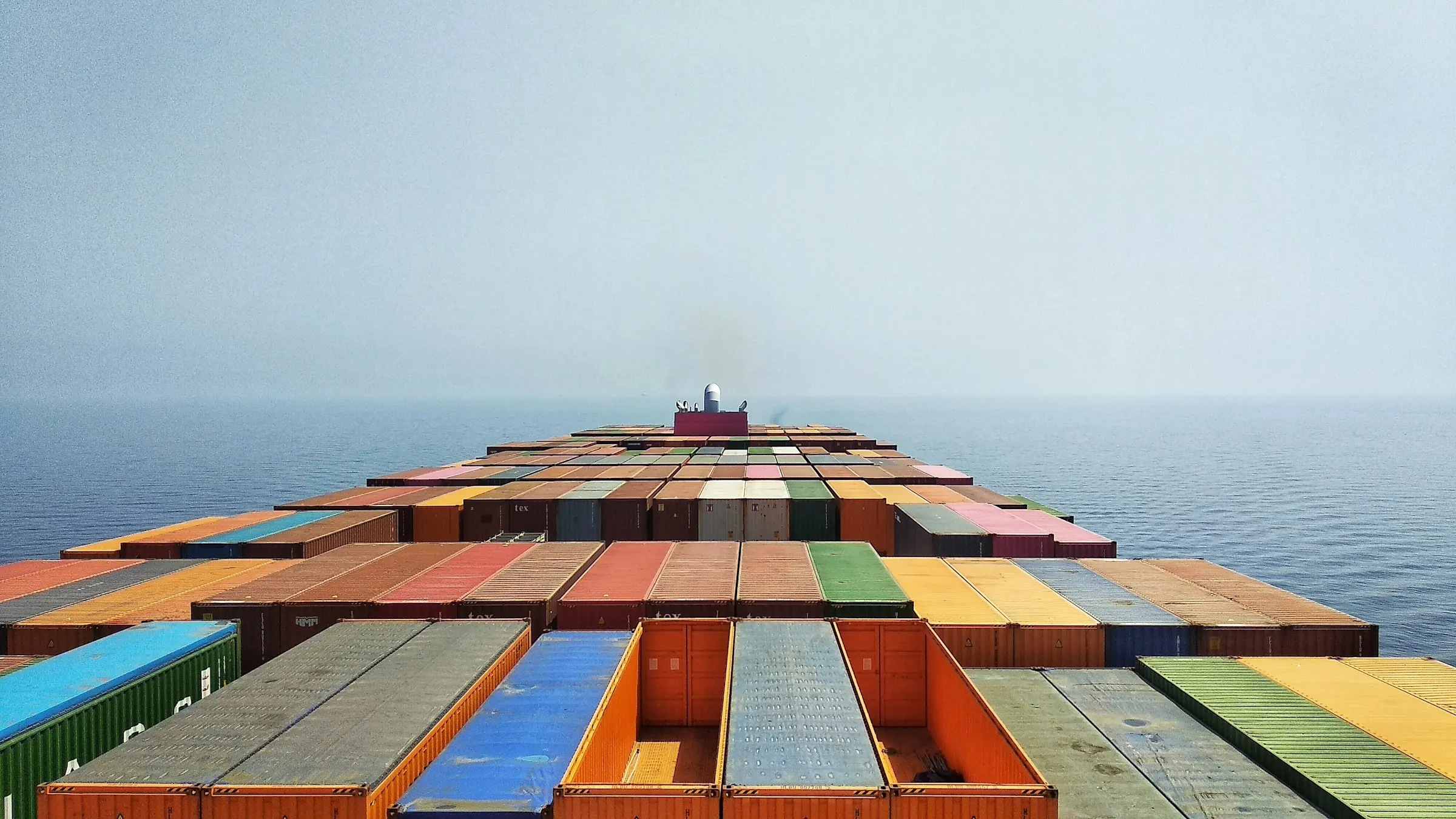
Cargo transport insurance: coverage, deductible, exclusions
Between the Chinese factory and your warehouse, the goods change hands, mode of transport and liability regime several times. When a container falls overboard or a fire breaks out in the hold, your only solid recourse remains the insurance policy you have taken out, not the carrier's compensation limit.
Carrier liability does not replace insurance
Transport conventions cap what the carrier must pay. For maritime, the Hague-Visby Rules (Brussels Convention of 1924, 1968 Protocol), applicable to the classic bill of lading, limit compensation to 666.67 Special Drawing Rights per package or 2 SDR per kilogram, whichever is higher. For air, the Montreal Convention of May 28, 1999 caps the freight indemnity at just over twenty SDR per kilogram, revised periodically by ICAO. The SDR, a basket of IMF currencies, is worth approximately 1.3 US dollars.
On a container of light and expensive goods, these caps cover a minimal fraction of the invoice. You still need to prove the damage occurred while under the carrier's custody, respect claim deadlines, and hope the company is solvent on the day of the loss. A cargo insurance policy reverses the logic: it indemnifies the agreed value, without discussion on these caps.
- For maritime, issue written reserves upon delivery; hidden damage must be notified to the carrier within three days (Hague-Visby Rules).
- For air, damage must be reported within fourteen days of receipt, and delivery delay within twenty-one days (Montreal Convention).
- A claim filed with the carrier does not constitute acknowledgment of liability, nor does it replace the claim declaration to your insurer.
Read next Air freight China: when to choose it and how it is priced · Express China France: costs DHL, FedEx, UPS and customs on arrival
Clauses A, B and C: the three coverage levels
Marine insurance relies on the standard Institute Cargo Clauses, in their January 1, 2009 edition. Clauses C cover major perils: fire, explosion, sinking, stranding, collision, jettison, and general average sacrifice. Clauses B add intermediate named risks: entry of sea or fresh water, washing overboard, lightning, earthquake, total loss of a package falling overboard during transshipment. Clauses A, known as 'all risks', cover any fortuitous loss except for listed exclusions: this is the expected level for packaged valuable goods.
Since the ICC Incoterms 2020, a CIF seller must cover at minimum Clauses C, and a CIP seller Clauses A. Under FOB, FCA, or EXW, it is the buyer who insures and chooses the level. This legal minimum is rarely sufficient: Clauses C do not cover theft or wet damage not following a sinking.
- Clauses C: major perils, lowest premium of the three, minimum protection.
- Clauses B: intermediate named risks, wet damage and packages lost overboard covered, theft not covered.
- Clauses A: all risks except exclusions, theft and shortage included, highest premium.
Ad valorem: insuring the true value of the goods
An ad valorem policy indemnifies the value you declare, not a flat rate per kilogram. The insured value is conventionally calculated on the cost of goods plus freight, usually increased by 10% to cover ancillary costs. If you declare less than the actual value, the insurer applies the proportional rule: the indemnity is reduced in the same ratio as the underinsurance.
Do not confuse this with the ad valorem value declaration to the carrier: for a surcharge, it raises the carrier's liability cap, but it is not a policy. Also check the coverage of freight and customs duties if needed: a dedicated extension exists, useful when the loss occurs after clearance, when duties paid become definitive.
Read next Customs Value and Duty Calculation: Base, Adjustments, Rates · Landed cost: the full formula for your delivered unit cost
The deductible: what remains your responsibility
The deductible is the portion of the damage that remains your responsibility per claim. It is expressed as a fixed amount or a percentage of the insured value. An absolute deductible is systematically deducted. A relative deductible only applies if the damage exceeds its threshold: in that case, everything is indemnified. The difference changes everything on small shortages; re-read the clause.
Fragile goods often carry a higher specific deductible, because breakage is difficult to date and prevent. Packaging is not just a production matter: insufficient packaging is a classic exclusion, and an excessive deductible can make the policy almost useless for glass or ceramics. Assess premium and deductible together, never separately.
Read next Hidden import costs: the fees beginners forget to budget for
General average: the trap of intact shipments
General average is an ancient mechanism, now codified by the York-Antwerp Rules 2016. When the crew voluntarily sacrifices part of the cargo to save the vessel, or incurs extraordinary expenses such as emergency towage, the loss is distributed among all saved interests proportionally to their value: shipowner, shippers, including those whose cargo was jettisoned.
The pitfall: your container may arrive intact and still trigger a contribution demand. Without a policy, the carrier blocks delivery until a guarantee is deposited and its share paid. With Clauses A, your insurer advances the general average contribution and conducts the settlement with the carrier's expert. Many importers discover this mechanism after the fact: it is a major reason to take out a policy, even on short routes.
What the insurance will not cover
A clauses are not a blank check. Inherent vice of the goods, insufficient or unsuitable packaging, pure delay, willful misconduct of the insured, loss of market, and consequences of nuclear radiation remain excluded. War and strikes are covered only by dedicated extensions, war clauses and strike clauses, charged according to the zones traversed.
Some goods are excluded outright or accepted only upon quotation: live animals, perishable goods, used items and vehicles, precious metals and stones. Carrier insolvency is also often excluded from standard policies. Request the list of exclusions before signing, not after a loss, and verify that your packing practices meet the contract requirements.
- Inherent vice: cargo that deteriorates on its own is not a loss.
- Insufficient packaging: the adjuster will rely on any packaging defect to reject the claim.
- Delay: commercial loss due to late delivery is not covered.
- War, strikes, confiscation: specific extensions to be subscribed according to the itinerary.
Read next Product specification: the tech pack the factory follows
What Sorva does for you
Our Chinese-speaking team in Guangzhou checks the packaging and supervises loading before departure: compliant packaging makes the difference between a claim that is paid and a claim rejected for insufficient packaging. As a brokerage and sourcing firm, we select with you the level of clauses suited to the goods, set the declared value, and coordinate forwarder and insurer, from ex-works price to customs clearance. If a loss occurs, we compile the file: reserves, photos, bill of lading, invoices, expert report.
In most cases, you pay no fees: you open a file, we negotiate the goods for you, and we take a commission on their ex-works value.
The carrier is capped by the convention, your policy is not: insure the real ad valorem value under clauses A, while monitoring the deductible and the war and strikes extensions. Before the first container, have the packaging and loading checked: that is what triggers the policy on the day of loss.
Let's talk about your project
Frequently asked questions
01Who should take out transport insurance: the Chinese seller or me?
02What do you recover if the goods are lost without insurance?
03Can general average really affect me?
04What to do upon discovering damage on arrival?
The service that matches
- CommissionVolume commissionYou open a file, we find and negotiate the factory. We are paid only on the goods you order.€150file opening feeView service
- One-off servicePre-shipment inspectionQuantities, packing, marking, container condition and a photo report, before the goods leave.€229per loadingView service
- Ongoing supportMonthly managementA buying programme run continuously, with two inspections included each month and a dedicated contact you can reach.€490per month, excluding VATView service