
Origin of goods and Made in marking: rules and pitfalls
Declaring the wrong origin holds the goods at arrival, distorts the calculation of duties and exposes the importer to penalties. This article explains how origin is determined in customs, when Made in marking is required, and what the certificate of origin actually does.
Non-preferential origin: the rule that decides at customs
In customs, non-preferential origin answers a simple question: where does this product come from, for the purposes of duties and controls. The Union Customs Code, Regulation (EU) No 952/2013, sets the rule in its Articles 59 and 60. A product wholly obtained in one country takes the origin of that country. When several countries take part in its manufacture, the origin is that of the place of its last substantial transformation, assessed by a change of tariff heading, sufficient value added, or a representative processing operation.
This origin governs the basic customs duty, the application of anti-dumping and countervailing duties, import restrictions and the marking of the product. It does not lower any duty. Preferential origin, governed by trade agreements and their own documents, is the one that opens reduced rates. Confusing the two leads to declaring an origin that serves neither your duties nor your marking.
Read next Anti-dumping duties on China: how to know if you are affected · HS, CN, TARIC customs codes: finding the right one, and why it matters
Made in China: what the marking requires on import
CE marking attests conformity, never provenance. As for origin marking, there is no single harmonised regime for all products imported into the Union. Sector-specific legislation imposes it on certain product families, and several member states require origin labelling on specific imported products. There is also a particular case: for products covered by the implementing regulation that establishes an anti-dumping measure, a specific marking of the country of origin, visible and durable, is required.
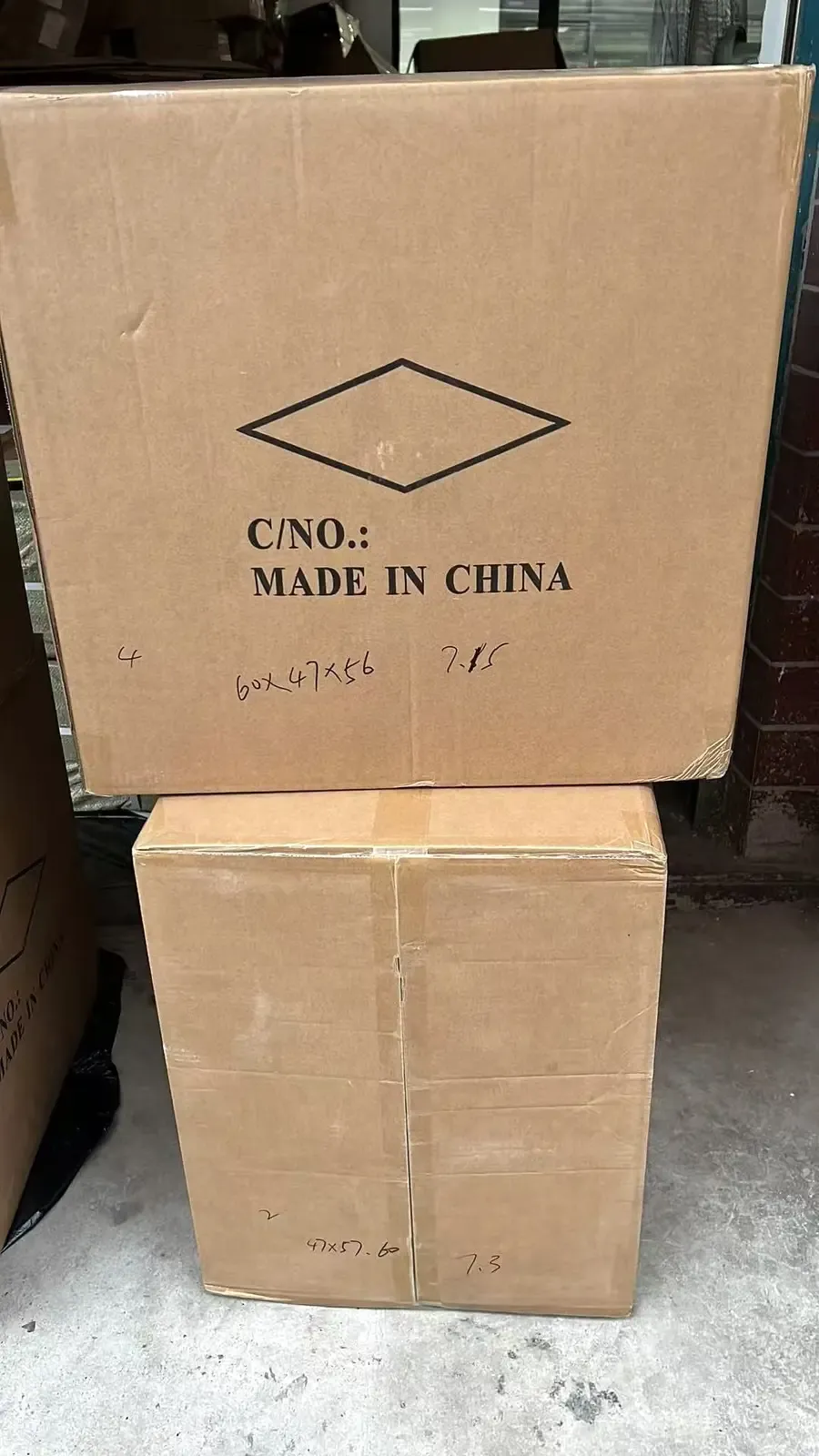
In a container coming from China, the marking is decided before loading. The factory marks the country of origin on the product and, in practice, on the packaging and the cartons. If the mention is missing, the correction happens at the port, in a rush, or not at all. Our Chinese-speaking team in Guangzhou requests photos of the marking before departure and locks this requirement into the brief.
Read next CE Marking on Imports: What It Covers and How to Verify
Assembly is not enough: when the origin does not change
Light assembly, packaging or minor finishing does not change the origin. A product manufactured in China, even fitted with European components, remains Chinese if its last substantial transformation takes place in China. The reverse also holds: a product born elsewhere and simply packaged in China does not become Chinese. This is the rule under Article 60 of the Union Customs Code, applied product by product.
The classic pitfall is circumvention of anti-dumping duties, governed by Regulation (EU) 2016/1036. Some sectors, such as bicycles subject to measures since the 1990s, have seen arrangements designed to mask the real origin. Customs authorities track these schemes, hold containers and seize the goods. The importer of record then bears the burden of proving the declared origin, even when the factory wrote the "made in" mention with its own hand.
The certificate of origin: what it is actually for
The non-preferential certificate of origin is issued by a chamber of commerce, in China mainly the CCPIT. It attests the declared origin of the goods; it does not open any reduced duty. The Union does not require it for all imports, but customs can request it to verify a declaration, and a customer, a bank or a freight forwarder sometimes adds it to their documents.
Do not confuse it with preferential documents, such as the EUR.1 movement certificate or the origin declaration on invoice, specific to trade agreements. There is no comprehensive free trade agreement between China and the Union: for a Chinese import, the certificate of origin remains a piece of evidence, not a saving on duties. Check the consistency between the certificate, the invoice and the bill of lading before departure.
Read next How to read a Chinese proforma invoice: line by line
The pitfalls that cost dearly
Most origin problems are settled before shipment. Here are the ones our team most often encounters on files coming from China.
In every case, the fault falls on the importer of record, not on the factory. A mention written by the seller is not proof. Origin is checked component by component, compared against the product's nomenclature and documented before shipment, not on arrival.
- Marking missing, illegible or applied at the last minute, discovered at the pre-loading inspection
- A "made in" mention claimed by the factory without proof, with components coming from elsewhere or subcontracting between several workshops
- An order split between several factories in different countries, but declared under a single origin
- Transhipment through a third country to dodge anti-dumping duties: container held, goods seized, importer's file called into question
- Certificate of origin drawn up after the fact, with a description that does not match the commercial invoice
- Confusion between CE marking, which attests conformity, and the origin of the product
Read next Sourcing scams in China: how to spot and avoid them · Pre-shipment inspection: the PSI protocol in China
What Sorva does for you
Sorva is a sourcing and brokerage house. Our Chinese-speaking team in Guangzhou collects the declared origin of each factory, checks it against the product's customs nomenclature and flags inconsistencies before the order. We verify the "made in" marking on pre-loading photos, follow the applicable anti-dumping measures with your freight forwarder, and have the certificate of origin issued when your file requires it.
In most cases you pay no fees: you open a file, we negotiate the goods on your behalf, and we take a commission on their ex-factory value.
Origin is determined by the last substantial transformation, not by the label the factory proposes. Before confirming an order, fix the marking in the brief, have the pre-loading photos checked, and request the certificate of origin if your file calls for it.
Let's talk about your project
Frequently asked questions
01Is the certificate of origin mandatory to import from China?
02Can a product assembled in China be marked Made in EU?
03What is the difference between preferential and non-preferential origin?
04Who decides the country of origin, the factory or customs?
05Must the Made in marking appear on the packaging?
The service that matches
- CommissionVolume commissionYou open a file, we find and negotiate the factory. We are paid only on the goods you order.€150file opening feeView service
- Engineering studiesRegulatory compliance studyWhat your product must meet in its destination country, written up and sourced, before the first order.€390per product and destination countryView service
- One-off servicePre-shipment inspectionQuantities, packing, marking, container condition and a photo report, before the goods leave.€229per loadingView service