
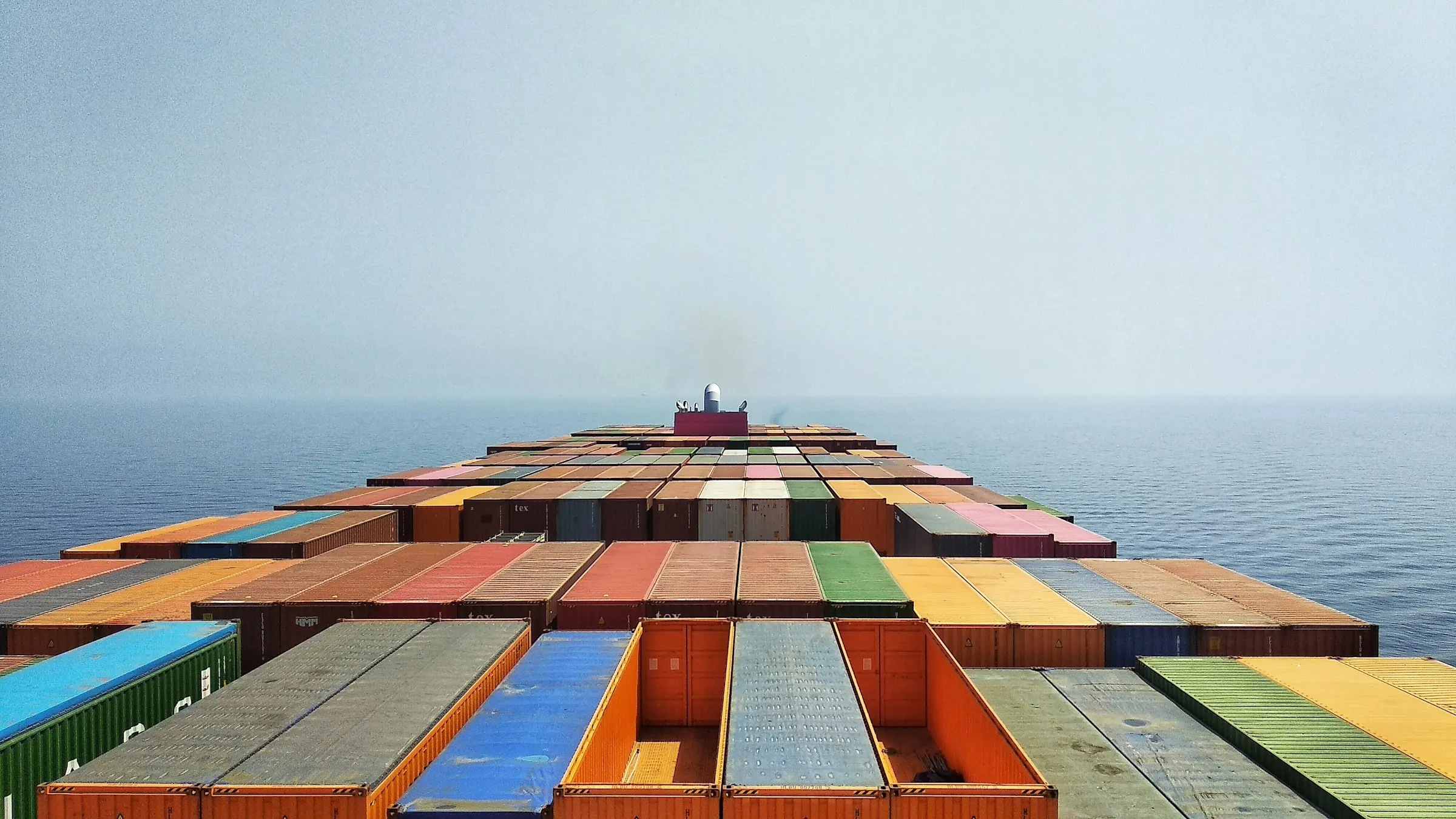
CIF and CFR under Incoterms 2020: difference, insurance and pitfalls
CIF stands for Cost, Insurance and Freight; CFR stands for Cost and Freight. Both Incoterms 2020 rules are reserved for sea transport and transfer risk to the buyer as soon as the goods are loaded on board the vessel, but only CIF requires the seller to take out insurance, and only minimum insurance at that. This article details what each rule actually covers, the extent of that minimum insurance, the destination charges that remain the buyer's responsibility, and the reasons many importers end up preferring FOB.
CIF and CFR: what exactly do they cover?
CIF stands for Cost, Insurance and Freight. CFR stands for Cost and Freight. Both rules belong to the sea Incoterms family, alongside FAS and FOB, and only apply to sea or inland waterway transport, with a port of loading and a port of destination agreed between the parties.
Under both rules, the seller arranges and pays for main carriage to the agreed port of destination. The difference concerns only insurance: under CIF, the seller must take out cover for the buyer's benefit; under CFR, no insurance is owed by either party, and the buyer alone remains responsible for insuring if it wishes to.
France's customs directorate points out that these four sea rules are designed for bulk and conventional cargo: containerised shipments in principle fall under the multimodal Incoterms, CPT and CIP in particular. In practice, CIF and FOB nonetheless remain widely used for containerised shipments, including from China.
- CIF: cost of the goods, minimum insurance and freight to the port of destination
- CFR: cost of the goods and freight to the port of destination, no insurance
- Both in principle reserved for bulk and conventional cargo; containerised shipments fall rather under CPT and CIP
Read next Incoterms for import from China: EXW, FOB, DDP, which Incoterm to choose · Sea freight from China: FCL or LCL, costs, transit times and break-even point
Transfer of risk: identical for CIF and CFR
The point at which risk passes from seller to buyer is the same under CIF and CFR: the moment the goods are loaded on board the named vessel, at the agreed port of loading. From that moment, damage or loss occurring during sea transport is borne by the buyer, even though the seller continues to pay freight to the port of destination.
This separation between the transfer of risk and the transfer of costs is the hallmark of the Incoterms C rules, CFR, CIF, CPT and CIP. It is this point that a first-time buyer often gets wrong, wrongly believing that a seller paying freight to destination remains responsible for the goods until they arrive.
Read next Cargo transport insurance: coverage, deductible, exclusions
Minimum insurance under CIF: Institute Cargo Clauses (C)
Under CIF, the seller must take out an insurance policy covering, at minimum, the price of the goods plus 10%, in the currency of the contract, for the buyer's benefit. Unless otherwise agreed, the cover required by the Incoterms 2020 rule corresponds to the Institute Cargo Clauses (C), or comparable cover: this is the minimum level provided for by the rule, not all-risks cover.
This minimum cover protects against a limited list of major events, fire, explosion, stranding, capsizing, sinking or general average contribution, but excludes ordinary particular average and partial theft. A buyer who needs broader cover must either negotiate a higher clause with the seller or take out supplementary ad valorem insurance itself.
The Incoterms 2020 revision specifically split the fate of CIF and its multimodal equivalent CIP: CIP now requires all-risks cover, Institute Cargo Clauses (A), while CIF stayed at the minimum level of clauses (C). Two rules that once seemed interchangeable have, since 2020, covered two very different levels of insurance.
Under CFR, the seller has no insurance obligation, either for its own account or the buyer's. If the buyer wants to be covered during sea transport, it must arrange its own policy before loading.
- Covered: fire, explosion, stranding, capsizing or sinking of the vessel, general average
- Excluded: ordinary particular average, partial theft, damage linked to insufficient packing
- Minimum amount: 110% of the invoiced price, in the currency of the contract
Read next Cargo transport insurance: coverage, deductible, exclusions
Destination charges: the classic pitfall of CIF and CFR
The cost paid by the seller under CIF and CFR stops, in principle, when the vessel arrives at the agreed port of destination, unloading not included. Unloading costs and the related handling charges fall to the buyer, unless the transport contract concluded by the seller provides otherwise.
This limit explains much of the dispute seen on shipments from China: a CIF or CFR quote shown at an attractive price can hide freight negotiated at a discount by the seller's agent, a discount then recovered on the destination side as port handling charges, file fees or demurrage billed by the local correspondent.
A simple safeguard limits this risk: ask in writing, before loading, for the list of charges included in the CIF or CFR price up to the port of destination, and refuse to pay a second time for a service already included in that price.
- In principle included: sea freight to the agreed port of destination
- In principle not included: unloading the vessel, related handling charges
- Always check: terminal charges, demurrage, file fees billed by the destination agent
Read next Landed cost: the full formula for your delivered unit cost · Freight Forwarder for Import from China: Role, Limits, Choice
Customs value: what CIF and CFR change for your declaration
Article 71 of the Union Customs Code provides that transport and insurance costs up to the place of introduction into the Union's customs territory form part of the elements to be added to the customs value, when not already included in the invoiced price. In practice, a price invoiced CIF or CFR to a Union port already includes these costs: nothing to add, in most cases, for the portion of the journey up to that port.
The nuance comes from the place agreed under the incoterm: if the invoiced price covers onward intra-Union carriage beyond the point of introduction, the corresponding portion must be identified and removed from the calculation basis, which requires a detailed transport contract.
On this point, CIF and CFR appear to simplify the declaration compared with an FOB-type incoterm, where the buyer itself must reconstruct and add the freight cost up to the point of introduction. This simplicity comes at a cost: it depends entirely on the reliability of the price quoted by the seller, hard to verify once the goods have been loaded.
Read next Customs Value and Duty Calculation: Base, Adjustments, Rates · Customs clearance for import into the EU: steps, step by step
Why many importers prefer FOB
Under FOB, as under CIF and CFR, risk passes to the buyer on loading on board the vessel. The difference lies in who arranges and pays for main carriage: under FOB, it is the buyer who contracts directly with its freight forwarder or shipping line, not the seller.
This arrangement changes things on three points: the buyer chooses its own freight forwarder and negotiates its own rates, it knows the actual freight cost instead of a CIF or CFR price with an undetailed margin, and it keeps control over tracking its cargo, which limits the risk of additional charges imposed by an agent who alone controls the information.
FOB requires more organisation on the buyer's side in return, with a trusted freight forwarder to manage directly. This is why some buyers choose CIF or CFR for small one-off volumes, then switch to FOB as their volumes and experience grow.
Read next Incoterms for import from China: EXW, FOB, DDP, which Incoterm to choose · Negotiating with a Chinese factory: price, deadlines, terms
What Sorva does for you
Sorva reviews factory quotes before they are signed and checks the incoterm proposed, the detail of the quoted freight and the charges that do, or do not, remain the buyer's responsibility at the port of destination. Our Chinese-speaking team in Guangzhou negotiates directly with the factory and its freight forwarder, in the local language, to clarify what is actually included in a CIF or CFR price before loading.
In most cases you pay no fees: you open a file, we negotiate the goods for you and we take a commission on their ex-works value. For an order that runs from production through to delivery, our Produce and Deliver plan arranges freight and customs clearance on your behalf, with a clear rundown of destination charges before the vessel departs.
Remember that CIF and CFR transfer risk at the same moment, loading on board the vessel, but only CIF requires insurance, and only minimum cover of the Institute Cargo Clauses (C) type. First move before signing: get it confirmed in writing what is included in the price up to the port of destination, unloading included or not.
Let's talk about your project
Frequently asked questions
01What is the CIF incoterm?
02What is the difference between CIF and CFR?
03Does the minimum CIF insurance cover all risks?
04Who pays the unloading costs at the port of destination under CIF and CFR?
05Are CIF or CFR suited to a container shipment?
06Why choose FOB rather than CIF to import from China?
The service that matches
- CommissionVolume commissionYou open a file, we find and negotiate the factory. We are paid only on the goods you order.€150file opening feeView service
- One-off serviceFactory quotation reviewYour proforma read line by line before you wire a single deposit.€49per quotationView service
- PackageLevel II · Produce and deliverEverything in Level I, plus own-brand production, factory inspections, negotiated freight and DDP delivery.€1,590deposit on ordering, balance by milestoneView service